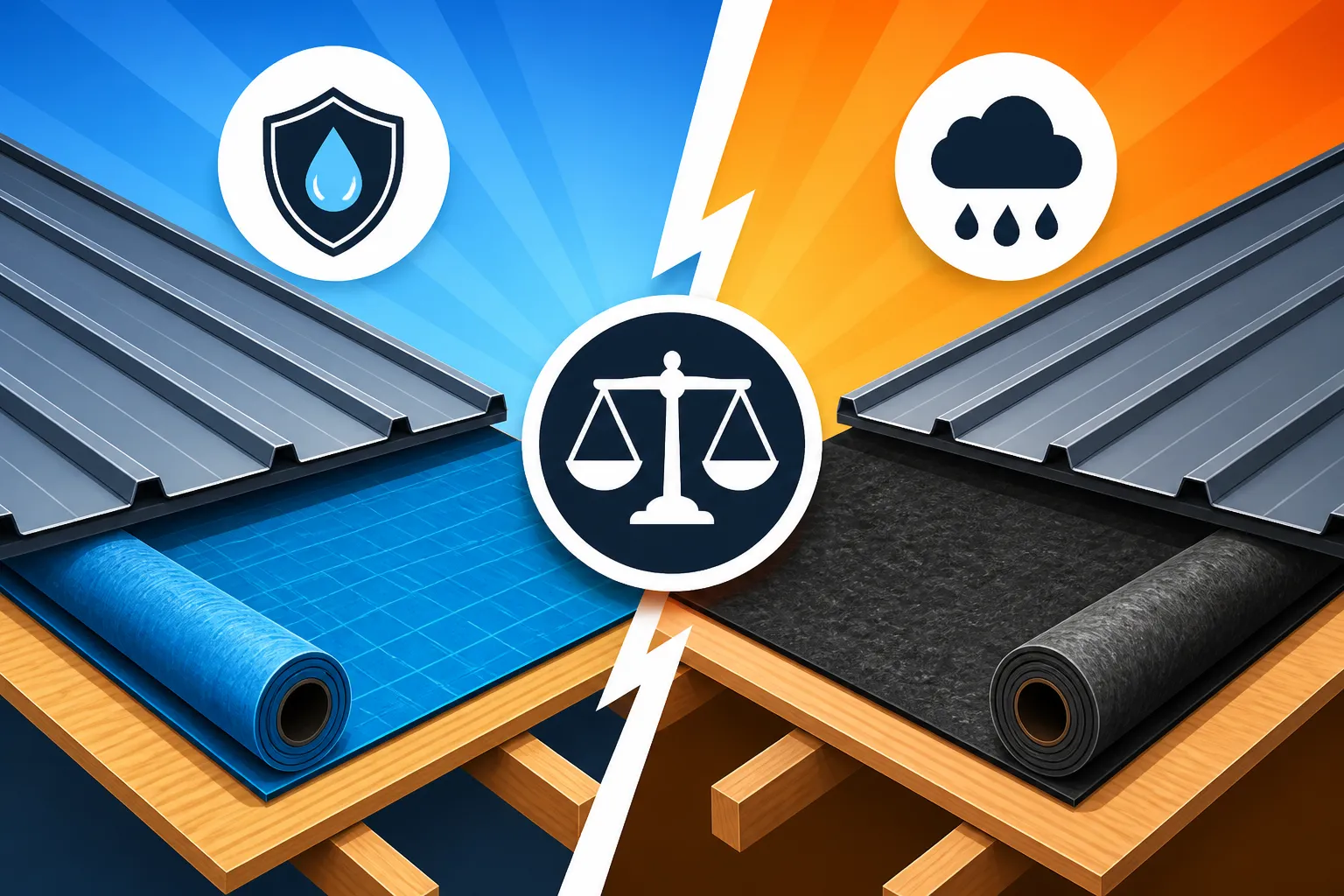
Metal Roof Underlayment: Synthetic vs Felt
Choosing a new roof is a big decision, and when you opt for metal roofing, it often feels like you've made the most significant choice already. But peel back the surface, and you'll find there's another crucial layer that demands your attention: the underlayment. Many homeowners overlook this vital component, leading to questions and confusion about whether to go with traditional felt or modern synthetic materials. This guide will walk you through everything you need to know about metal roof underlayment, helping you understand the differences, benefits, and why the right choice here is absolutely paramount for the longevity and performance of your entire roofing system.
The Critical Role of Underlayment in a Metal Roofing System
It’s easy to get caught up in the beauty and durability of the metal panels themselves – whether it’s the sleek lines of a standing seam or the rustic charm of corrugated steel. But beneath those shiny panels lies a silent guardian that works tirelessly to protect your home. This guardian is the underlayment, and its role is far more extensive and essential than many realize. Think of it as your roof’s second line of defense, a robust safety net that catches whatever the primary roofing material might miss.
More Than Just a Barrier: Core Functions of Underlayment
When people think of underlayment, they often assume its sole purpose is to provide a temporary waterproof layer during installation or to offer a slight bit of extra protection from leaks. While those are certainly functions, they only scratch the surface of what underlayment truly does. Firstly, it acts as a critical moisture barrier, preventing any water that might get past your metal panels – through wind-driven rain, ice dams, or even damaged fasteners – from reaching your roof deck and causing extensive structural damage. This isn't just about large leaks; it's also about preventing the subtle ingress of moisture that can lead to rot, mold, and mildew over time.
Beyond moisture, underlayment offers essential protection from abrasion. Metal panels, especially as they expand and contract with temperature changes, can rub against the roof deck. A good underlayment provides a smooth, protective layer that prevents this friction, which could otherwise wear down the decking or even the underside of your metal panels. It also helps to create a uniform surface for the metal panels to rest on, minimizing imperfections that could lead to unevenness or "oil canning" – a phenomenon where metal panels appear wavy or buckle. Furthermore, it adds a layer of thermal protection, contributing to your home's energy efficiency, though this is a secondary benefit compared to its primary protective roles. For a deeper dive into all the layers, check out our guide on what Goes Under a Metal Roof.
Protecting Your Investment: Why Underlayment is Non-Negotiable
Considering the significant investment a metal roof represents, skimping on underlayment is akin to buying a luxury car and foregoing insurance. It simply doesn't make sense. Without proper underlayment, even the most robust metal roof is vulnerable. For instance, if a severe storm brings wind-driven rain from an unusual direction, or if a fastener backs out slightly, the underlayment is what stands between your home’s interior and potential water damage. It’s also a crucial component in ensuring your metal roof system meets local building codes and qualifies for manufacturer warranties. Most reputable metal roofing manufacturers explicitly require specific types and installation methods for underlayment to validate their product warranties.
Beyond direct water protection, underlayment provides a critical vapor barrier in many installations, controlling moisture movement from inside your home to the attic and roof deck. This prevents condensation from forming beneath the metal panels, which can lead to rust on steel roofs or damage to your roof decking over time. Especially in areas with significant temperature fluctuations, managing this vapor is essential for the long-term health of your roof structure. Professional installers, like those you can find through services like Modernize, understand these nuances and ensure the correct underlayment is chosen and installed properly to safeguard your home and extend the life of your metal roof.
Understanding Traditional Felt Underlayment
For decades, felt underlayment was the undisputed champion of roof protection, especially under asphalt shingles. It’s the material many of our parents and grandparents relied on, and for good reason: it’s relatively inexpensive, readily available, and gets the job done – at least for many traditional roofing types. But when it comes to the specific demands of a metal roof, it's important to understand both its enduring qualities and its inherent limitations.
Asphalt-Saturated Felt: The Tried and True (and Its Limitations)
Traditional felt underlayment, often called "tar paper" or "roofing felt," is typically made from organic cellulose fibers (like recycled paper or wood pulp) that are saturated with asphalt. The most common varieties are #15 felt and #30 felt, referring to the weight per 100 square feet. The asphalt saturation makes the felt water-resistant, allowing it to shed water and provide a temporary barrier against the elements. It’s been a staple in construction because it's economical and effective at preventing water penetration during installation and for standard shingle roofs.
However, felt underlayment comes with several drawbacks when paired with metal roofing. For one, it's susceptible to degradation from UV exposure. If your metal roof installation takes longer than expected, or if there are delays between laying the felt and the metal panels, the sun can bake and crack the felt, significantly reducing its effectiveness. It can also become brittle in cold weather, making it prone to tearing during installation. Furthermore, felt paper tends to absorb moisture, which can cause it to wrinkle or buckle. This "ponding" or unevenness can transfer to the metal panels above, potentially contributing to the aesthetic issue of oil canning. While it's a venerable material, its performance under the unique conditions of a metal roof, with its high heat transfer and expansion/contraction cycles, is often less than ideal compared to modern alternatives.
Installation Challenges and Performance Factors of Felt
Installing felt underlayment can be a tricky business, and its performance is highly dependent on precise application. One of the biggest challenges is its weight and bulk. Rolls of #30 felt are heavy and unwieldy, making them more difficult and labor-intensive to maneuver and secure, especially on steep-pitched roofs. This can add to labor costs and increase installation time. Moreover, felt can become slippery when wet or dusty, posing a significant safety hazard for roofing crews.
Once installed, felt underlayment's longevity is a concern for a roofing system designed to last 50 years or more. While felt might hold up for 20-30 years under ideal conditions, the constant expansion and contraction of metal panels above it can accelerate its deterioration. The extreme heat that metal roofs can reach, especially dark-colored ones in sunny climates, can also dry out the asphalt in felt, causing it to become brittle and crack prematurely. This means that if your metal panels eventually need repair or replacement decades down the line, there's a higher chance the felt underlayment beneath them will also be compromised, necessitating a full tear-off and replacement. This contrasts sharply with the long lifespan expected of a metal roof, underscoring why many modern installers are moving away from felt for these applications.
Exploring Modern Synthetic Underlayment Solutions
Stepping into the 21st century of roofing, synthetic underlayment has emerged as a superior alternative to traditional felt, especially for high-performance roofing materials like metal. These advanced materials are engineered to overcome the limitations of felt, offering enhanced durability, easier installation, and ultimately, better protection for your home.
The Advanced Composition and Superior Benefits of Synthetics
Synthetic underlayments are a marvel of modern engineering, typically manufactured from polypropylene or polyethylene woven fabrics that are coated with a polymer. This composition makes them incredibly strong, lightweight, and far more tear-resistant than felt. One of their most significant advantages is their impressive resistance to water. Unlike felt, which absorbs moisture, synthetics are hydrophobic, meaning they shed water completely. This prevents the underlayment itself from degrading or wrinkling, maintaining a smooth, consistent surface for your metal panels.
Beyond water resistance, synthetic underlayments offer exceptional UV stability. Many formulations are designed to withstand exposure to sunlight for months, a stark contrast to felt's vulnerability. This flexibility in exposure time is a huge benefit during the construction phase, especially for complex roof geometries or projects with unpredictable weather delays. They also remain pliable in cold temperatures and don't become slippery when wet, enhancing safety and ease of installation for roofing crews. These combined benefits mean that synthetic underlayments provide a robust, long-lasting barrier that perfectly complements the lifespan and performance expectations of a metal roof.
Water Resistance, Breathability, and Beyond: Key Features
Modern synthetic underlayments boast a range of features tailored for optimal performance under metal roofing. Their superior water resistance is paramount. They create a robust secondary waterproof barrier that can handle any moisture infiltration, ensuring your roof deck stays dry. Furthermore, many synthetic underlayments are vapor-permeable, or "breathable." This means they prevent bulk water from entering but allow water vapor to escape from the attic or roof deck. This breathability is crucial for preventing condensation issues, which can lead to mold, rot, or even rust on the underside of certain metal panels. For further information on this, you might explore whether your metal roof needs a vapor barrier.
Another significant advantage is their exceptional strength-to-weight ratio. A roll of synthetic underlayment can cover significantly more square footage than a roll of felt of comparable protection, yet it weighs substantially less. This makes transportation, handling, and installation much more efficient. They are also highly resistant to fungal growth, rot, and insects, further contributing to the long-term health of your roof system. Their smooth, uniform surface helps prevent oil canning in metal panels and provides excellent footing for installers, reducing the risk of slips and falls. Brands like Titanium UDL and RoofRunner are popular choices that exemplify these advanced features, providing reliable, high-performance solutions for metal roofs.
Ice and Water Shield: A Specialized Synthetic Consideration
While most synthetic underlayments offer excellent general protection, for critical areas or harsh climates, a specialized type known as "ice and water shield" is often recommended or required. This self-adhering membrane is made from rubberized asphalt or synthetic polymers, offering an aggressive sticky backing that seals directly to the roof deck. When installed, it creates a waterproof seal around fasteners, preventing water penetration even from ice dams or extreme wind-driven rain.
Ice and water shield is typically applied at eaves, valleys, around penetrations like chimneys and skylights, and along rake edges – areas most prone to water intrusion. In colder climates, building codes often mandate its use along the eaves to prevent damage from ice dams, where melting snow refreezes at the colder edge of the roof, causing water to back up and seep under roofing materials. Its self-sealing properties provide an unparalleled level of protection in these vulnerable zones. While it's generally more expensive than other underlayment types, its targeted application in high-risk areas can dramatically enhance the overall leak protection of your metal roof, making it a wise investment for peace of mind. Learn more about the specific benefits in our article on Ice and Water Shield for Metal Roofs.
Side-by-Side Comparison: Synthetic vs. Felt Underlayment
When it comes down to choosing between synthetic and felt underlayment for your metal roof, it’s not just about tradition versus innovation. It’s about understanding how each material performs under the unique stresses a metal roof endures, and how those performances translate into long-term value, installation efficiency, and peace of mind for you, the homeowner.
Durability, Longevity, and Tear Resistance
The lifespan of a metal roof can easily stretch 50 years or more, making the durability and longevity of the underlayment a paramount concern. Here, synthetic underlayment truly shines. Its woven polypropylene or polyethylene construction makes it incredibly tear-resistant, significantly outperforming felt. Imagine a roofing crew walking on it during installation, or the constant expansion and contraction of metal panels over decades – felt will eventually break down, crack, and tear. Synthetic, on the other hand, is designed to withstand these stresses for the full life of the metal roof. It won't become brittle in the cold, nor will it degrade quickly under the intense heat transferred by metal panels in the summer.
Furthermore, synthetic underlayments are far more resistant to UV degradation. If adverse weather or project delays prolong the period between underlayment installation and metal panel placement, felt can rapidly deteriorate when exposed to sunlight. Synthetics, with their built-in UV stabilizers, can often remain exposed for several months without significant loss of performance. This resilience ensures that the secondary barrier beneath your metal roof maintains its integrity for as long as your roof is expected to last, effectively making it a "set it and forget it" component that you won't have to worry about failing prematurely. This robust performance is critical for preventing leaks on a metal roof.
Weight, Walkability, and Installation Practicalities
Installation efficiency and safety are critical considerations for any roofing project, directly impacting labor costs and overall project timelines. This is another area where synthetic underlayment holds a clear advantage. Synthetic products are incredibly lightweight compared to felt. A single roll of synthetic underlayment can often cover four to five times the area of a roll of #30 felt, yet weigh considerably less. This means fewer rolls to transport, fewer trips up the ladder, and less physical strain on the roofing crew. This translates to faster installation times and potentially lower labor costs.
The walkability and safety of the underlayment also play a crucial role. Felt, particularly #15 felt, can be quite slippery, especially when dusty or wet, posing a significant fall risk for installers. Synthetic underlayments, in contrast, often feature textured surfaces designed to provide better traction, even when damp, enhancing safety during the installation process. They also lay flatter and are less prone to wrinkling or tearing during foot traffic or high winds before the metal panels are secured. This ease of handling and improved safety profile not only makes the job more efficient but also reduces the risk of accidents and potential delays, ensuring your metal roof installation process goes as smoothly as possible.
Understanding the Cost: Upfront vs. Long-Term Value
When evaluating the cost of underlayment, it’s essential to look beyond the initial purchase price and consider the long-term value. On an upfront, per-square-foot basis, felt underlayment is generally less expensive than synthetic. You might find #15 felt for as little as $0.10-$0.15 per square foot, while #30 felt could be $0.15-$0.25. Synthetic underlayments, depending on their features and thickness, typically range from $0.25 to $0.75 per square foot, with ice and water shield costing even more, sometimes upwards of $1.00 per square foot for specialized products.
However, these initial cost differences can be misleading when considering a metal roof, which is a long-term investment. The superior durability and longevity of synthetic underlayment mean it's highly unlikely to fail or need replacement before your metal roof does. This is critical because replacing underlayment prematurely would require removing and reinstalling your metal panels, a costly and labor-intensive endeavor. Felt, being less durable, is more prone to early failure, potentially leading to expensive repairs down the line. Moreover, the enhanced protection offered by synthetic underlayment can prevent costly water damage to your home’s interior and structure, saving you significant money in potential repairs. When factoring in ease of installation (potentially lower labor costs), enhanced safety, and superior protection, the higher upfront cost of synthetic underlayment often represents a much better long-term value and peace of mind for a metal roofing system.
Here's a quick comparison table:
| Feature | Felt Underlayment (#15 / #30) | Synthetic Underlayment |
|---|---|---|
| Composition | Asphalt-saturated organic fibers (cellulose, paper) | Woven polypropylene/polyethylene fabric, polymer coating |
| Weight | Heavy (15-30 lbs per 100 sq ft) | Lightweight (3-10 lbs per 100 sq ft, covers more area) |
| Tear Resistance | Low (prone to tearing, especially when cold) | High (extremely strong, resistant to tears and punctures) |
| Water Resistance | Water-resistant (sheds water), can absorb moisture | Waterproof/Water-repellent (sheds water, non-absorbent) |
| UV Resistance | Low (degrades quickly with sun exposure) | High (many rated for several months of UV exposure) |
| Flexibility/Pliability | Becomes brittle in cold, can wrinkle/buckle | Flexible in varying temperatures, lays flat |
| Walkability/Safety | Can be slippery when wet/dusty | Textured surface often provides good traction |
| Lifespan | 20-30 years (can degrade faster under metal) | 30-50+ years (designed to match metal roof lifespan) |
| Cost (per sq ft) | Lower ($0.10 – $0.25) | Higher ($0.25 – $0.75, Ice & Water Shield more) |
| Vapor Permeability | Low (can trap moisture) | Variable (some breathable, some impermeable) |
| Ideal Use | Budget projects, shorter-lifespan roofs (e.g., shingles) | Metal roofs, tile roofs, and other long-lasting systems |
Making the Right Choice for Your Metal Roof Project
Deciding between synthetic and felt underlayment isn't a one-size-fits-all scenario, but for metal roofing, the pendulum strongly swings towards synthetic for most applications. However, the best choice for your specific project depends on a confluence of factors unique to your home, climate, and budget. It's about aligning the underlayment's properties with your overall roofing goals.
Factors to Consider Beyond Material Type
While the inherent qualities of synthetic versus felt are paramount, several other factors should influence your final decision. First, consider your local climate. In regions prone to heavy rain, high winds, or significant snowfall and ice dams, a high-performance, self-adhering synthetic underlayment like an ice and water shield in critical areas is almost always a superior choice. Its ability to seal around fasteners and prevent water backup from ice dams offers unparalleled protection. Conversely, in very dry, mild climates, the need for extreme waterproofing might be slightly less critical, though durability remains important for metal roofs.
Next, think about your roof's pitch and complexity. A steep-pitched roof is more challenging to install on, and a lightweight, easy-to-handle synthetic will not only speed up the process but also improve installer safety. Complex rooflines with multiple valleys, dormers, and penetrations also benefit greatly from the superior sealing and flexibility of synthetic products, especially self-adhering membranes. Finally, consider your long-term goals. If you're installing a metal roof for its 50+ year lifespan, it makes little sense to pair it with an underlayment that might only last half that time. The underlayment is an integral part of your metal roof system, and its quality should match the quality and expected longevity of the metal panels themselves.
Specific Scenarios and Recommendations
For the vast majority of residential metal roof installations, particularly new construction or full replacements, a high-quality synthetic underlayment is the recommended choice. Its superior tear strength, UV resistance, light weight, and ease of installation make it the most practical and durable option. For example, if you're installing a standing seam metal roof, which is designed for ultimate longevity and weather protection, a synthetic underlayment will ensure that the secondary water barrier matches the performance of the panels. Many reputable metal roofing contractors, including those vetted by services like Modernize, will strongly advocate for synthetic underlayment.
In situations where you're installing a metal roof over existing shingles, the choice of underlayment becomes even more critical. While you might opt for a lighter synthetic, the primary concern is proper ventilation and ensuring no moisture gets trapped. For a comprehensive overview, refer to our guide on installing a metal roof over shingles. For certain specific applications, like an unheated shed or barn where moisture control and longevity are less critical, a heavier #30 felt might be considered if budget is the absolute top priority, but even then, the benefits of synthetic often outweigh the minimal cost savings. For any area prone to ice dams or heavy rain, or around roof penetrations, an ice and water shield is highly recommended, regardless of the primary underlayment choice. Ultimately, investing in a good underlayment, often a synthetic one, is investing in the long-term health and performance of your entire metal roofing system. You can explore the full range of options in our guide to metal roof underlayment and ventilation.
Proper Installation Techniques for Optimal Underlayment Performance
No matter how high-quality your chosen underlayment, its performance hinges on proper installation. Even the most advanced synthetic material won't protect your home if it's installed incorrectly. Professional roofing contractors understand that the underlayment is not just laid down; it's meticulously applied to create a seamless, protective envelope that works in harmony with the metal panels above.
Essential Deck Preparation and Underlayment Placement
The foundation of a successful underlayment installation begins with a clean, dry, and sound roof deck. Before any underlayment is rolled out, the roof deck must be thoroughly inspected. Any existing damage, such as rotten or warped plywood or OSB, must be repaired or replaced. All debris, nails, and fasteners should be removed, and the surface should be smooth to prevent any imperfections from telegraphing through to the metal panels. This meticulous preparation ensures that the underlayment can adhere properly and perform optimally without being compromised by underlying issues. For details on what the deck requirements are, see our article on Metal Roof Decking Requirements.
Once the deck is ready, the underlayment typically begins at the eaves, running horizontally parallel to the eave edge. For self-adhering ice and water shield, the backing is carefully peeled away as the material is unrolled and pressed firmly onto the deck to ensure full adhesion. For non-adhering synthetics or felt, it's typically fastened with staples or cap nails. The goal is to lay each course flat and taut, avoiding wrinkles or buckles, which can create weak points or affect the appearance of the finished metal roof. This first course at the eave is particularly important as it helps direct water into the gutters.
Overlap, Fastening, and Sealing for a Watertight System
Proper overlapping and fastening are critical to creating a continuous, watertight barrier. Each subsequent course of underlayment must overlap the course below it according to manufacturer specifications, typically by at least 2 to 6 inches, to prevent water intrusion. Side laps (where one roll meets another horizontally) should also be overlapped adequately. In areas prone to high winds or heavy rain, increasing the overlap can provide an extra layer of security. For vertical seams or around penetrations, specialized sealing tapes compatible with the underlayment are often used to ensure a completely watertight seal.
Fastening techniques vary between felt and synthetic. Felt is traditionally secured with roofing nails or staples, but excessive fastening can compromise its integrity. Synthetic underlayments are typically fastened with plastic cap nails, which have a wide head that helps prevent tear-through and creates a more secure hold without puncturing the material excessively. Self-adhering membranes, by their nature, require fewer mechanical fasteners once properly installed. Around all roof penetrations – such as vents, chimneys, and skylights – the underlayment needs to be cut and flashed meticulously to ensure a watertight seal. This often involves applying additional layers of ice and water shield or specialized flashing tapes. Taking these precise steps during underlayment installation is just as important as the quality of the metal panels themselves in creating a durable, leak-free metal roof that will protect your home for decades to come.
Disclaimer
Please note that this guide provides general information about metal roof underlayment. Building codes, product specifications, and best practices can vary significantly by location and specific roofing system. Always consult with a qualified, licensed metal roofing professional for advice tailored to your specific project and local regulations. The information provided herein is not a substitute for professional advice.