Metal Roof Cost vs Architectural Shingles
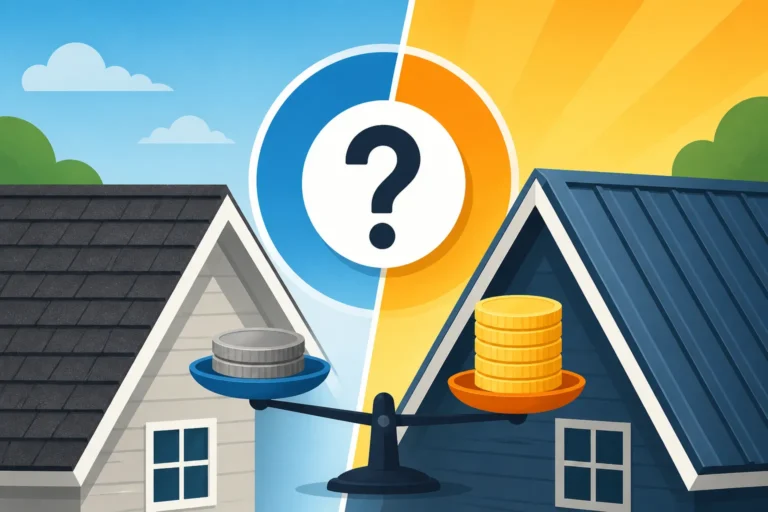
Choosing between a new roof and a bank-breaking investment is a stressor every homeowner eventually faces, especially when weighing the immediate affordability of shingles against the legendary durability of metal. This guide settles the debate by breaking down the true lifetime costs, material differences, and hidden factors that determine whether a metal roof or architectural shingles actually provide the best value for your specific home and budget.
The Initial Sticker Shock: Upfront Costs Compared
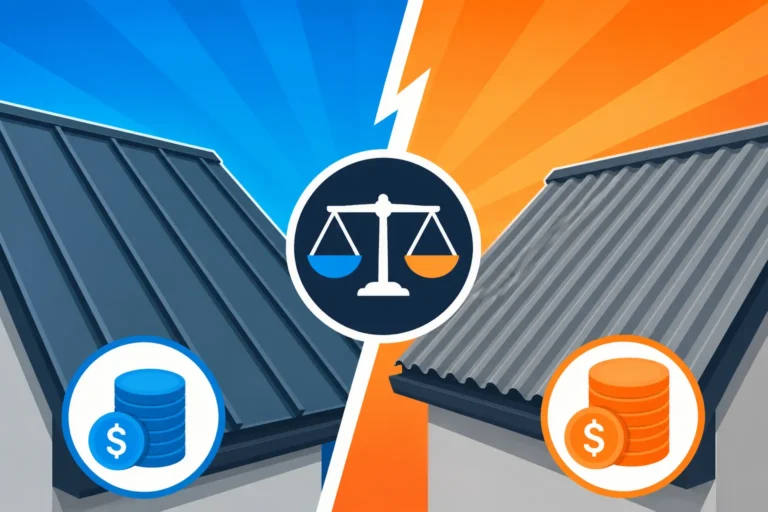
When you first start looking at quotes, the price gap between these two options can feel like a chasm. Architectural shingles, also known as dimensional or laminate shingles, are the most popular roofing choice in North America for one primary reason: they are significantly cheaper to install on day one. Because they are made of a fiberglass mat coated in asphalt and ceramic granules, the material is relatively inexpensive to produce and, more importantly, easy to install. Any general roofing crew can slap down a shingle roof in a day or two without specialized training, which keeps the Metal Roof vs Asphalt Shingle Cost gap quite wide.
Metal roofing, however, requires a completely different level of craftsmanship and material investment. Whether you are looking at aluminum, steel, or copper, the raw materials are tied to global commodity prices, which tend to be higher than petroleum-based asphalt. Beyond the material, the specialized tools and the time required for precision cutting and fastening drive the Metal Roof Labor Cost much higher. For many homeowners, seeing a metal quote that is double or triple the price of a shingle quote is enough to end the conversation, but looking only at the initial check you write is a trap that often leads to higher spending over the next few decades.
Architectural Shingle Material and Labor Pricing
Architectural shingles typically cost between $4.50 and $7.00 per square foot installed, depending on the complexity of your roof and where you live. This price includes the tear-off of your old roof, the underlayment, and the shingles themselves. In a scenario where you have a standard 2,000-square-foot roof, you might see quotes ranging from $9,000 to $14,000. It is a predictable, manageable expense for most families, which is why it remains the go-to for "emergency" replacements when a roof starts leaking unexpectedly.
The labor for shingles is essentially "commodity labor." Because the installation process involves overlapping pieces and nailing them down in a somewhat forgiving pattern, the risk of a catastrophic installation error is lower than with metal—though certainly not zero. You are paying for speed and efficiency. This makes architectural shingles the "fast fashion" of the roofing world; they look great and perform well for a specific window of time, but they are designed to be replaced, not to endure for a century.
Metal Roofing Material and Labor Pricing
On the flip side, metal roofing generally starts around $10.00 per square foot for basic exposed fastener panels and can climb to $20.00 or more for high-end standing seam systems. When you ask How Much More Does a Metal Roof Cost Than Shingles, the answer is usually about 2 to 3 times the price. For that same 2,000-square-foot house, you could be looking at an investment of $25,000 to $45,000. This is a significant financial hurdle that requires either substantial savings or specialized Metal Roof Financing Options.
The labor cost for metal is higher because the stakes are higher. If a contractor miscalculates a cut on a standing seam panel or fails to account for thermal expansion and contraction, the roof will fail, and the repairs are expensive. You aren't just paying for someone to swing a hammer; you are paying for a sheet metal specialist who understands flashing, physics, and weather-tightness. This specialized skill set is in high demand, particularly in regions prone to high winds or heavy snow, which keeps the price floor for metal installations quite high compared to asphalt crews.
Comparing Lifespan and Long-Term Value
The real magic (or math) of the metal vs. shingle debate happens when you look 30 years into the future. Architectural shingles are marketed as "30-year" or even "50-year" products, but in the real world, they rarely last that long. Heat, UV rays, and wind eventually dry out the asphalt, causing the shingles to become brittle, lose granules, and curl. In most climates, a high-quality architectural shingle roof will give you 18 to 22 years of solid service before it needs a full replacement. If you live in a place with intense sun, like Arizona, or high humidity, like Florida, that lifespan can drop even further.
Metal, however, is a "legacy" material. A properly installed standing seam metal roof can easily last 50 to 70 years, often outliving the homeowner. This is where the Metal Roof Cost vs Lifespan Value becomes clear. While the shingle homeowner is on their third roof replacement, the metal homeowner is still under their original roof, having spent virtually nothing on major structural repairs. When you amortize the cost over 50 years, the metal roof often ends up being the cheaper option by a wide margin.
The 30-Year Replacement Cycle of Shingles
Imagine a homeowner named Sarah who installs architectural shingles today for $12,000. Fast forward 20 years: the shingles are balding, the valleys are leaking, and the neighborhood roofer tells her it’s time for a tear-off. By then, inflation and rising labor costs have pushed the price of that same roof to $20,000. Sarah pays it. Ten years after that, she decides to sell her home, but the 10-year-old shingles are already showing wear, and the buyer wants a credit for a new roof.
This "cycle of replacement" is the hidden cost of shingles. You are not just paying for one roof; you are pre-paying for the inevitable labor of tearing it off and the landfill fees for disposing of the old materials. Asphalt shingles contribute millions of tons of waste to landfills every year because they are difficult to recycle. For a homeowner planning to stay in their "forever home," the shingle cycle is a recurring financial drain that never truly ends.
The Lifetime Investment of Metal
Now consider Mark, who lives next door to Sarah and chooses a standing seam metal roof for $35,000. He feels the sting of the price tag upfront, but 20 years later, while Sarah is dealing with contractors and debris in her yard, Mark’s roof looks exactly the same as the day it was installed. He hasn't had to worry about a single leak, even after a few heavy hailstorms that sent Sarah's insurance rates skyrocketing.
By year 40, Mark has effectively "paid off" his roof compared to Sarah’s multiple replacements. His home is better protected, and his long-term maintenance costs have been negligible. Furthermore, if Mark decides to sell, he can market the home as having a "lifetime roof," which is a massive selling point. This is why many experts argue that Is a Metal Roof Worth It? ROI, Resale & Payback is a resounding yes for anyone staying in their home longer than 15 years.
Maintenance, Repairs, and Hidden Expenses
No roof is truly "maintenance-free," but the types of care they require are vastly different. Architectural shingles are prone to biological growth like algae, moss, and lichen, especially on the north-facing sides of the roof or under heavy tree cover. These organisms don't just look ugly; they can actually eat into the shingle mat, shortening the roof's life. Removing them requires professional soft-washing, which is an added recurring expense that many homeowners forget to budget for.
Metal roofs are much more resistant to biological growth, but they have their own set of needs. For exposed fastener systems, the rubber washers on the screws can dry out and crack over 15–20 years, requiring a full "re-screw" of the roof. For standing seam systems, maintenance is mostly limited to cleaning out the gutters and checking the flashing around chimneys. While metal is tougher, if it does get damaged—say by a falling oak limb—the Metal Roof Repair Cost can be higher than a simple shingle patch because you often have to replace entire panels rather than just a few individual pieces.
Keeping Up with Asphalt: Granule Loss and Leaks
The biggest headache with shingles is the slow, silent degradation. Every time it rains, a few more ceramic granules wash into your gutters. These granules are the "sunscreen" for the asphalt; once they are gone, the sun bakes the shingles until they crack. This leads to the most common issue: small, nagging leaks that are hard to find. You might notice a brown spot on your ceiling, only to find out it's been leaking for months, rotting the plywood decking underneath.
Furthermore, shingles are susceptible to "wind uplift." During a storm, the wind can catch the edge of a shingle and tear it off. Even if the roof doesn't leak immediately, that missing shingle creates a weak point. Comparing metal roof vs architectural shingles in terms of storm resilience, shingles are significantly more likely to require an insurance claim after a standard high-wind event, leading to deductible costs and potential premium increases.
Metal Maintenance: Sealants and Fasteners
The maintenance for a metal roof is generally "preventative" rather than "reactive." On an exposed fastener roof, you are essentially keeping an eye on the thousands of penetrations made by screws. If you neglect these, you will eventually have leaks at every screw point. However, if you are proactive, a metal roof is incredibly boring—in a good way. It just sits there and does its job.
One thing metal homeowners must watch for is "oil canning," which is a wavy appearance in the flat areas of the metal panels. While it’s mostly an aesthetic issue and doesn't affect the roof's integrity, it can be a frustration for homeowners who paid a premium for a sleek look. To avoid this, it's crucial to hire someone who knows What Affects Metal Roof Cost: Gauge, Pitch, Complexity & Tear-Off and can install the panels with the right tension and underlayment to minimize the effect.
Cost Comparison Table: 50-Year Projection
| Expense Category | Architectural Shingles (50 Years) | Standing Seam Metal (50 Years) |
|---|---|---|
| Initial Installation | $9,000 – $15,000 | $25,000 – $45,000 |
| Number of Replacements | 2 to 3 times | 0 times |
| Total Replacement Cost | $45,000 – $70,000 (Adjusted for Inflation) | $0 |
| Annual Maintenance | $200 (Cleaning/Moss removal) | $50 (Gutter cleaning/Inspection) |
| Energy Savings | Minimal | 20% – 40% on Cooling Costs |
| Insurance Impact | Standard Rates / Potential Hikes | Up to 35% Discount (Class 4) |
| Estimated Total 50-Year Spend | $60,000 – $85,000 | $30,000 – $50,000 |
Energy Efficiency and Insurance Savings
One of the most overlooked aspects of the Metal Roof Cost vs Architectural Shingles debate is the monthly savings on your utility bills. Asphalt shingles are "thermal masses"—they soak up the sun's heat and hold onto it, radiating that heat into your attic and living space long after the sun has gone down. This forces your air conditioner to work overtime. Modern architectural shingles come in "cool" versions, but they still struggle to compete with the natural properties of metal.
Metal roofs, particularly those with reflective "cool roof" coatings, reflect a massive percentage of solar radiation back into the atmosphere. This can reduce your cooling costs by as much as 40% in the summer months. Over 20 or 30 years, those monthly savings of $30 to $80 can add up to thousands of dollars, effectively acting as a rebate on the higher initial cost of the roof. If you live in a hot climate like Texas or Florida, the energy efficiency alone makes metal a very attractive long-term play.
Reflectivity and Cooling Costs
The science here is simple: emittance and reflectance. Metal has high solar reflectance, meaning it bounces light away, and high thermal emittance, meaning it releases whatever heat it does absorb very quickly. In contrast, asphalt shingles have low reflectance and hold heat for hours. If you've ever touched a black shingle on a 90-degree day, you know it can reach temperatures of 160 degrees. A light-colored metal roof will stay much closer to the ambient air temperature.
This difference doesn't just save money; it extends the life of your HVAC system. When your AC doesn't have to fight a 140-degree attic, it runs shorter cycles and experiences less wear and tear. This is a "hidden" financial benefit of metal roofing that rarely shows up in a standard contractor's quote but is very real for the person paying the power bill every month.
Insurance Discounts and Impact Resistance
Insurance companies love metal roofs, especially in "Hail Alley" or hurricane-prone coastal regions. Because metal is much harder to penetrate or blow off than shingles, many insurers offer significant discounts on homeowners' insurance premiums. If you choose a metal roof with a Class 4 impact rating, you could see your premiums drop by 20% to 35%.
When you consider Metal Roof Insurance Savings & Discounts, the financial bridge between shingles and metal gets even shorter. In states like Texas or Oklahoma, where hail is a regular occurrence, the insurance savings alone can pay for the price difference between shingles and metal in less than a decade. Additionally, you avoid the headache of filing claims and paying deductibles every time a storm rolls through your neighborhood, which is a massive win for your sanity and your wallet.
Resale Value and Curb Appeal
Finally, we have to talk about what happens when you decide to move. A roof is one of the first things a home inspector and a potential buyer look at. Architectural shingles are the standard; they don't necessarily "wow" a buyer, but as long as they are in good shape, they won't hurt the sale. However, a metal roof is a luxury upgrade that signals to a buyer that the home has been meticulously maintained with high-quality materials.
Real estate data consistently shows that homeowners recover a large portion of their metal roofing investment at the time of sale. It’s not just about the durability; it’s about the aesthetic. Modern metal roofing comes in styles that mimic slate, tile, and even wood shakes, providing a high-end look that architectural shingles simply cannot match. When people ask Does a Metal Roof Increase Home Value?, the answer is usually a firm yes, often increasing the resale price by 1% to 6% compared to a shingle-roofed home.
How Buyers View Metal vs. Shingles
In today’s market, buyers are increasingly wary of "deferred maintenance." If a buyer sees a 15-year-old shingle roof, they immediately start calculating the $15,000 they’ll have to spend in a few years to replace it, and they’ll likely lower their offer accordingly. If they see a 15-year-old metal roof, they see a roof that is still in its "youth" with another 40 years of life left.
This peace of mind is a powerful negotiating tool. For a buyer, knowing they won't have to worry about the roof for the entire time they own the home is a massive weight off their shoulders. It makes your home more competitive in a crowded market and can lead to a faster sale at a higher price point.
Aesthetic Trends in Modern Roofing
We've moved past the days when a metal roof meant looking like a barn. Today's residential metal roofing is sleek, modern, and incredibly versatile. You can get standing seam panels in deep charcoals, forest greens, or even metallic finishes that look like copper. For those who love the look of traditional shingles but want the performance of metal, stone-coated steel shingles offer the best of both worlds.
Architectural shingles have also improved, with high-definition colors and deeper shadow lines that mimic the look of wood shakes. However, they still lack the "architectural intent" that a metal roof provides. A metal roof can take a boring ranch-style house and turn it into a modern farmhouse or a contemporary showpiece. This "curb appeal" factor is hard to quantify in dollars, but you’ll certainly feel it when you pull into your driveway every evening.
Metal Roof Cost vs Architectural Shingles Disclaimer
The cost information and comparisons provided in this guide are based on national averages and current 2026 market trends. Local labor rates, material availability, roof complexity, and specific contractor pricing will cause these numbers to vary significantly for your individual project. Always obtain at least three detailed quotes from licensed and insured roofing professionals in your area to get an accurate estimate for your home. This guide is for informational purposes and does not constitute a legal or binding financial quote.