Metal Roof Cost vs Shingles Over 30 Years
Deciding on a new roof for your home is never just about the immediate price tag; it's a big investment that often leaves homeowners agonizing over which material will truly save them money in the long run. Many of us grapple with the question: does the higher upfront cost of a metal roof actually pay off compared to the seemingly cheaper asphalt shingles over three decades? This comprehensive guide dives deep into the true financial comparison, unraveling the hidden costs and long-term benefits of both roofing options over a 30-year span.
Understanding the Upfront Cost Difference
It’s easy to get caught up in the initial sticker shock when you start pricing out new roofs. Asphalt shingles always seem to win the "cheapest option" award at first glance, but that's rarely the full story. The truth is, a metal roof almost always costs more to install initially than an asphalt shingle roof, and understanding why is the first step in this 30-year journey.
Initial Material and Installation Expenses
When you first talk to a roofing contractor, the quote for a metal roof will undeniably be higher. For a typical 2,000 square foot home, you might see asphalt shingle installation costs ranging from $8,000 to $15,000, depending on the shingle quality and regional labor rates. On the other hand, that same metal roof could easily run you anywhere from $15,000 to $40,000 or more. This significant difference comes down to several factors, primarily the materials themselves and the specialized labor required.
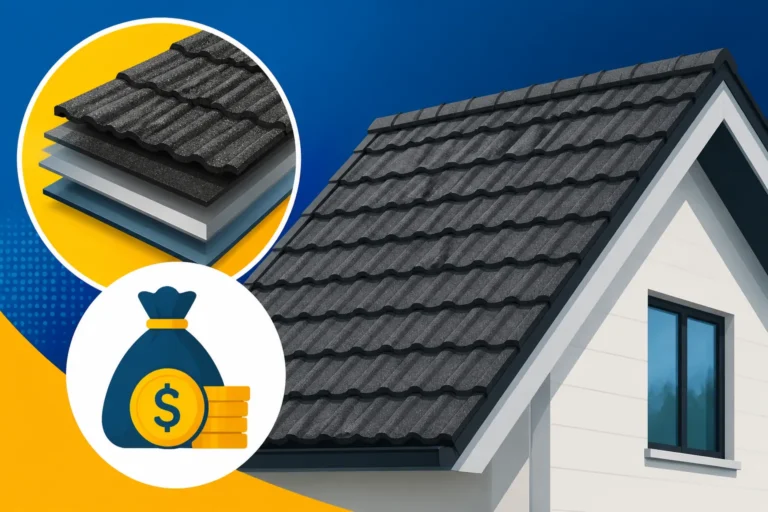
Metal roofing materials, whether we're talking about durable steel, lightweight aluminum, or more premium options like copper or zinc, are inherently more expensive to manufacture than asphalt shingles. They involve more complex processes to form into panels, tiles, or shingles, and require specialized coatings (like Kynar 500 or SMP) for color retention and weather resistance. Then there's the installation. Putting on a metal roof isn't like nailing down shingles; it requires specialized training, tools, and a more precise approach. For instance, installing a standing seam metal roof involves interlocking panels that are mechanically seamed or snapped together, a process that demands a different skill set and more time than traditional shingle installation.
Factors Influencing Upfront Costs
Beyond the base materials and labor, several other elements can dramatically swing the initial cost for both roofing types. Understanding these nuances is crucial when you're getting quotes and trying to compare apples to apples.
Firstly, the size and complexity of your roof play a massive role. A simple, low-pitch gable roof will be far less expensive to cover with either material than a complex roof with multiple dormers, valleys, hips, and a steep pitch. More cuts, more flashing, and more intricate details mean more labor hours and potentially more material waste. You can dive deeper into how various factors influence metal roof cost in a separate guide.
Geographic location also matters. Labor rates vary significantly from state to state and even city to city. For example, a metal roof cost in California might be higher than in Texas due to differing labor costs, local regulations, and material transportation expenses. Permitting fees, which are almost always required for a full roof replacement, also add to the initial cost, and these can differ widely by municipality.
Finally, tear-off is a big one. If your existing roof needs to be completely removed before the new one is installed – which is often the case, especially with metal roofs – that adds considerable labor and disposal costs. While it's sometimes possible to install a metal roof over shingles, doing so comes with its own considerations and potential drawbacks, and it's essential to understand the Cost to Replace Shingles With a Metal Roof thoroughly.
The Long-Term Financial Picture: Beyond Installation
While the initial cost of a metal roof can feel daunting, the real magic happens over time. This is where the long-term benefits start to chip away at, and eventually surpass, the initial investment, making a compelling case for metal roofing over asphalt shingles when you look at a 30-year horizon.
Longevity and Replacement Cycles
This is perhaps the most significant factor in the 30-year comparison. Asphalt shingle roofs typically have a lifespan of 15 to 30 years, with many homeowners needing a replacement closer to the 20-year mark, especially with cheaper 3-tab shingles. Architectural or laminated shingles might push closer to 25-30 years, but even then, they are often on their last legs. This means that over a 30-year period, you'll likely replace your asphalt shingle roof at least once, and potentially twice if you start with a shorter-lifespan shingle.
Metal roofs, on the other hand, boast an impressive lifespan of 40 to 70 years, and sometimes even longer for premium materials like copper or zinc. This means that a properly installed metal roof will likely be the last roof you ever need. Over a 30-year period, a metal roof requires zero replacements, saving you the entire cost of tearing off an old roof and installing a new one – a cost that could easily rival the initial difference between metal and shingles. When you compare metal roof cost vs lifespan value, the longevity really shines through.
Maintenance and Repair Costs
While both roof types require some level of maintenance, their typical repair profiles differ. Asphalt shingle roofs can be prone to issues like curling, cracking, granule loss, and blow-offs, especially after strong winds or hail. Repairs for these issues often involve replacing individual shingles, which can sometimes be a challenge to match perfectly if the shingles have faded over time. After about 15-20 years, shingle roofs often require more frequent and extensive repairs as they near the end of their life.
Metal roofs generally require less frequent maintenance and repair. Their durability makes them highly resistant to common problems that plague shingles. However, issues can still arise, such as loose fasteners on exposed fastener systems, damaged sealant around penetrations, or dents from very large hail. Repairing a metal roof might involve replacing a panel, resealing fasteners, or touching up scratches. These repairs, while potentially more specialized, are often less frequent and can extend the roof's life without needing a full replacement. Keeping up with a regular Metal Roof Maintenance Guide can further minimize these costs.
Energy Efficiency and Savings
This is where metal roofs often provide tangible, ongoing savings that chip away at their higher initial price. Many metal roofs feature cool pigments and reflective coatings that bounce sunlight and heat away from your home. This can significantly reduce attic temperatures, especially in hot climates, leading to lower air conditioning costs. In fact, ENERGY STAR certified metal roofs can reflect up to 70% of solar radiation.
While traditional dark asphalt shingles absorb a lot of solar energy, heating up your attic and making your HVAC system work harder, lighter-colored or specially coated asphalt shingles do exist that offer some reflective properties. However, their energy efficiency generally doesn't match that of a purpose-built cool metal roof. Over 30 years, these energy savings, particularly in states like Florida or Arizona with long cooling seasons, can add up to thousands of dollars, further narrowing the long-term cost gap.
Insurance Premiums and Discounts
Another often-overlooked financial benefit of metal roofing is the potential for lower homeowners insurance premiums. Many insurance companies offer discounts for metal roofs due to their superior resistance to fire, hail, and high winds. Because metal roofs are non-combustible, they often receive a Class A fire rating. Their robust construction can also achieve Class 4 impact resistance against hail, the highest rating available, and withstand incredibly high wind speeds, often exceeding 140 mph.
For homeowners in areas prone to severe weather, like those in "hail alley" states or hurricane-prone coastal regions, these discounts can be substantial. For example, in Texas or Florida, homeowners with metal roofs might see notable savings on their insurance policies. It's always worth checking with your insurance provider to understand specific Metal Roof Insurance Savings & Discounts available in your area. Over three decades, these annual savings contribute significantly to the total cost of ownership.
Real-World Scenarios: 30-Year Cost Projections
Let's get down to brass tacks and look at some hypothetical numbers to illustrate how these costs and savings play out over 30 years. Keep in mind these are averages, and your specific costs will depend on your location, roof size, and material choices.
Hypothetical Cost Breakdown (Example House)
Imagine a 2,000 square foot single-story home with a moderately complex roof in a typical U.S. suburban area.
Scenario 1: Asphalt Shingle Roof
- Initial Installation (Year 0): Let's estimate a mid-range architectural shingle roof at $12,000. This includes material, labor, and a tear-off of the old roof.
- Maintenance/Minor Repairs (Years 1-15): Minimal, perhaps $500 total for small repairs or sealing.
- Energy Costs (Years 1-15): Assume average energy costs with a shingle roof.
- Insurance Costs (Years 1-15): Assume average insurance premiums without specific discounts.
- Second Replacement (Year 15): At the 15-year mark, the shingles are showing significant wear. You decide to replace them again. Cost: $12,000 (factoring in some inflation for simplicity).
- Maintenance/Minor Repairs (Years 16-30): Another $500 total as the second roof ages.
- Energy Costs (Years 16-30): Continues with average energy costs.
- Insurance Costs (Years 16-30): Continues with average premiums.
Total Estimated Cost Over 30 Years for Asphalt Shingles: ~$25,000 – $30,000 (and likely needing a third roof soon after year 30).
Scenario 2: Metal Roof
- Initial Installation (Year 0): Let's estimate a mid-range standing seam steel metal roof at $25,000. This includes material, specialized labor, and a tear-off.
- Maintenance/Minor Repairs (Years 1-30): Minimal, perhaps $1,000 total over 30 years for checking fasteners or minor flashing repairs.
- Energy Savings (Years 1-30): Assume an average of 15% energy savings on cooling costs. If your annual cooling bill is $1,000, that's $150/year in savings. Over 30 years: $4,500.
- Insurance Savings (Years 1-30): Assume a modest 5% discount on a $2,000 annual premium due to fire/hail resistance. That's $100/year. Over 30 years: $3,000.
- Replacement (Year 30): No replacement needed! Your metal roof is still going strong.
Total Estimated Cost Over 30 Years for Metal Roof: ~$25,000 – $26,000 (and still having a roof with decades of life left).
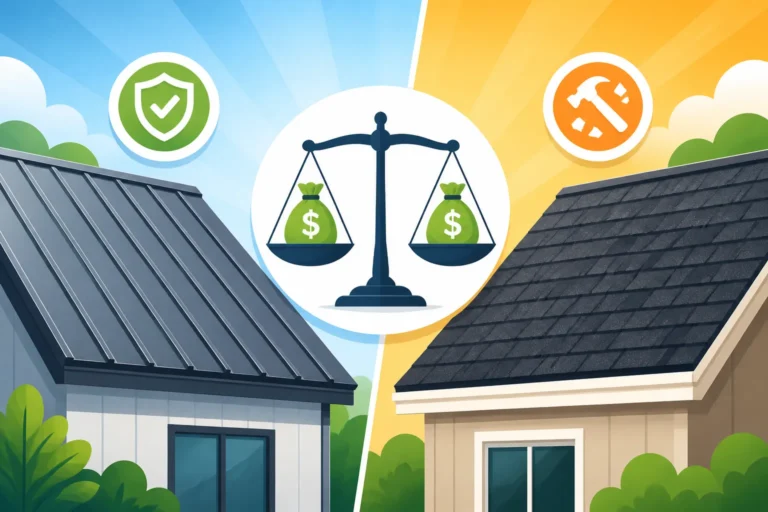
As you can see, even with the higher initial cost, the metal roof often comes out ahead financially over a 30-year period, primarily due to its longevity and the accumulated savings. If you want to refine your own estimates, you can use a Metal Roof Cost Calculator: How to Estimate.
The "Total Cost of Ownership" Perspective
This comparison highlights the critical concept of "total cost of ownership." When evaluating roofing options, it's not just about what you pay on day one, but what you pay over the entire lifespan of the product. The initial purchase price is just one piece of the puzzle. You also need to factor in:
- Longevity and Replacement Cycles: How many times will you need to replace the roof?
- Maintenance and Repair Expenses: What are the expected costs to keep the roof in good condition?
- Operational Savings: Can the roof save you money on energy bills or insurance premiums?
- Resale Value: Does the roof increase the value of your home when it's time to sell? (Often, a metal roof does increase home value).
Looking through this lens, the metal roof, despite its higher initial investment, often presents a lower total cost of ownership over a typical homeownership period. It's a classic example of "buy once, cry once," where paying more upfront saves you significantly more in the long run. When considering whether Is a Metal Roof Worth It? ROI, Resale & Payback, this long-term perspective is key.
Here’s a simplified breakdown comparing the two over 30 years:
| Feature | Asphalt Shingles (30-Year Avg.) | Metal Roof (30-Year Avg.) |
|---|---|---|
| Initial Cost | $8,000 – $15,000 | $15,000 – $40,000 |
| Lifespan | 15-30 years (requires 1-2 replacements) | 40-70+ years (no replacement needed) |
| Replacement Cost | $8,000 – $15,000 (once or twice) | $0 |
| Maintenance/Repairs | Moderate ($1,000 – $3,000) | Low ($500 – $1,500) |
| Energy Savings | Low to None | Moderate to High (Avg. 15-25% cooling) |
| Insurance Discounts | Rare | Potential (5-20%) |
| Total Cost of Ownership | $25,000 – $45,000+ | $18,000 – $45,000 (with remaining lifespan) |
| Resale Value Impact | Minimal | Positive (often seen as upgrade) |
Please note that these are estimated ranges and can fluctuate based on specific materials, regional pricing, and economic conditions.
Disclaimer
The information provided in this guide is for general informational purposes only and does not constitute professional advice. Roofing costs, lifespans, and savings can vary widely based on specific materials, geographic location, contractor rates, roof complexity, and individual home characteristics. It is always recommended to obtain multiple detailed quotes from qualified local metal roofing contractors and consult with financial and insurance professionals before making any decisions about your roofing project.