Do Metal Roofs Need Hurricane Clips?
The thought of your home facing down a hurricane or a major windstorm can be terrifying, and it's completely natural to worry about every single component that keeps your roof securely attached. Many homeowners who are considering the long-term resilience of a metal roof often ask if these incredibly durable systems still require something as specific as hurricane clips. This guide will delve deep into what hurricane clips are, why they're used, and when and why your metal roof might absolutely need them to stand strong against nature's fury.
Understanding Hurricane Clips and Their Purpose
When we talk about protecting a roof from extreme weather, it's not just about the quality of the shingles or panels; it's about how that roof is anchored to the very structure of your home. Hurricane clips are a crucial, often unseen, component in this battle.
What Exactly Are Hurricane Clips?
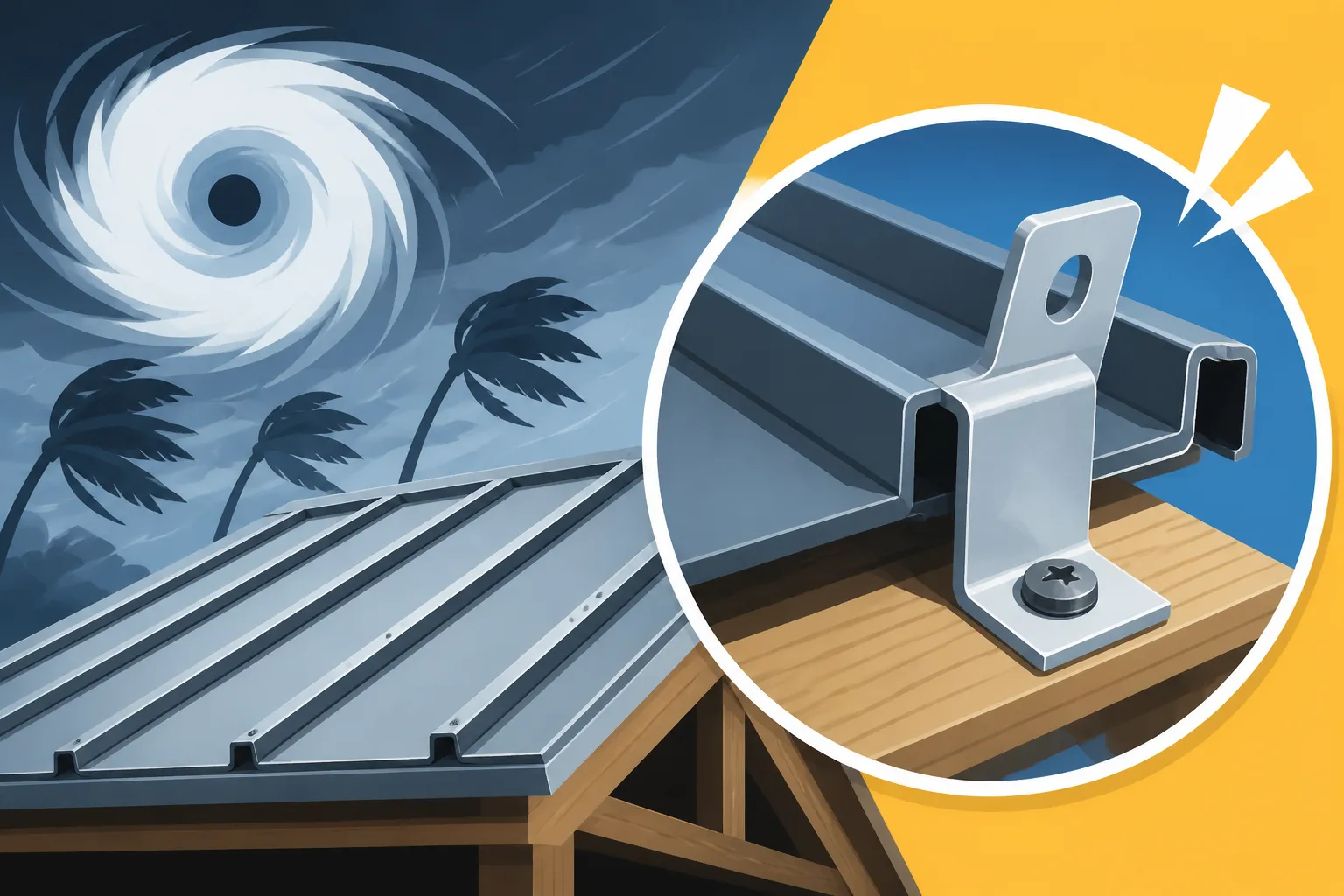
Hurricane clips, sometimes called hurricane ties or straps, are specialized metal connectors designed to create a stronger connection between your roof truss or rafter system and the top plate of your home's walls. Think of them as reinforced, heavy-duty brackets that literally tie your roof to your house. In traditional construction, roof components might just be nailed together, which, while sufficient for everyday loads, can be no match for the immense forces generated by hurricane-force winds.
The beauty of these clips lies in their engineering. They're typically made of galvanized steel, bent and punched with holes for nails or screws, and designed to resist both uplift and lateral (shear) forces. Instead of relying solely on a few nails driven straight down, these clips wrap around or secure adjacent framing members, distributing the stress over a larger area and providing a mechanical connection that’s significantly more robust. They act as a critical safeguard, preventing the roof from being peeled off like the lid of a tin can during severe wind events.
The Critical Role in High-Wind Zones
In areas prone to hurricanes, tornadoes, or simply very strong winds, the roof is the most vulnerable part of a home. Wind doesn't just push down on a roof; it also creates suction (uplift) as it flows over and around the structure, trying to pull the roof upwards. Simultaneously, the sheer force of the wind pushing against the side of the house tries to slide the roof off its foundation. This combination of uplift and shear is what makes high-wind events so destructive to roofs.
Hurricane clips are engineered specifically to counteract these forces. By effectively strapping the roof framing to the wall framing, they provide an unbroken load path that transfers these wind forces down to the foundation, preventing the roof structure from separating from the rest of the house. This continuous connection is paramount in maintaining the structural integrity of your home during an extreme weather event. Without them, a powerful gust of wind can exploit the weaker nail-only connections, leading to partial or complete roof failure, which then exposes the interior of your home to the elements and can lead to catastrophic damage. For homes in coastal regions, particularly those facing the Gulf of Mexico or the Atlantic, these clips aren't just a good idea; they're often a non-negotiable requirement.
Do Metal Roofs Require Hurricane Clips?
This is where the conversation gets interesting because it's not a simple "yes" or "no." While metal roofs are inherently more durable and wind-resistant than many other roofing materials, their need for hurricane clips is dictated by a confluence of factors, primarily local building codes and the specific design of the metal roofing system itself.
Building Codes and Local Ordinances
The absolute first place to look for whether your metal roof needs hurricane clips is your local building code. These codes are established by state and local governments to ensure minimum safety standards for construction. In high-wind areas, like much of Florida or coastal Texas, these codes are incredibly stringent. For example, the Florida Building Code (FBC) and specific high-velocity hurricane zone (HVHZ) requirements, such as those in Miami-Dade County, are renowned for their strictness when it comes to roof-to-wall connections.
These codes often specify minimum wind speed ratings that a roof system must withstand, and to achieve these ratings, hurricane clips or similar robust fastening systems are frequently mandated. It's not usually about the roofing material (metal, asphalt, tile) directly, but rather the entire roof system and its ability to resist prescribed wind loads. If your local code requires a certain level of roof-to-wall connection for a specific wind zone, then any roof installed in that area, including a metal roof, will likely need to incorporate hurricane clips or an equivalent engineered solution. It's crucial for homeowners to understand that these aren't optional upgrades in many places; they're the law. You can often find detailed information on your local government's building department website or by consulting a reputable local contractor.
Fastener Systems and Metal Roof Profiles
The type of metal roof you choose also plays a significant role in its inherent wind resistance and how hurricane clips might integrate. Metal roofing comes in various profiles, each with different fastening methods that contribute to its overall wind uplift resistance.
- Standing Seam Metal Roofs: These systems, with their hidden fasteners and interlocking panels, generally offer superior wind resistance compared to exposed fastener systems. The panels are mechanically seamed or snapped together and then attached to the roof deck via clips that are concealed beneath the panels. These clips themselves often provide a very strong connection to the underlying structure. In some cases, a robust standing seam system with properly engineered clips may meet or exceed wind uplift requirements without needing additional hurricane clips at the roof-to-wall connection, especially if the panels extend down to the eaves and are secured there. However, it's critical that the entire system, from panel to deck to wall, is designed for the specified wind loads. You can learn more about specific profiles in our guide on Metal Roof Cost by Profile: Standing Seam vs Corrugated vs Stone-Coated.
- Exposed Fastener Metal Roofs (e.g., Corrugated, R-Panel): These panels are typically screwed directly through the panel into the purlins or roof deck. While durable, the individual fasteners are exposed and can be points of vulnerability under extreme uplift. The sheer number of fasteners often helps distribute forces, but their holding power against severe uplift might be less than a mechanically seamed standing seam system. For these types of roofs in high-wind zones, ensuring strong roof-to-wall connections with hurricane clips is often even more critical to prevent the entire roof deck, with its attached metal panels, from lifting off.
The takeaway here is that while metal roofs are strong, they are still subject to the same physics of wind uplift. The specific fastening method and the overall design of the metal roof system determine how much inherent wind resistance it provides. In many high-wind areas, hurricane clips at the roof-to-wall connection act as a foundational safeguard, regardless of the metal roof type chosen, creating a continuous load path that prevents the entire roof from becoming airborne.
Factors Influencing the Need for Hurricane Clips
Beyond the basic requirement of building codes, several specific characteristics of your home and its location will heavily influence whether hurricane clips are an absolute necessity for your metal roof.
Geographical Location and Wind Zones
This is arguably the most significant factor. If you live in a region that is regularly impacted by hurricanes or experiences sustained high winds, the need for hurricane clips shifts from a "maybe" to a "definitely." States along the Atlantic and Gulf Coasts, such as Florida, Texas, Louisiana, and the Carolinas, fall squarely into these high-wind zones. These areas are often categorized into specific wind-borne debris regions or high-velocity hurricane zones (HVHZ), like Miami-Dade and Broward counties in Florida, where building codes are exceptionally rigorous.
In these locales, it's not uncommon for codes to mandate roof systems capable of withstanding wind speeds well over 130-150 mph. To meet these stringent requirements, proper roof-to-wall connections, often achieved with hurricane clips, are essential. Beyond hurricanes, even inland areas prone to strong thunderstorms or tornadoes might have codes that recommend or require enhanced connections for added resilience. Understanding your home's specific wind zone classification is the first step in determining the necessity of hurricane clips. Our guide on Florida Metal Roof Codes: FBC, HVHZ & Approvals offers a deeper dive into region-specific regulations.
Roof Design, Pitch, and Overhangs
The architectural design of your roof also plays a crucial role in how it interacts with wind forces. Certain roof shapes inherently perform better or worse in high winds.
- Roof Pitch: Lower-sloped roofs can be more susceptible to wind uplift than steeper ones, as the wind can get underneath them more easily. However, extremely steep roofs can also experience increased pressure on the windward side. Generally, hip roofs (where all sides slope downwards to the walls) tend to be more aerodynamic and perform better in high winds than gable roofs (which have two sloping sides and two vertical walls).
- Overhangs: Large overhangs, while aesthetically pleasing and practical for shade, can act like sails, creating significant uplift pressure during strong winds. The longer the overhang, the greater the lever arm for wind to grab onto and try to peel the roof upwards. Shorter or well-secured overhangs can reduce this vulnerability. Building codes in high-wind zones often have specific requirements for how overhangs are constructed and reinforced, sometimes directly impacting the need for and type of hurricane clips or strapping used at the eaves. An experienced contractor will consider these factors and recommend the appropriate reinforcement for your specific roof design to ensure maximum stability.
Metal Roof Type and Gauge
While metal roofs are known for their durability, not all metal roofs are created equal when it comes to wind resistance. The specific type of metal panel and its gauge (thickness) contribute significantly to its ability to withstand extreme forces.
- Standing Seam vs. Exposed Fastener: As mentioned earlier, standing seam systems with their concealed fasteners and continuous interlocked panels generally offer superior wind uplift ratings. The clips holding the panels to the purlins or deck are typically robust, and the seam itself provides inherent strength. In contrast, exposed fastener systems, like corrugated or R-panel, rely on thousands of screws that can be points of failure if not properly installed or if the system isn't adequately designed for the wind loads. While individual panels of exposed fastener systems are strong, the cumulative effect of wind pressure on those fasteners over time, especially in cyclic wind events, can be a concern.
- Gauge: The gauge of the metal refers to its thickness; a lower gauge number means thicker metal. Thicker metal (e.g., 24-gauge steel) is inherently more rigid and resistant to deformation than thinner metal (e.g., 29-gauge steel). While 26-gauge is common and perfectly adequate for many residential applications, in extremely high-wind zones, specifying a heavier gauge metal for the panels themselves can add another layer of resilience. This material strength, combined with a robust fastening system that includes hurricane clips at critical points, creates a formidable defense against severe weather. For more on this, check out our article on 24 vs 26 Gauge Metal Roof: Cost Difference.
Ultimately, the decision to incorporate hurricane clips, or the specific type required, is a holistic one. It stems from a detailed analysis of your home's location, its roof geometry, and the chosen metal roofing system, all filtered through the lens of local building codes and engineering best practices.
Installation Best Practices and Ensuring Compliance
Getting a metal roof that performs optimally in high winds, especially with hurricane clips, isn't just about the materials; it's overwhelmingly about the installation. A flawless product poorly installed is as good as no product at all.
Working with a Qualified Contractor
This cannot be stressed enough: the success of your metal roof, particularly its resistance to high winds and its adherence to code requirements for hurricane clips, hinges on hiring a qualified and experienced metal roofing contractor. Look for contractors who specialize in metal roofing and have a proven track record in your specific geographical area, especially if you live in a hurricane-prone zone.
A truly qualified contractor will be intimately familiar with local building codes, including specific wind-load requirements and whether hurricane clips are mandated. They will know the proper types of clips to use, the correct fasteners (length, type, spacing), and the precise installation techniques to ensure these critical connections provide the maximum intended resistance. They should be able to explain how your entire roof system, from the decking to the underlayment to the metal panels and the roof-to-wall connections, works together to achieve compliance and protection. Don't hesitate to ask for references, check their licensing and insurance, and inquire about their crew's experience with hurricane-resistant installations. Our guide on How to Hire a Metal Roofing Contractor provides a comprehensive checklist to help you make the right choice.
Understanding Your Specific Building Code
As a homeowner, being informed is your best defense. While your contractor is the expert, you should still take the initiative to understand your local building codes regarding roofing and wind mitigation. Many municipal and county building departments have their codes available online. Pay particular attention to sections related to "roof-to-wall connections," "wind load requirements," and "continuous load path."
Don't be afraid to ask your contractor specific questions:
- "What wind rating will this roof system achieve?"
- "Are hurricane clips required by our local code for this project?"
- "If so, what type of clips will be used, and how will they be installed?"
- "Can you show me the relevant section of the building code or engineering drawings that specify these connections?"
A transparent and knowledgeable contractor will welcome these questions and be able to provide clear, detailed answers, often backed by documentation. This proactive approach ensures that you're not just relying on blind trust but are an active participant in securing your home. Reviewing resources like Metal Roof Building Codes Explained can further empower you with knowledge.
The Role of Engineered Drawings and Inspections
For significant roofing projects, especially in high-wind zones, engineered drawings are often required. These drawings, prepared by a licensed structural engineer, detail precisely how the roof system, including roof-to-wall connections like hurricane clips, must be constructed to meet or exceed specific wind load requirements. They leave no room for guesswork and are crucial for ensuring the integrity of the installation.
Furthermore, proper building inspections are non-negotiable. After your contractor installs the clips and before the roof deck or panels are fully covered, a municipal inspector will typically need to verify that these critical connections have been installed correctly and in accordance with the approved plans and local codes. This inspection is a vital checkpoint, ensuring that the hidden elements of your roof's wind resistance are correctly in place. Passing these inspections is not just a bureaucratic hurdle; it's a testament to the safety and resilience of your new metal roof, and often a requirement for obtaining a certificate of occupancy or ensuring insurance coverage. Don't allow your contractor to move forward with subsequent stages of the roof installation until the clip inspection has been successfully completed.
Key Factors for Hurricane Clip Necessity
To help visualize when hurricane clips are typically recommended or required for metal roofs, consider this table:
| Factor | Likelihood of Needing Hurricane Clips (or enhanced connections) | Explanation |
|---|---|---|
| Geographical Location | High | Living in a hurricane zone (e.g., Florida, Gulf Coast, Atlantic Coast) or tornado alley. Local codes are usually very strict. |
| Local Building Codes | High (if mandated) | Codes specify minimum wind uplift resistance; clips are often the required method to achieve this. |
| Roof Profile | Moderate to High (Exposed Fastener) | Exposed fastener systems often benefit more from robust wall connections to compensate for lower inherent uplift resistance compared to standing seam. |
| Low to Moderate (Standing Seam) | High-quality standing seam systems with integrated clips may offer sufficient uplift resistance, but supplemental clips at eaves are often still wise or required by code. | |
| Roof Pitch | Moderate (Low Slope) | Lower-pitched roofs can be more susceptible to uplift; clips help anchor the roof more securely. |
| Low (Steep Hip Roof) | Aerodynamic hip roofs with steeper pitches tend to shed wind better, but clips may still be a code requirement depending on overall wind zone. | |
| Overhang Length | High (Long Overhangs) | Long overhangs act as "sails" for wind to catch; clips provide crucial reinforcement at the eaves to prevent detachment. |
| Insurance Incentives | Moderate to High | Many insurance companies offer discounts for homes with robust wind mitigation features, including hurricane clips. This can be a strong incentive even if not strictly mandated. |
| Age of Home | High (Older Homes) | Older homes (pre-2000s) often have weaker roof-to-wall connections, making clips a critical upgrade during re-roofing to meet modern code standards. |
Remember, while metal roofs are fantastic for their longevity and resilience, they are part of a larger system. Ensuring that system is properly anchored with components like hurricane clips where required is paramount to your home's safety and your peace of mind. Investing in a properly reinforced metal roof is investing in decades of protection from the elements.
Disclaimer
Please note that the information provided in this article is intended for general informational purposes only and does not constitute professional advice. Building codes, regulations, and best practices regarding metal roofing and hurricane clips can vary significantly by location and may change over time. Always consult with a qualified, licensed metal roofing contractor and your local building authority to understand the specific requirements for your property and project. Failure to comply with local building codes can result in significant penalties, voided warranties, and compromised structural integrity.