Do Metal Roofs Get Struck by Lightning More?
It’s a concern that pops into many homeowners’ minds when they’re considering a metal roof: "Do metal roofs get struck by lightning more often?" It’s a completely natural question, conjuring images of dramatic storms and terrifying electrical discharges. The last thing anyone wants is to unknowingly invite more risk to their home. This guide is here to clear up that common misconception and put your mind at ease about metal roofs and lightning.
The Core Question: Do Metal Roofs Attract Lightning?
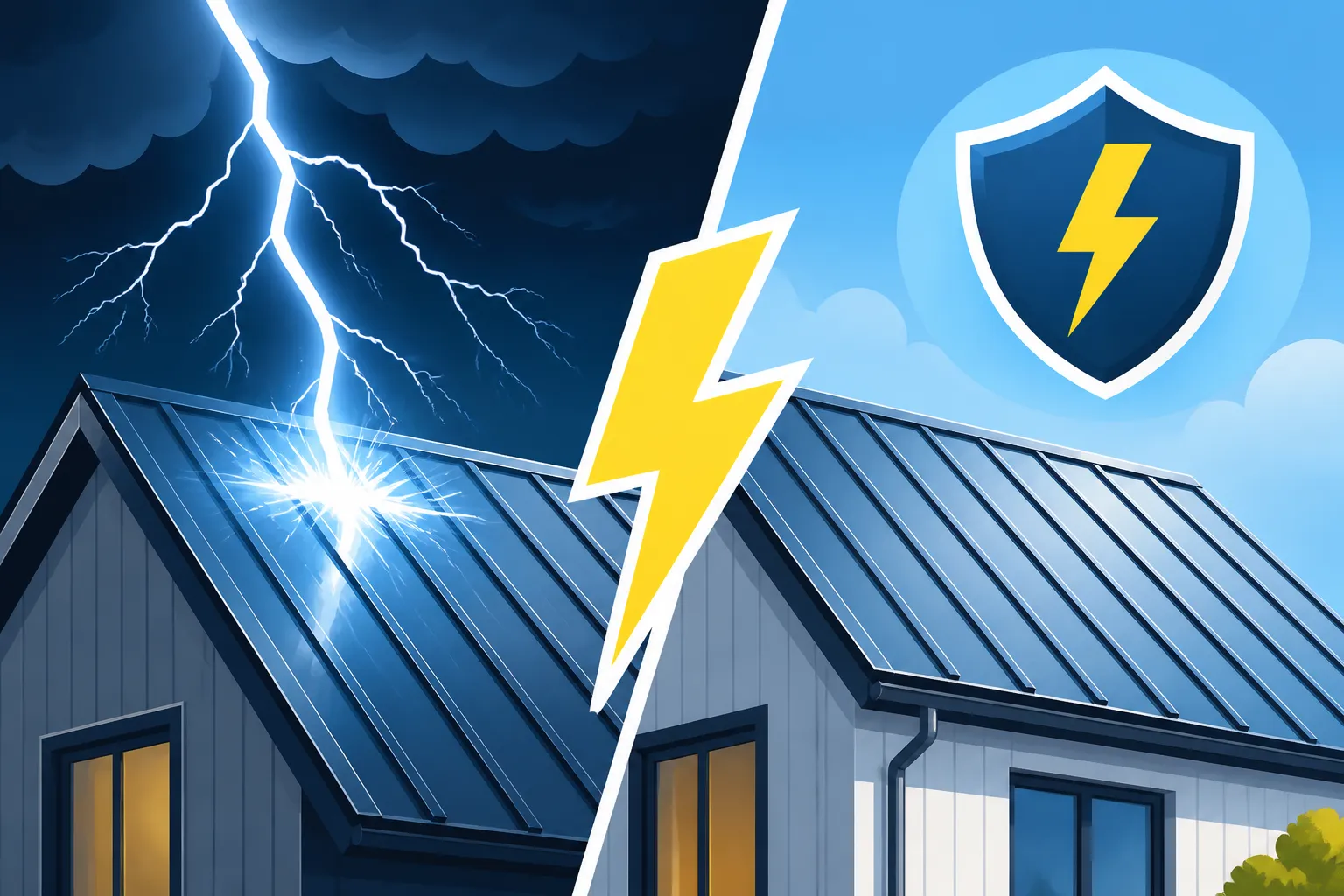
Let's cut right to the chase because this is the question everyone asks first, often with a hint of trepidation. The short answer is: no, a metal roof does not inherently attract lightning any more than any other roofing material. This might seem counterintuitive given that metal is a conductor, but the science behind lightning strikes tells a different story.
Understanding Lightning's Path
Lightning is an incredibly powerful electrical discharge caused by imbalances between storm clouds and the ground, or within the clouds themselves. It’s essentially electricity seeking the path of least resistance to equalize that charge. This path is generally the shortest, most direct route to the ground, usually striking the tallest objects in an area – be it a tree, a tall building, or a utility pole. The material of that object, whether it’s wood, asphalt, or metal, is largely irrelevant before the strike. The lightning doesn't "seek out" conductive materials in the sky; it simply aims for the highest point to complete its circuit to the ground.
Think of it like this: if you have a 100-foot tall pine tree and a 10-foot tall shed with a metal roof next to it, the lightning is far more likely to strike the tree because it’s the tallest object. Its material doesn't make it a magnet for the strike. The primary determinant for a lightning strike is height, not conductivity.
Metal Roofs and Conductivity
Once lightning does strike a structure, that’s where the material comes into play. Yes, metal is an excellent conductor of electricity. This is actually a good thing! If your metal roof were to be struck, its conductive properties allow the massive electrical charge to be distributed safely over the entire roof surface and, crucially, dissipated to the ground through the home's structure or dedicated grounding system.
Unlike a non-conductive material that might resist the charge and potentially cause sparks or heat buildup, a metal roof effectively disperses the energy. It’s not about attracting the strike; it’s about how the roof handles the strike if it occurs. This inherent conductivity, when properly managed through installation, means a metal roof is actually quite safe in a lightning storm. You can learn more about how different materials affect costs by reading our guide on Metal Roof Cost by Material: Steel vs Aluminum vs Copper vs Zinc.
Safety Aspects of a Metal Roof During a Lightning Strike
So, if a metal roof is struck, what actually happens? It's a common fear that the house will just explode or burn down, but that's not how it works, especially with a well-installed metal roofing system.
Dissipating the Charge
When lightning hits a metal roof, the electrical current spreads out rapidly across the entire metal surface. This quick dispersal prevents a concentrated build-up of heat in one spot, which could otherwise lead to significant damage or fire with less conductive materials. Imagine pouring a bucket of water onto a small sponge versus a large, flat surface. The water spreads out much faster and thinner on the large surface. Similarly, the enormous electrical charge from a lightning strike is distributed efficiently by the metal, preventing localized superheating.
This means that while the roof has been struck, the energy is quickly shunted away, reducing the risk of fire or explosive damage that might occur if the charge concentrated in a less conductive or more flammable material.
The Grounding Factor
For a metal roof to truly offer this level of safety, proper grounding is absolutely essential. A professionally installed metal roof will be properly grounded, meaning there's a low-resistance path from the metal roof to the earth. This pathway is typically integrated into the home's existing electrical grounding system or via dedicated lightning protection components. When lightning strikes, the electricity flows through the roof, down the grounded path, and safely into the ground, bypassing the interior of your home and protecting its occupants and electrical systems.
Without proper grounding, even a metal roof could be problematic. This is why choosing a reputable contractor who understands and adheres to local building codes and National Electrical Code (NEC) requirements is paramount. They ensure your metal roof is an integral part of your home's overall safety system. Don't underestimate the importance of professional installation, as it directly impacts the safety and longevity of your investment.
Metal Roofs and Fire Safety
Beyond just conducting electricity, the material itself offers a significant advantage in terms of fire safety, which is especially important when considering the intense heat generated by a lightning strike.
Non-Combustible Nature of Metal
One of the standout benefits of metal roofing is its non-combustible nature. Unlike asphalt shingles or wood shakes, metal simply won't catch fire. This attribute earns metal roofs high fire ratings, often Class A, which is the best possible rating. In the event of a lightning strike, while there might be some localized scorching or damage to the coating, the roof material itself will not ignite.
This dramatically reduces the risk of your home catching fire due to a lightning strike. It’s a huge peace of mind, especially for homes in areas prone to frequent thunderstorms or even wildfires, where embers from nearby sources could also be a concern. If you're comparing options, you might be interested in our article on Metal Roof vs Asphalt Shingle Cost to see the long-term value.
Preventing Secondary Damage
Because a metal roof doesn't ignite, it helps prevent secondary damage to your home and potentially surrounding properties. With a traditional roof, a lightning strike could not only start a roof fire but also potentially send flaming debris onto your lawn or even a neighbor's house. The non-combustible nature of metal mitigates this risk significantly. The energy of the strike is either absorbed and dissipated or, in extreme cases, might cause a small, isolated puncture or burn mark, but it won't spread fire. This makes metal roofs a very resilient option, contributing to overall property safety during severe weather events.
Dispelling Common Metal Roof Lightning Myths
The fear surrounding metal roofs and lightning is deeply rooted in some persistent myths. Let's tackle these head-on.
Myth 1: Metal Roofs are Lightning Rods
This is perhaps the most common misconception. Many people mistakenly believe that having a metal roof is like putting a giant lightning rod on your house. This simply isn't true. A lightning rod, or a lightning protection system, is a specially designed component that is typically a pointed metal rod installed at the highest point of a structure and connected via heavy gauge wires to a dedicated ground. Its purpose is to intercept a lightning strike and safely channel the immense electrical current directly to the earth, protecting the building.
A metal roof, on the other hand, is part of your home’s envelope. While it is conductive, it is not designed to attract lightning. Its primary function is protection from the elements. If it happens to be struck, its metal composition and proper grounding allow it to manage the electrical discharge safely, rather than drawing it in. The roof itself isn't acting as a lightning rod; it's simply a large, conductive surface that handles the strike effectively if it falls on your home. For comprehensive protection, a dedicated lightning protection system would be an addition, not a replacement for the roof.
Myth 2: Increased Risk to Occupants
Another terrifying myth is that living under a metal roof somehow puts you or your family at greater risk during a thunderstorm. This is also false. As discussed, a properly installed and grounded metal roof safely dissipates a lightning strike to the earth. The electricity flows outside the living space, through the roof and grounding system. It does not penetrate the interior of your home or pose a direct threat to occupants.
In fact, because metal roofs are non-combustible, they actually reduce the risk of fire-related injuries or property damage compared to other materials that could ignite. Your house’s internal electrical system and plumbing are more likely to be affected by a lightning strike (due to surges) than the mere presence of a metal roof putting you in danger. Ensuring your home has surge protectors for sensitive electronics is a wise precaution, regardless of your roofing material.
What to Consider for Enhanced Lightning Protection
While metal roofs are inherently safe against lightning, there are steps you can take to enhance your home's protection even further, providing complete peace of mind.
Professional Installation and Grounding
The most crucial factor in ensuring the safety of your metal roof during a lightning storm is professional installation. This isn't a DIY job for a weekend warrior. A qualified metal roofing contractor understands the intricacies of proper installation, which includes integrating the roof into your home's overall grounding system. They will adhere to all local building codes and National Electrical Code (NEC) standards, ensuring that if your roof is struck, the electricity has a safe, unobstructed path to the ground.
When vetting contractors, ask about their experience with metal roof grounding and their adherence to safety standards. Look for contractors who are licensed, insured, and can provide references. You'll want to review their process for ensuring all metal components are properly bonded and grounded. Using a service like Modernize can help you find vetted professionals in your area who specialize in metal roof installations, ensuring they meet these critical safety requirements. A properly installed system minimizes risks and maximizes the lifespan of your roof. Don't forget to ask about warranties, both for materials and workmanship. Our guide on Metal Roof Warranties: Workmanship vs Manufacturer can help you understand what to look for.
Lightning Protection Systems
For those who live in areas with frequent and intense lightning storms, or for very tall structures, a dedicated lightning protection system (LPS) can be installed. This system typically includes:
- Air Terminals (Lightning Rods): These are pointed rods strategically placed at the highest points of your roof to intercept lightning strikes.
- Conductors: Heavy-gauge copper or aluminum cables connect the air terminals to the ground.
- Ground Electrodes: These are rods buried deep in the earth to safely disperse the electrical current.
An LPS is designed to be the preferred path for lightning, drawing the strike to itself and guiding the electricity safely away from your home's structure. While a metal roof itself doesn't attract lightning, an LPS is engineered to do so, providing a controlled pathway for the electrical discharge. Installing an LPS is an additional layer of protection, particularly valuable if your home is one of the tallest structures in the vicinity. This is an entirely separate system from your metal roof, though it can be integrated seamlessly by a qualified installer.
Comparative Table: Metal Roofs vs. Other Roofing Materials and Lightning
To help visualize the differences, here's a quick comparison of how metal roofs stack up against other common roofing materials when it comes to lightning strikes.
| Feature | Metal Roof | Asphalt Shingle Roof | Tile/Slate Roof | Wood Shake Roof |
|---|---|---|---|---|
| Lightning Attraction | No more than other materials (height matters) | No more than other materials (height matters) | No more than other materials (height matters) | No more than other materials (height matters) |
| Conductivity | Excellent | Very Low | Very Low | Very Low |
| Fire Resistance (direct strike) | Non-combustible (Class A) | Combustible (can ignite) | Non-combustible (Class A/B) | Highly combustible (can easily ignite) |
| Damage Potential from Strike | Disperses charge, localized melting/puncture possible | Direct path to structural framing, potential ignition | Shattering, spalling, potential ignition | Direct ignition, rapid fire spread |
| Risk to Occupants (no LPS) | Minimal, if properly grounded | Moderate, due to fire risk and structural damage | Minimal, due to non-combustible nature | High, due to high fire risk and structural damage |
| Grounding Requirement | Essential for safety | Not typically grounded | Not typically grounded | Not typically grounded |
| Overall Safety in Thunderstorm | High, especially with proper installation | Moderate, due to fire risk | High, though potential for shrapnel | Low, due to high fire risk |
As you can see, the non-combustible and conductive nature of a properly grounded metal roof actually makes it a very safe option when considering lightning. It manages electrical discharges far better than many alternatives.
Final Thoughts on Metal Roofs and Lightning
The notion that metal roofs attract lightning more than other types of roofs is a persistent myth, but it's one that the science simply doesn't support. Lightning is primarily drawn to the tallest objects in an area, regardless of their material composition. Once a strike occurs, a properly installed and grounded metal roof actually performs remarkably well, safely dissipating the electrical charge across its surface and into the earth, largely due to its inherent conductivity and non-combustible properties.
Instead of posing a greater risk, metal roofs, when installed correctly by experienced professionals, offer excellent fire resistance and can help protect your home from some of the most devastating effects of a direct lightning strike. If you're looking for an extra layer of protection, a dedicated lightning protection system can always be added. So, rest easy knowing that investing in a durable, long-lasting metal roof doesn't mean inviting more lightning. It means investing in a resilient and safe roofing solution for your home.
Disclaimer
Please remember that this article provides general information and should not be considered professional advice. Always consult with a qualified metal roofing contractor and local building authorities for specific guidance tailored to your home and location. Building codes and safety standards vary by region, and professional assessment is crucial for any roofing project.