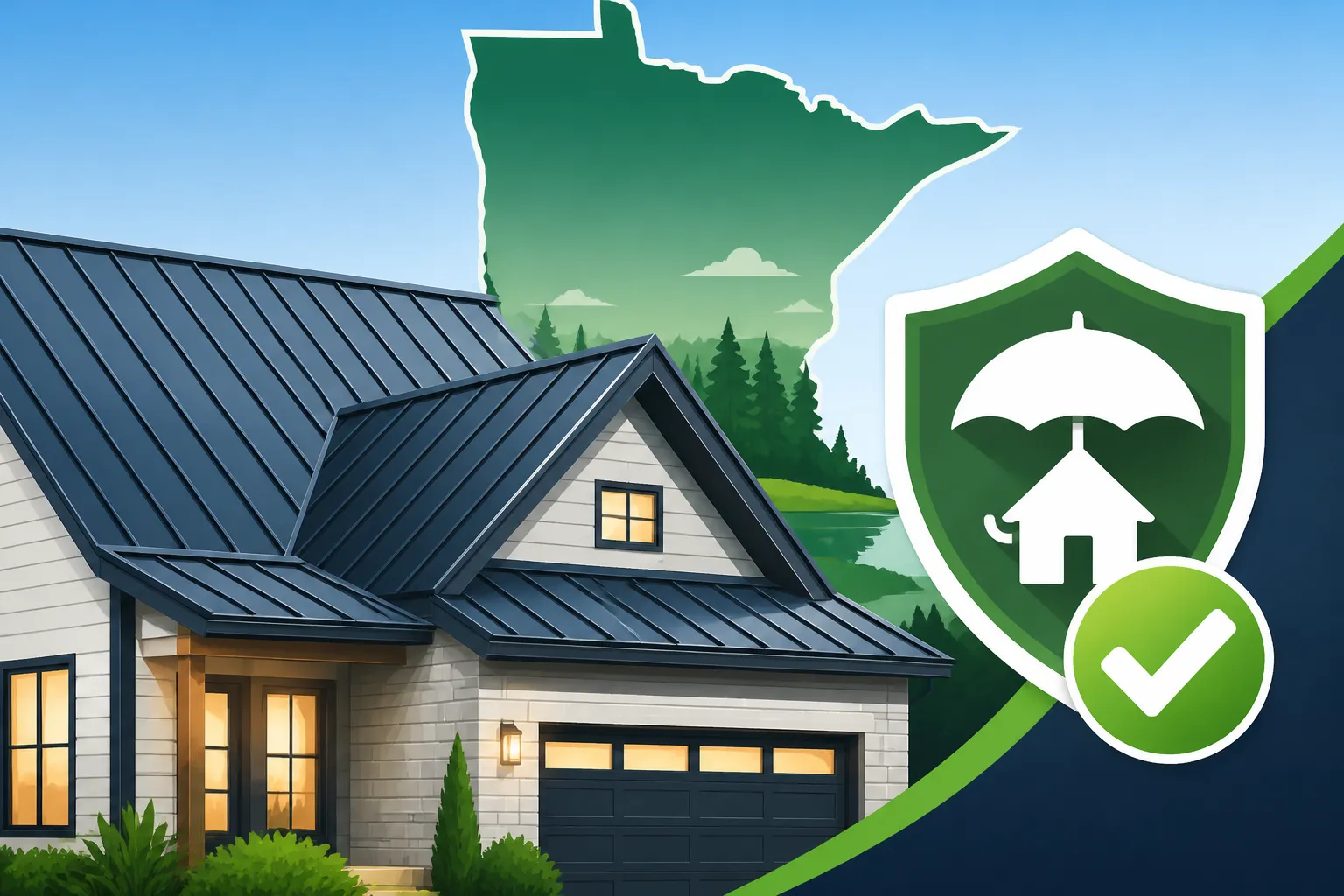
Metal Roof Insurance Discount in Minnesota
It feels like every year, another bill shows up in the mail, reminding you that your home insurance premiums are creeping higher and higher. It’s a frustrating reality for many homeowners, especially when you’re doing everything you can to protect your biggest investment. If you’re a Minnesota homeowner wrestling with these costs and considering a metal roof, you’re in luck. This guide will deep dive into how investing in a metal roof can potentially snag you some welcome insurance discounts in Minnesota, helping you understand the criteria and how to claim those savings.
Understanding Home Insurance in Minnesota
Let's be real, navigating home insurance can feel like trying to solve a puzzle with half the pieces missing. You pay your premiums, hoping you'll never need to file a claim, but in states like Minnesota, the weather can be incredibly unpredictable, making robust coverage a necessity. The cost of that peace of mind often feels like it's perpetually on the rise, leaving homeowners searching for any way to lighten the financial load.
The Rising Cost of Coverage in the North Star State
Home insurance premiums in Minnesota have been on an upward trajectory for quite some time, and it's not hard to see why. We're talking about a state that experiences everything from brutal winters with heavy snow and ice dams to severe thunderstorms, damaging hail, and powerful straight-line winds in the warmer months. Each of these events, when they cause damage, leads to claims, and those claims collectively drive up rates for everyone. It's a tough cycle. Insurers are simply responding to the increased risk and the higher costs associated with repairing or rebuilding homes in a climate that consistently tests structural integrity. This leaves many homeowners feeling stuck, wondering how they can protect their homes better and potentially save money on their monthly outgoings.
The sheer volume of claims stemming from weather-related incidents – think about the massive hailstorms that can sweep across the Twin Cities metro or the blizzard conditions that blanket northern Minnesota – pushes insurance companies to adjust their risk models and, inevitably, their pricing. Homeowners in areas prone to these frequent, high-impact events often bear the brunt of these increases. It’s not just about repairing a damaged roof; it's also about potential water damage, structural issues, and the entire disruption that comes with it. Anything that can mitigate these risks becomes attractive to insurers, and by extension, to your wallet.
How Insurance Companies Assess Roof Risk
When an insurance company looks at your home, the roof is one of the very first things they evaluate for risk. And honestly, it makes perfect sense. Your roof is the primary shield against the elements, and if it fails, the damage to the rest of your home can be extensive and incredibly expensive to repair. They're looking at several factors:
- Age and Condition: An older roof, especially one showing signs of wear and tear, is a huge red flag. Hail pockmarks, missing shingles, or algae growth all signal a roof that's nearing the end of its life or already compromised.
- Material: The type of material your roof is made from is crucial. Asphalt shingles, while common, have a finite lifespan and varying degrees of resistance to hail and wind. Other materials like wood shake might be aesthetically pleasing but can pose fire risks.
- Weather Resilience: Insurers want to know how well your roof can stand up to the specific weather challenges of Minnesota. This means considering its ability to shed snow, resist high winds, and withstand hail impacts. A roof that offers superior protection against these common threats is seen as a lower risk.
- Installation Quality: A poorly installed roof, regardless of material, is a liability. That's why many insurance companies implicitly trust roofs installed by reputable, certified contractors.
- Maintenance: While harder to quantify, a well-maintained roof, evident during an inspection, suggests a proactive homeowner, which is always a plus in an insurer's eyes.
Essentially, anything that makes your roof more durable and less likely to fail under typical Minnesota conditions will be viewed favorably. This is precisely where a metal roof shines and why it becomes a strong contender for those sought-after discounts.
Why Metal Roofs Earn Discounts in Minnesota
There’s a reason more and more Minnesota homeowners are looking up at their roofs and thinking, "Maybe it's time for metal." Beyond the sleek aesthetics, the practical benefits of a metal roof are immense, and these benefits translate directly into lower risk for insurance companies, leading to potential savings for you. It's not just a trend; it's a smart investment, especially in a climate like ours.
Superior Durability Against Minnesota Weather
Minnesota throws everything it has at our homes: blizzards, ice storms, torrential rains, hail, and high winds. Traditional roofing materials, particularly asphalt shingles, can take a beating. Shingles can crack, curl, lift, and lose granules, significantly reducing their effectiveness and lifespan. That's where metal roofing truly sets itself apart.
Consider the immense strength of steel or aluminum panels. They don't absorb water, so they're immune to the freeze-thaw cycles that break down other materials. This means no more worries about ice dams causing water to back up under shingles and into your attic. The smooth, hard surface of a metal roof also allows snow to slide off more easily, reducing the heavy load on your structure, though you might want to consider How Much Does Snow Guard Installation Cost to control those slides! Furthermore, many metal roofing systems, especially standing seam, feature concealed fasteners, protecting them from exposure and potential leaks that can plague exposed fastener systems. They are designed to withstand extreme temperatures, from the bitter cold of January to the scorching heat of July, without warping, cracking, or degrading. This resilience significantly lowers the chances of weather-related damage claims, which is a big win for both you and your insurer.
When strong winds whip through, a metal roof, properly installed, holds firm. Unlike shingles that can be torn off one by one, metal panels are typically interlocked or securely fastened to the roof deck, often able to withstand hurricane-force winds. And hail? While nothing is truly impervious to extreme hail, metal roofs are significantly more resistant to impact damage than asphalt. Many metal roofing products achieve a Class 4 impact resistance rating, the highest available, which directly leads to insurance discounts from many providers. This means those dreaded hail showers, while still nerve-wracking, are far less likely to cause widespread damage that requires costly repairs or a full replacement.
Fire Resistance and Lower Risk
When we think about home safety, fire protection is usually at the top of the list. And here again, metal roofs offer a significant advantage that insurance companies recognize. Metal is, by nature, non-combustible. This isn't just a minor detail; it's a huge factor in reducing fire risk for your home.
Unlike wood shakes or even some types of asphalt shingles that can catch fire from embers, lightning strikes, or nearby wildfires, metal roofs provide a substantial barrier. Embers from a chimney, stray fireworks, or even a wildfire threat in more rural parts of Minnesota are far less likely to ignite a metal roof. Many metal roofing materials carry a Class A fire rating, which is the highest possible rating for exterior fire resistance. This level of protection means that not only is your home better safeguarded against external fire threats, but it also helps prevent the spread of fire from a neighboring property. Insurance companies are all about mitigating risk, and a Class A fire-rated roof directly translates to a lower likelihood of fire-related claims, which can result in attractive discounts on your premiums. This is especially true in areas with higher wildfire risks, though even in urban settings, the added fire resistance is a valuable asset.
Long-Term Value and Reduced Claims
The upfront cost of a metal roof can be higher than traditional asphalt, and that's often a point of hesitation for homeowners. However, when you consider the lifespan and durability, a metal roof often provides superior Metal Roof Cost vs Lifespan Value over the long haul. This long-term value is a significant factor in how insurance companies view your home.
Think about it: an asphalt shingle roof typically needs replacement every 15-20 years, sometimes sooner in harsh Minnesota conditions. Each replacement is a significant expense and a potential disruption. A quality metal roof, on the other hand, can easily last 50 years or more with proper care, often outliving the home itself. This extended lifespan means fewer roof replacements and, crucially, fewer opportunities for damage-related claims over the decades. From an insurer's perspective, a roof that needs to be replaced less frequently and is more resistant to common damage sources means fewer payouts for them. This reduced long-term risk often translates directly into Metal Roof Insurance Savings & Discounts for you.
Furthermore, the robust nature of metal roofs means they're less susceptible to minor damage that might not warrant a full claim but could still require costly repairs. For instance, small hail dents on an asphalt roof might compromise its integrity, leading to leaks down the line, whereas minor cosmetic damage on a metal roof often doesn't affect its protective function. This fewer incidence of "nuisance" claims or major structural damage contributes to a homeowner's positive claims history, which can also help maintain lower premiums over time. It’s an investment that pays dividends not just in protection, but in sustained financial savings on your home insurance.
Navigating Insurance Discounts for Your Metal Roof
So, you're convinced that a metal roof is the way to go for your Minnesota home, not just for its incredible durability but also for those sweet insurance discounts. But how do you actually get them? It's not always automatic, and you need to be proactive. Getting a metal roof isn't just about the installation; it's also about understanding the financial benefits and making sure your insurance provider recognizes them.
What to Ask Your Insurance Provider
This is perhaps the most crucial step. Don't assume anything. Before you even finalize your metal roof plans, pick up the phone and talk to your current insurance provider. This conversation can save you a lot of hassle and potentially lead to bigger savings.
Here are the key questions you absolutely need to ask:
- "What discounts do you offer for homes with metal roofs in Minnesota?": Be direct. Some companies might offer specific "metal roof discounts," while others might factor it into broader categories like "impact-resistant roof discounts" or "fire-resistant material discounts."
- "Do you offer discounts for Class 4 impact-resistant roofs?": Many metal roofs qualify for the highest impact resistance rating. This is a common and often substantial discount, particularly in hail-prone areas of Minnesota. Make sure your chosen metal roofing product carries this rating if you want to maximize savings.
- "What documentation do I need to provide to qualify for these discounts?": They might ask for manufacturer specifications, installation certificates, or a copy of your building permit. Having this information ready after your installation will streamline the process.
- "How does a metal roof affect my premium overall? Can you give me a before-and-after estimate?": Get an idea of the actual savings you can expect. Ask for a specific quote with an asphalt roof and then with a metal roof. This helps you quantify the long-term ROI.
- "Are there any specific types of metal roofs or installation methods that qualify for better discounts?": For instance, a Standing Seam Metal Roof Cost might be higher upfront, but its superior wind resistance and concealed fasteners could lead to better insurance incentives than, say, a more basic corrugated panel.
- "Do you recommend a wind mitigation inspection once the roof is installed?": Some states, like Florida, have robust wind mitigation programs that significantly reduce premiums. While Minnesota's program might not be as formalized, showing that your roof meets high wind-resistance standards can still be beneficial.
Speaking with a knowledgeable agent from companies like State Farm, Allstate, or Farmers Insurance, all of whom operate in Minnesota, can provide specific details about their offerings. Remember, not all insurers are the same, so what one company offers, another might not.
Essential Documentation for Claims
Once your beautiful new metal roof is installed, your job isn't quite over regarding insurance. You need to gather the right paperwork to actually prove your roof's superior qualities and claim those discounts. Without the proper documentation, your insurance company might not be able to apply the savings you're due.
Here’s a checklist of documents you should keep readily accessible:
- Manufacturer’s Specifications: This includes brochures, spec sheets, or warranty information from the metal roofing manufacturer (e.g., McElroy Metal, Metal Sales). These documents will often state the fire rating (Class A), wind resistance rating, and impact resistance rating (Class 4), which are key for discounts.
- Installation Certificate/Contract: A detailed contract from your installer outlining the scope of work, the specific materials used, and confirming the installation meets local building codes and manufacturer guidelines. If you chose a manufacturer-certified installer, even better. The quality of installation is paramount to the roof's performance.
- Permit and Inspection Records: In Minnesota, replacing a roof typically requires a permit from your local municipality. Keep copies of the approved permit and any final inspection sign-offs. This confirms the work was done to code.
- Before-and-After Photos: While not always strictly required by insurers, having photos of your old roof and your new metal roof can serve as great visual proof of the upgrade, especially if there was pre-existing damage that prompted the replacement.
- Warranty Information: Both the manufacturer's warranty on the materials and your contractor's warranty on their workmanship are important. They demonstrate the expected longevity and reliability of your new roof. Understanding Metal Roof Warranties: Workmanship vs Manufacturer is crucial here.
Submitting these documents promptly to your insurance agent will help them update your policy and apply any eligible discounts. Don't be shy about following up to ensure everything has been processed correctly.
Key Insurance Providers in Minnesota Offering Discounts
While specific discount percentages can vary greatly based on your exact policy, location, and the insurer's underwriting rules, many major insurance carriers that operate in Minnesota recognize the value of metal roofs. They understand the reduced risk profile and are often willing to pass some savings on to you.
Here are some of the key players and what you might expect:
- State Farm: Often provides discounts for impact-resistant roofs, which many metal roofing systems qualify for. They look at the overall risk reduction.
- Allstate: Known for offering various home protection discounts, including those for superior roofing materials that can withstand severe weather.
- Farmers Insurance: Frequently offers discounts for Class 4 impact-resistant roofs. It's one of their prominent ways to reward homeowners who invest in durable materials.
- Liberty Mutual: They, too, often have specific discounts for roofs made with certain impact-resistant materials.
- American Family Insurance: As a regional player with a strong presence in the Midwest, they are keenly aware of Minnesota's weather challenges and often incentivize homeowners who fortify their homes with durable roofing.
- Travelers: Offers credits for homes with features that make them more resistant to wind and hail, which metal roofs excel at.
- Nationwide: Generally offers protective device and construction discounts, which can encompass the benefits of a metal roof.
It's highly recommended to get multiple quotes. Don't just stick with your current provider. Contact several of these companies, tell them you're installing a metal roof, and ask specifically about their available discounts for homes with metal roofs in Minnesota. You might be surprised at the difference in savings offered by different Insurance Companies That Discount Metal Roofs. Comparing these offers side-by-side is the best way to ensure you're getting the most bang for your buck on your new roof investment.
Maximizing Your Savings Beyond the Discount
Getting a discount for your metal roof is fantastic, but savvy homeowners know that the real game is in maximizing every possible saving and benefit. It's not just about the immediate premium reduction; it's about making a truly informed decision that pays off in the long run. There are additional strategies and considerations that can amplify the financial benefits of your metal roof investment in Minnesota.
Understanding Wind Mitigation and Class 4 Ratings
We've touched on this briefly, but it deserves a deeper dive because it's where some of the most significant insurance savings can be found, especially in a state that experiences strong winds and hail. Wind mitigation isn't just a buzzword; it refers to features or improvements that strengthen a home against wind damage, and a robust metal roof is a prime example.
Many insurance companies offer specific "wind mitigation credits" or "wind-resistant construction discounts." These aren't always explicitly called "metal roof discounts" but are tied to the inherent qualities of metal roofing. For instance, a properly installed metal roof, especially a standing seam system, can withstand much higher wind speeds than asphalt shingles. When your roof is installed according to high-wind-resistant codes, your insurer sees a significantly reduced risk of catastrophic damage during a major storm. This directly translates to lower risk for them and thus lower premiums for you.
The Class 4 impact resistance rating is another golden ticket. This rating is issued after rigorous testing where the roofing material is struck by steel balls mimicking large hail. A Class 4 rating means the material can withstand significant hail impact without breaching. In Minnesota, where hail storms are a common occurrence, having a Class 4-rated metal roof is a huge advantage. Insurance companies often offer substantial discounts for this rating, sometimes reducing the hail portion of your premium by 20% or more. This isn't just about reducing your out-of-pocket costs; it can also help you avoid the heartache and hassle of dealing with hail damage claims, which can impact your future insurability. Always confirm with your installer that the specific metal roofing product you choose carries a Class 4 rating and ask for the documentation to prove it. For more details, you can explore topics like Class 4 Impact-Resistant Roof Insurance Discount and Wind Mitigation and Roof Premium Credits.
The Role of Professional Installation and Warranties
You've heard the saying, "You get what you pay for," and nowhere is that truer than with a roof installation. Even the highest quality metal roofing materials can underperform if they're not installed correctly. Insurance companies know this, and it plays a subtle but significant role in how they view your roof.
Hiring a reputable, experienced metal roofing contractor is not just about ensuring your roof looks good; it’s about guaranteeing its long-term performance and, by extension, its insurance benefits. A professional contractor will be well-versed in local building codes, manufacturer specifications, and best practices for installing metal roofs in Minnesota's challenging climate. They will know how to properly seal seams, install flashing around chimneys and vents, and secure panels to withstand high winds and heavy snow loads. When you work with a certified installer, you're less likely to encounter problems down the road that could lead to claims, such as leaks from improper sealing or panels coming loose in a storm. Asking questions from the Questions to Ask a Metal Roofing Contractor Before You Hire guide can help ensure you select the right professionals.
Furthermore, a professional installation typically comes with a strong workmanship warranty, complementing the manufacturer's material warranty. These warranties aren't just for your peace of mind; they're also a subtle signal to your insurer that the roof is built to last and backed by accountability. Some insurance companies may even offer better rates or be more amenable to discounts if they know the installation was performed by a highly-rated, manufacturer-certified contractor. Always ensure you receive and understand both the material and labor warranties. This provides an additional layer of protection and speaks volumes about the quality and reliability of your metal roof.
Comparing Quotes and Long-Term ROI
Making the switch to a metal roof is a big decision, financially speaking. While the upfront cost is usually higher than asphalt, the long-term return on investment (ROI) is often compelling. This is where getting multiple quotes and looking at the big picture truly pays off.
Don't settle for the first estimate you receive. Contact several qualified metal roofing contractors in Minnesota and get detailed bids. Each bid should break down material costs, labor, disposal of old materials, and any extras like underlayment or snow guards. This allows you to compare "apples to apples" and negotiate effectively. Remember, the cheapest bid isn't always the best. Look for value, experience, and comprehensive warranties. Understanding what What Should Be Included in a Metal Roof Estimate will help you evaluate these bids.
Once you have your installation quotes, go back to the insurance comparison. Get firm quotes from multiple insurance providers with your new metal roof factored in. You might find that one company offers significantly better discounts than another, even if their base rates are similar. Use tools or consult with your financial advisor to project the long-term savings from reduced premiums, fewer repairs, and the extended lifespan of your metal roof. Factor in that a metal roof can also Does a Metal Roof Increase Home Value? to your property, making it more attractive to future buyers. When you combine the insurance savings, the reduced maintenance, and the potential increase in home value, the higher initial investment often makes perfect financial sense over the 30-50+ year lifespan of a metal roof, making it a very strong argument for its long-term ROI.
Disclaimer
Please remember that insurance policies and discount availability can vary widely based on your specific location within Minnesota, the individual insurance provider, the specifics of your policy, and current underwriting guidelines. The information provided in this article is for general informational purposes only and does not constitute financial or insurance advice. Always consult directly with a licensed insurance agent or financial professional to discuss your individual circumstances and obtain accurate quotes and policy details before making any decisions.