How Metal Roofs Handle Expansion and Contraction
One of the most common worries I hear from homeowners considering a metal roof is about how it handles temperature changes. You're probably thinking, "Doesn't metal expand when it's hot and contract when it's cold? Won't that cause problems, like buckling or leaks, over time?" It's a completely valid concern, and you're right to ask! This guide will dive deep into the fascinating world of thermal movement in metal roofing, explaining the science behind it, the ingenious engineering solutions that keep your roof secure, and what to look for to ensure your metal roof performs beautifully for decades to come.
Understanding Thermal Expansion and Contraction in Metal Roofs
Metal, by its very nature, responds to temperature fluctuations. It’s not something unique to roofing; think about bridges with expansion joints or even railway tracks that are deliberately laid with gaps. Your roof is exposed to some of the most extreme temperature swings imaginable, from the scorching heat of a summer afternoon in Arizona to the biting cold of a winter night in Minnesota. This constant movement is what we call thermal expansion and contraction, and understanding it is fundamental to appreciating the marvel of modern metal roofing.
The Science Behind the Movement
At a microscopic level, all materials are made up of atoms and molecules that are constantly vibrating. When you add heat energy, these vibrations become more vigorous, causing the atoms to push further apart. This increased spacing between atoms manifests as the material expanding in size. Conversely, when the temperature drops, the atoms lose energy, their vibrations lessen, and they pull closer together, causing the material to contract.
This phenomenon is quantified by a material's "coefficient of thermal expansion" (CTE). Essentially, the CTE tells us how much a material will change in length per unit of length for every degree of temperature change. Different metals have different CTEs. For instance, aluminum tends to expand and contract more significantly than steel over the same temperature range. Imagine a metal roof panel that's 20 feet long. On a sunny 90-degree Fahrenheit day, that panel might be several inches longer than it was on a frosty 20-degree Fahrenheit morning. If that movement isn't properly accommodated, it can lead to serious issues like panels buckling, fasteners pulling out, or even seams failing, allowing water to penetrate. This is why the engineering behind metal roofing is so crucial.
Why Metal Roofs Are Particularly Susceptible
It's true that metal roofs exhibit more noticeable thermal movement compared to other common roofing materials like asphalt shingles or clay tiles. Asphalt shingles, for example, are a composite material and tend to be much more flexible, absorbing some movement internally, but they also degrade more quickly under constant flexing. Clay or concrete tiles are rigid but installed in smaller, overlapping units, allowing tiny movements between individual tiles. However, they are also prone to cracking under extreme conditions if not installed correctly.
Metal roofing, especially in the form of long, continuous panels, magnifies the potential for movement. A typical metal panel on a residential home can be anywhere from 10 to 40 feet long. Over such lengths, even a small coefficient of thermal expansion can result in significant linear changes. For example, a 30-foot steel panel might expand or contract by about three-quarters of an inch over a 100-degree Fahrenheit temperature swing, which is a common daily or seasonal fluctuation in many regions. An aluminum panel of the same length could move almost twice that amount. This isn't a sign of weakness; it's just the inherent property of the material. The "susceptibility" isn't a flaw, but rather a design challenge that has been thoroughly overcome by modern roofing technology. The key lies not in preventing the movement (which is impossible), but in allowing it to happen freely and harmlessly.
Engineering Solutions for Thermal Movement
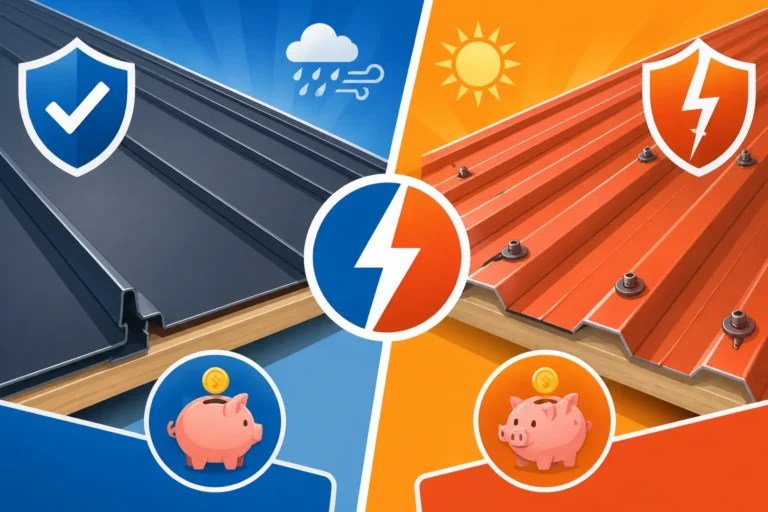
The beauty of modern metal roofing lies in its sophisticated design, specifically engineered to manage these temperature-induced movements without compromising the roof's integrity or performance. The two primary categories of metal roofing — hidden fastener and exposed fastener systems — each employ different but equally effective strategies.
Hidden Fastener Systems (Standing Seam)
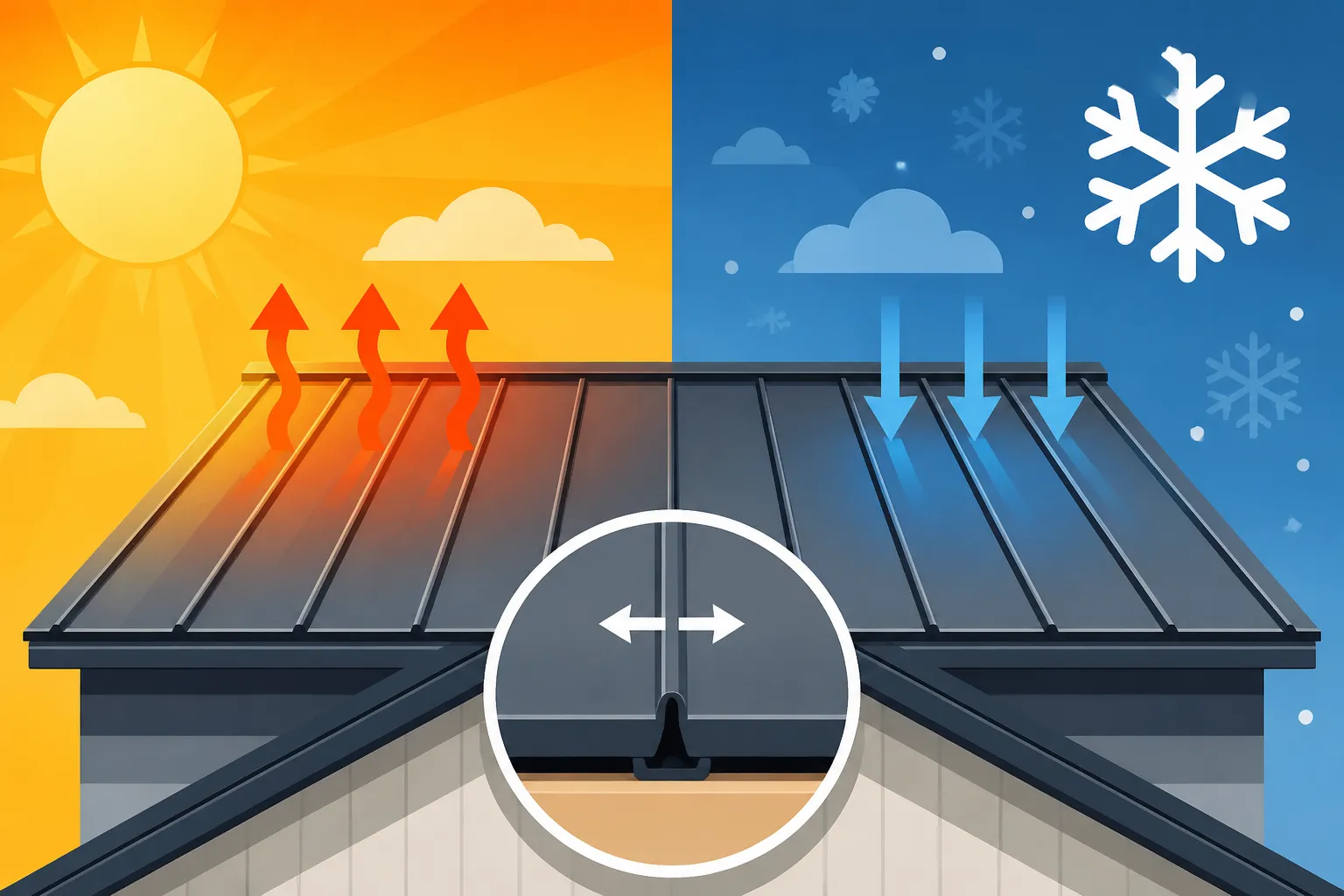
When you look at a beautiful standing seam metal roof, you'll notice one thing immediately: no visible screws. This is not just for aesthetics; it's a critical design feature for thermal movement. Standing seam systems, like those from companies such as Englert or McElroy Metal, utilize a clever system of clips that attach the panels to the roof deck. These clips are designed with a built-in slot or channel that allows the metal panel to slide freely as it expands and contracts.
Imagine your metal panel as a train on a track. The clips act like the track, holding the train securely but allowing it to move forward and backward. The panels are mechanically seamed together, or "snapped" together (in the case of snap-lock standing seam), forming a watertight interlock. As the panel heats up, it elongates and slides slightly within these clips. When it cools, it retracts, also sliding within the clips. This controlled movement prevents stress from building up in the panels, which eliminates buckling, warping, and the potential for fasteners to loosen or pull through the metal. This approach ensures a long-lasting, low-maintenance roof that remains watertight for decades. If you're curious about the mechanics, a deep dive into What Is a Standing Seam Metal Roof? can show you just how these intricate systems work to provide superior protection.
Exposed Fastener Systems (Corrugated, R-Panel)
Exposed fastener systems, such as corrugated or R-panel metal roofs, are often seen on barns, commercial buildings, and increasingly on homes, especially in more rustic or industrial architectural styles. As the name suggests, the fasteners (screws) are driven directly through the metal panels and into the roof decking or purlins, remaining visible on the roof surface. While these systems are typically more budget-friendly than standing seam, their design requires specific considerations to manage thermal movement.
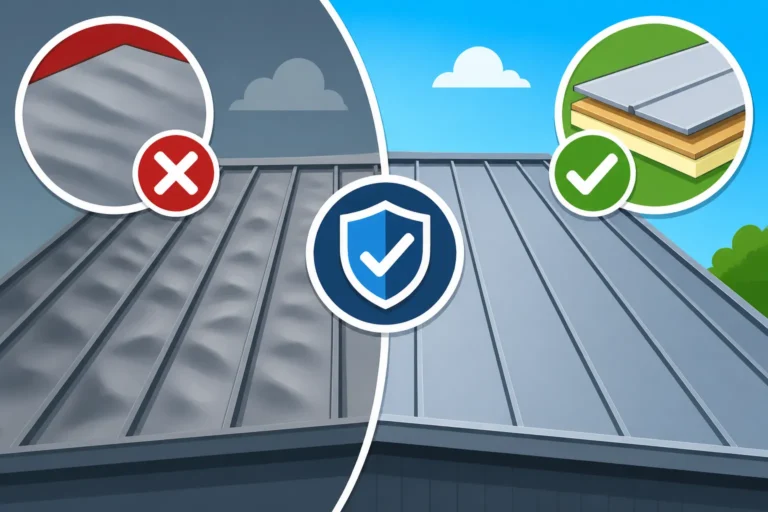
The primary strategy here involves slightly oversizing the screw holes. This might sound counterintuitive, as you want a watertight seal, but it's crucial. The slightly larger hole provides a small amount of play for the panel to move around the fastener shank without tearing the metal. Each screw also includes a durable, weather-resistant washer (usually made of neoprene or EPDM rubber) that compresses when the screw is tightened, creating a watertight seal while still allowing for some minor movement. These washers are essential, acting as a flexible buffer between the screw head and the moving panel. Furthermore, strategic fastening patterns, often with fixed points at the eaves and allowing movement towards the ridge, help distribute and control the thermal shifts. Improper installation with exposed fasteners, such as overtightening screws or using fasteners without the correct washers, can lead to premature wear, leaks, and "oil canning" (visible waviness in the panels) as the metal tries to move but is rigidly held. This is why understanding How Many Screws Per Sheet of Metal Roofing and their proper installation is so important for exposed fastener systems to function correctly and avoid issues down the road.
Impact of Different Metal Types and Coatings
The type of metal chosen for your roof and the coating applied to it play significant roles in how well your roof handles expansion and contraction, as well as its overall longevity and performance. Not all metals behave the same way under temperature stress, and even the color of your roof can influence its thermal dynamics.
Material-Specific Expansion Properties
As we touched on earlier, different metals have distinct coefficients of thermal expansion. This means they will expand and contract at different rates and by different amounts given the same temperature change.
- Steel (Galvalume, Galvanized): Steel is one of the most common materials for residential and commercial metal roofing. It has a moderate CTE, meaning its expansion and contraction are manageable with proper installation techniques. It's robust and widely available.
- Aluminum: Aluminum has a higher CTE than steel, meaning it will expand and contract more dramatically over the same temperature range. This isn't a problem, but it requires even more careful consideration in panel design and clip systems to accommodate the increased movement. Aluminum is also lighter and inherently rust-resistant, making it excellent for coastal environments.
- Copper: Copper has an even higher CTE than aluminum, making it one of the most active metals in terms of thermal movement. Copper roofs are renowned for their beauty and extreme longevity, but they require expert installation by contractors highly skilled in working with this dynamic metal to ensure movement is properly managed.
- Zinc: Zinc, while possessing a notable CTE, is unique in its ability to self-heal minor scratches through its patina development. Its thermal movement properties are well understood and accounted for in specialized zinc roofing systems.
Understanding these differences is crucial when selecting a metal roof. A contractor installing a copper roof, for instance, needs to have a deeper understanding of thermal dynamics than one installing a steel roof, simply because the movement is more pronounced. You can learn more about the unique characteristics of each material by checking out Metal Roofing Materials Compared: Steel, Aluminum, Copper & Zinc.
Here's a simplified table comparing the approximate linear thermal expansion of common roofing metals over a 100°F (55.5°C) temperature change for a 12-foot long panel:
| Metal Type | Approximate CTE (x 10⁻⁶ in/in/°F) | Approx. Expansion/Contraction for 12 ft. panel (100°F change) | Notes |
|---|---|---|---|
| Steel | 6.5 | ~0.094 inches (just under 1/10 inch) | Common, robust, manageable movement. |
| Aluminum | 13.0 | ~0.187 inches (almost 1/5 inch) | Higher movement requires careful design, naturally rust-resistant. |
| Copper | 9.4 | ~0.136 inches (just under 1/7 inch) | Significantly more movement than steel, excellent longevity, premium material. |
| Zinc | 17.0 | ~0.245 inches (almost 1/4 inch) | Highest movement, self-healing patina, specialized installation. |
Note: These are approximate values and can vary slightly based on specific alloys and temperature ranges. The key takeaway is the relative difference between materials.
The Role of Paint Systems and Coatings
Beyond the base metal, the paint system or coating applied to your metal roof also plays a role in managing thermal stress, primarily by influencing the roof's temperature. High-quality paint systems do more than just make your roof look good; they're engineered to withstand the constant flexing and movement that thermal expansion and contraction cause.
- Color Choice: Lighter colors, especially those with "cool pigment" technology (often referred to as ENERGY STAR rated colors), reflect a significant amount of solar radiation. By reflecting heat rather than absorbing it, these lighter colors keep the roof panels cooler. A cooler panel experiences less extreme temperature swings and, consequently, less expansion and contraction. This not only reduces stress on the roof system but can also lead to energy savings by lowering cooling costs for your home.
- Coating Flexibility: The paint itself needs to be incredibly flexible. Coatings like PVDF (Kynar 500 or Hylar 5000) are renowned for their exceptional flexibility, color retention, and resistance to chalking and fading. These coatings are designed to stretch and contract along with the metal substrate without cracking, peeling, or losing adhesion. Cheaper coatings, or those not formulated for the dynamic nature of metal, might become brittle over time and fail, exposing the metal to the elements and leading to premature degradation. When comparing options, understanding PVDF vs SMP Paint Coatings for Metal Roofs can help you make an informed decision on durability and performance.
In essence, a superior paint system not only protects the metal but actively contributes to the roof's ability to gracefully manage the inevitable thermal dance.
Design and Installation Best Practices
Even with the most advanced materials and coatings, the performance of a metal roof hinges critically on its design and, perhaps most importantly, its installation. A metal roof isn't just a collection of panels; it's an integrated system that requires precision and expertise to function as intended, especially when it comes to accommodating thermal movement.
Proper Panel Lengths and Seam Design
One of the fundamental principles in managing thermal movement is to control the overall length of the metal panels. While some continuous panels can run from the eave to the ridge without a break, very long roof slopes might benefit from splitting panels or incorporating expansion joints to prevent excessive cumulative movement. For instance, on a very long commercial roof, designers might specify a "floating" eave or ridge detail that allows more freedom of movement at one end. For residential roofs, the panel length is typically optimized for the specific slope to minimize the number of seams while still allowing for natural expansion and contraction.
The design of the seams themselves is also paramount. In standing seam systems, the interlocking or mechanically seamed connections are designed to be flexible. They essentially allow a microscopic "breathing" motion. The specific profile of the seam (e.g., mechanical double lock, snap lock) dictates how this movement is accommodated and how robust the watertight seal is. For exposed fastener systems, correct overlapping of panels, often with specific sealants or butyl tape at the laps, is essential to ensure that as panels shift, they maintain a secure, water-resistant barrier. Without proper attention to panel length and seam design, even a minor temperature change could lead to stress points, causing leaks or aesthetic issues like oil canning. Thinking about how to keep water out, it's worth exploring guides like How to Prevent Leaks on a Metal Roof to see the various design elements that work together.
Expert Installation is Key
This is where the rubber truly meets the road. You can invest in the highest quality metal panels from a reputable manufacturer like Sheffield Metals or PAC-CLAD, but if they aren't installed correctly, all the advanced engineering in the world won't matter. An experienced metal roofing contractor understands the nuances of thermal movement and knows how to install a system that allows for it.
Here’s why expert installation is non-negotiable:
- Clip Placement and Fastening: For standing seam, clips must be installed at precise intervals and fastened correctly to the roof deck, allowing the panels to slide freely without binding.
- Screw Installation (Exposed Fastener): For exposed fastener systems, screws must be driven to the correct torque – tight enough to compress the washer for a seal, but not so tight that they impede the panel's movement or strip the hole. The installer also needs to know where fixed-point fastening is required and where panels need to "float."
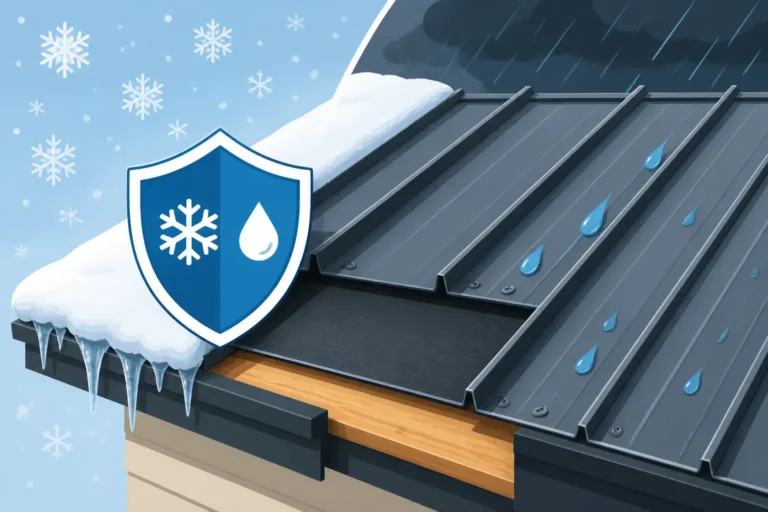
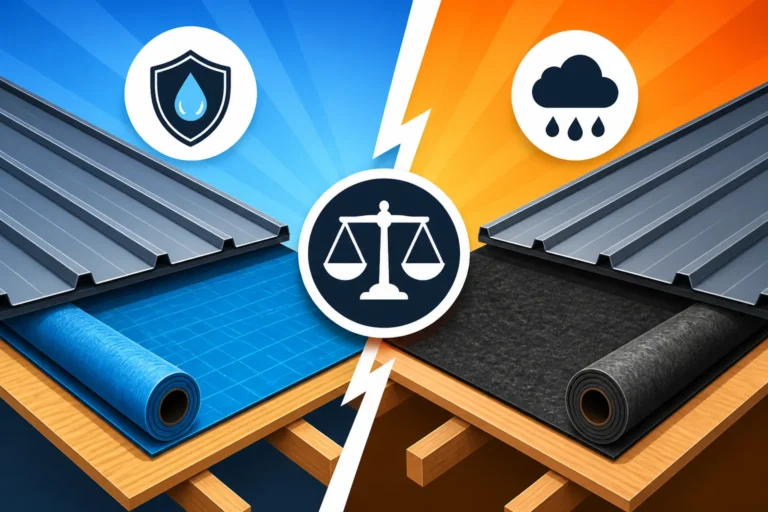
- Proper Underlayment: While not directly managing thermal movement, a high-quality underlayment, like synthetic underlayment or ice and water shield, acts as a critical secondary water barrier. It protects the roof deck if any moisture were to get past the metal panels, which is especially important if thermal movement were to ever compromise a seal. You can learn more about its importance in a Metal Roof Underlayment and Ventilation Guide.
- Flashing and Trim Details: These are often the most complex parts of any roof installation and are crucial for preventing leaks. Expert installers know how to design flashing around chimneys, skylights, and valleys that moves with the roof without breaking its seal.
Choosing a contractor who specializes in metal roofing is paramount. They should be familiar with the specific type of metal system you've chosen and have a proven track record. Platforms like Modernize can be incredibly helpful for connecting homeowners with qualified professionals in their area who understand these specialized requirements. When you're ready to start your project, resources like How to Hire a Metal Roofing Contractor and Manufacturer-Certified Metal Roof Installers Explained offer excellent advice on vetting potential candidates and ensuring you get a team that knows their stuff. A truly professional installer accounts for every single detail, ensuring your metal roof is installed to last and withstand the test of time and temperature.
Addressing Common Concerns and Misconceptions
Despite the robust engineering and proven performance of metal roofs, homeowners often have legitimate concerns about how thermal expansion and contraction might impact their daily lives or the long-term integrity of their roof. Let's tackle a couple of the big ones head-on.
Noise from Expansion and Contraction
One of the most frequently asked questions about metal roofs is, "Will it be noisy when it expands and contracts, especially when it rains?" It's a valid concern, often fueled by images of tin roofs on old sheds. The reality, however, is far more nuanced. While metal can make sounds as it expands and contracts, modern residential metal roofs are designed to minimize this.
The sounds, often described as "pings," "creaks," or "ticking," are largely due to minor friction between the moving metal panels and the fasteners or substructure. This phenomenon is often more pronounced with exposed fastener systems if not installed perfectly, or in cases of extreme temperature swings combined with less robust underlayment. For standing seam systems, the sliding clip mechanism is specifically engineered to allow silent movement.
Several factors mitigate noise:
- Proper Installation: This is the biggest factor. Correctly installed clips and fasteners allow the panels to move freely, reducing friction and the associated noise. An expert installer ensures that panels aren't "bound" or held too rigidly.
- Roof Deck and Underlayment: A solid roof deck (e.g., plywood or OSB) underneath the metal roof, combined with a high-quality felt or synthetic underlayment, acts as a sound-dampening layer. This helps absorb any minor noises before they can resonate into your living space.
- Insulation: The insulation in your attic is also a fantastic sound barrier, further muffling any external noises, including rain, hail, and thermal movement.
- Thermal Breaks: Some advanced systems incorporate thermal breaks or specialized spacers between the metal and the roof deck to further reduce direct contact and sound transmission.
While you might hear a faint tick or pop now and then, especially during rapid temperature changes (like sunset after a hot day or sunrise after a cold night), it's rarely a significant or intrusive issue with a properly installed residential metal roof. If you're particularly sensitive to sound, discussing this with your contractor and considering a standing seam system with robust underlayment and good attic insulation can provide peace of mind. For more detailed insights, checking out articles like Do Metal Roofs Make Noise When It Rains? can offer further reassurance. The noise concern is often overblown, and most homeowners find the occasional sound barely noticeable or even charming.
Long-Term Durability and Maintenance
Another common misconception is that the constant movement from thermal expansion and contraction will inevitably lead to fatigue, loosening of fasteners, or cracking of the metal over time, thereby shortening the roof's lifespan. The truth is quite the opposite. Modern metal roofs are built for this dynamic environment, and their design accounts for it, which is why they boast such impressive lifespans.
- Engineered for Movement: The clips, oversized fastener holes, and flexible seams are specifically designed to accommodate decades of daily and seasonal movement. Materials like steel, aluminum, copper, and zinc are selected not just for their strength and weather resistance but also for their ability to endure repeated cycles of expansion and contraction without material fatigue. High-quality metal roofing panels are typically tested to withstand thousands of these cycles.
- Fastener Technology: For exposed fastener systems, the screws themselves are engineered with specific threads, coatings, and integrated rubber washers (EPDM is common) that maintain their seal and flexibility over decades, even with continuous movement. These washers are resistant to UV degradation and extreme temperatures.
- Minimal Maintenance, Not No Maintenance: While metal roofs are remarkably low-maintenance compared to asphalt shingles, "low maintenance" isn't "no maintenance." It's a good practice to periodically inspect your metal roof, especially after severe storms. For exposed fastener roofs, a visual check every few years to ensure all screws are snug and washers are intact can be beneficial. Any loose fasteners can often be simply tightened. For standing seam, maintenance is even less, usually just ensuring gutters are clear and no debris is accumulating. This proactive approach ensures minor issues don't become larger ones.
The durability of metal roofs, often spanning 50 years or more, is a testament to how effectively they handle thermal expansion and contraction. This engineered resilience is one of their greatest advantages. Far from being a weakness, the ability to "breathe" with temperature changes is a core reason why they outlast almost every other roofing material. If you're looking for a comprehensive overview of how long you can expect your investment to last, "Metal Roof Lifespan: How Long Do They Last?" is an excellent resource. This built-in adaptability makes metal roofing an incredibly reliable and sustainable choice for virtually any climate.
Disclaimer
Please remember that the information provided in this guide is for general informational purposes only and does not constitute professional advice. While we strive to offer accurate and up-to-date content, roofing is a complex field that requires expert assessment for specific projects. Always consult with a qualified and licensed metal roofing contractor before making any decisions related to your roof. Building codes, material specifications, and installation techniques can vary significantly by location and roof type.