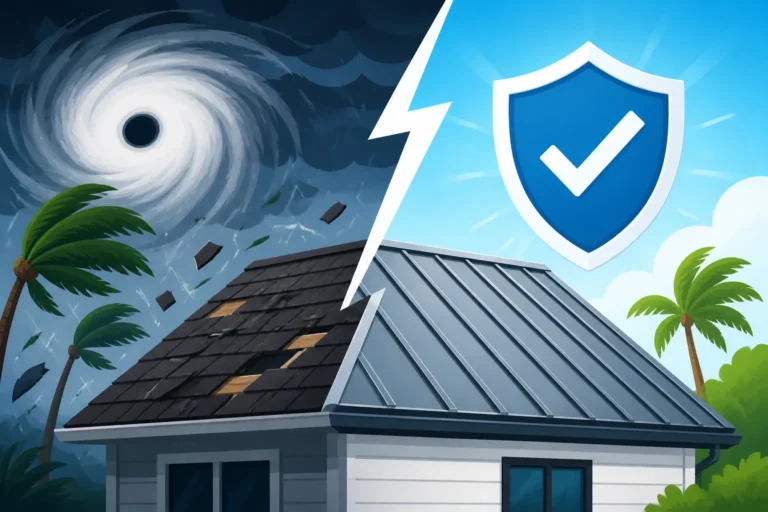
Hurricane Straps and Metal Roof Requirements
One of the most terrifying aspects of living in certain regions is the constant worry about severe weather, especially hurricanes and powerful windstorms. For homeowners considering a metal roof, you’re likely thinking about its durability, but what about its ability to truly stand up to a Category 3 or 4 hurricane? It’s not just about the panels themselves, but how the entire roof system is anchored to your home. This comprehensive guide will walk you through everything you need to know about hurricane straps and the critical role they play in fortifying your metal roof against nature's fiercest winds, ensuring your peace of mind and the long-term safety of your home.
Understanding Hurricane Straps and Their Role in Roof Integrity
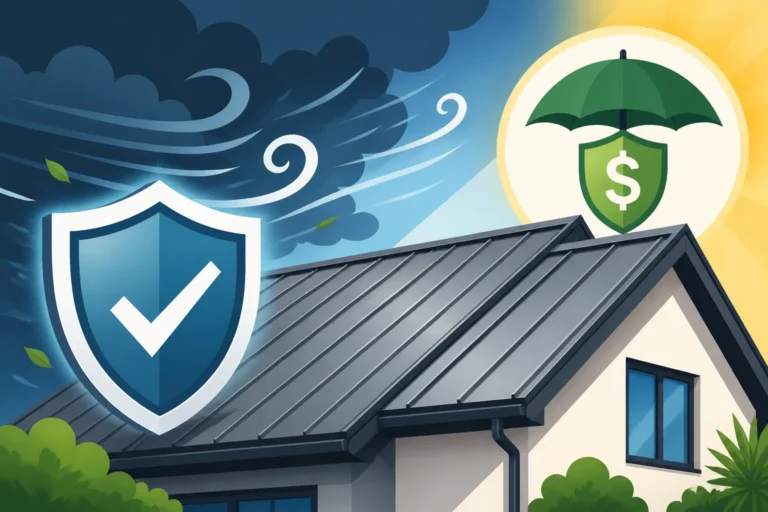
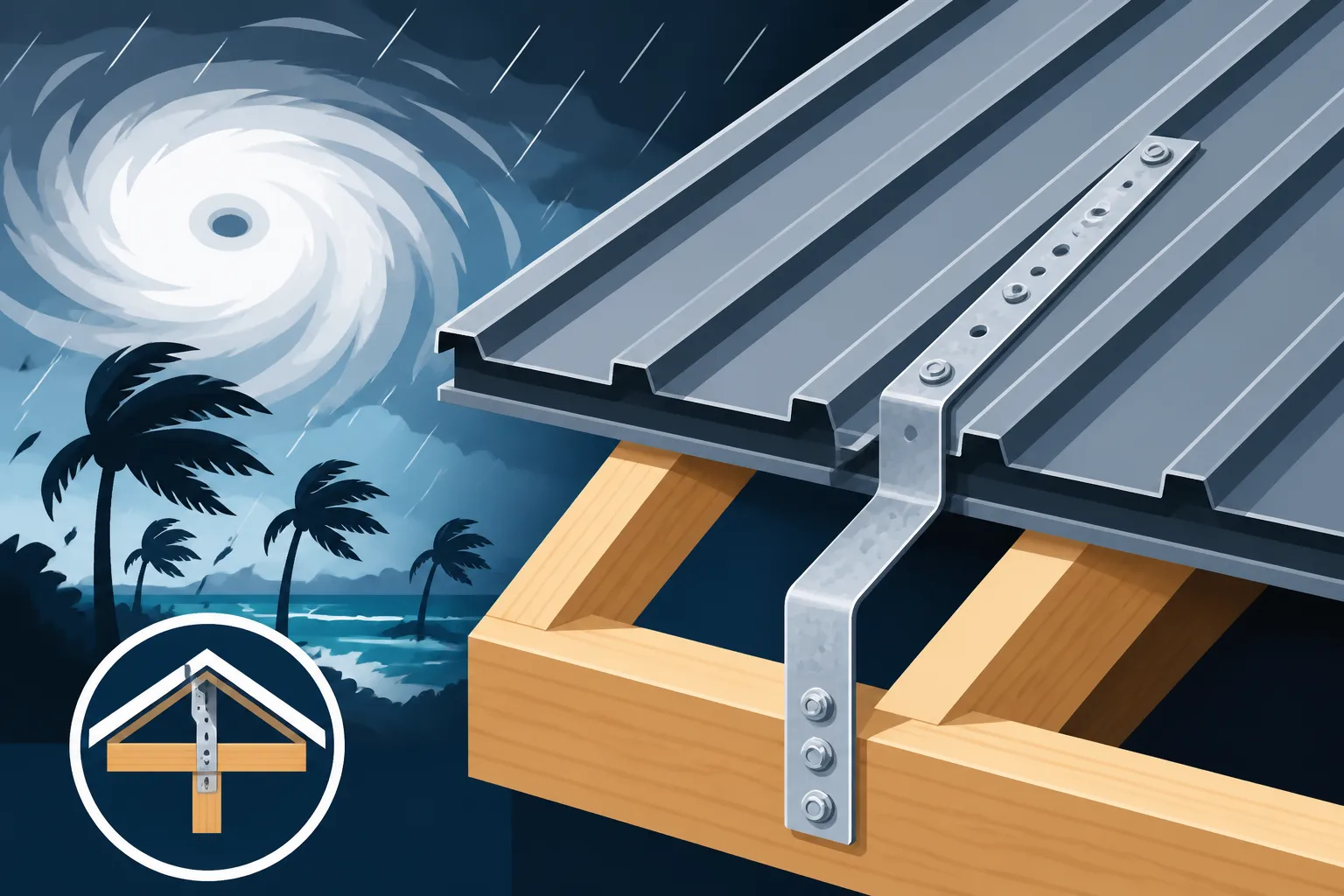
When a hurricane hits, the sheer force of the wind isn't just pushing down on your roof; it's trying to lift it right off your house. This "uplift" pressure is what often causes the most catastrophic damage during major storms. Imagine a giant suction cup trying to pull your roof upwards – that's the force we're talking about. This is where hurricane straps, also known as hurricane ties or clips, come into play. They are specialized connectors designed to create a continuous load path, essentially tying your roof to the walls and foundation of your home, so it can resist these powerful upward forces.
What Exactly Are Hurricane Straps?
Hurricane straps are typically metal connectors, often made from galvanized steel, that reinforce the connection between your roof trusses or rafters and the wall framing below. They come in various shapes and sizes, from simple L-shaped clips to more complex continuous ties, but their fundamental purpose remains the same: to resist uplift and lateral forces. Unlike basic toe-nailing or conventional framing connections, which can fail under extreme stress, hurricane straps provide a much stronger, engineered connection, distributing the wind load more effectively throughout the structure.
Think of them as super-strong hands gripping your roof to your house’s skeletal frame. Without them, your roof might rely solely on nails driven at an angle, which can easily pull out when subjected to significant uplift. These straps are often unseen once installed, tucked away within your attic or wall cavities, but their presence is absolutely vital for a robust, storm-ready roof system. They are a small component with an enormous job, acting as a crucial line of defense when the weather turns truly nasty.
Why Are They Crucial for Metal Roofs?
Metal roofs, with their incredible strength and longevity, are often chosen for their superior performance in harsh weather. However, their lightweight nature, while offering many benefits, can also make them more susceptible to uplift forces if not properly secured. Imagine a large sheet of metal acting like a giant sail. While the panels themselves are incredibly durable, the fastening of those panels to the roof deck, and the roof deck to the rest of the house, is paramount.
When you install a metal roof, especially a standing seam system where panels are mechanically seamed or snap-locked together, the entire system becomes very rigid and strong. This rigidity is fantastic for shedding water and resisting impacts, but it also means that if wind gets underneath a panel, the force can be transferred across a much larger area, creating immense uplift pressure on the entire roof structure. Hurricane straps ensure that this strong, rigid metal roof system is firmly anchored to your home's foundation, preventing it from detaching and sailing away during extreme winds. They complement the robustness of the metal panels by providing the structural anchorage needed for the entire assembly.
Beyond Just Straps: A System for Wind Resistance
It’s easy to focus on just "hurricane straps," but it's vital to understand that they are part of a larger, integrated system for wind resistance. A truly storm-resistant metal roof involves multiple layers of protection, all working in concert. This includes the quality and gauge of your metal panels, the type and spacing of your fasteners, the integrity of your roof decking, the connection of the decking to the rafters/trusses, and finally, the connection of those rafters/trusses to the wall framing and foundation—which is where hurricane straps become critical.
When you're exploring Metal Roof Wind and Fire Ratings Explained, you'll see that a roof's wind rating isn't just about the top layer; it's about the entire assembly. For example, a standing seam metal roof relies on clips that attach the panels to the purlins or decking, which then must be securely attached to the structural framing, which in turn needs to be anchored to the walls and foundation with elements like hurricane straps. It’s a chain, and every link needs to be strong. Ignoring any part of this system can create a weak point that compromises the entire roof's ability to withstand high winds, making it crucial to consider a holistic approach to wind mitigation.
Building Codes and Hurricane Strap Requirements by Region
Building codes are not just suggestions; they are minimum standards designed to protect life and property. When it comes to something as critical as your roof's ability to withstand a hurricane, these codes become incredibly specific and strict, especially in areas prone to severe weather events. Understanding these regulations is your first line of defense in ensuring your new metal roof is not just beautiful, but also safe and compliant.
The Florida Building Code and High-Velocity Hurricane Zones (HVHZ)
Florida stands as a prime example of a state with some of the most stringent building codes in the nation, and for good reason. It’s a regular target for hurricanes, and past devastation has led to continuous improvements in construction standards. The Florida Building Code (FBC) has specific requirements for roof-to-wall connections, often mandating the use of hurricane straps or similar anchoring systems for all new construction and significant roof replacements. This is especially true for homes located within High-Velocity Hurricane Zones (HVHZ), which include Miami-Dade and Broward counties. These areas have some of the toughest product approval standards, requiring materials and installation methods to withstand winds exceeding 150 mph.
For homeowners in Florida, it's not enough to simply have hurricane straps; they must be the correct type, properly installed, and meet the specific criteria outlined in the Florida Metal Roof Codes: FBC, HVHZ & Approvals. You might also encounter the "25% Rule," which stipulates that if more than 25% of your roof decking is removed or damaged during a replacement, the entire roof system, including the strapping and connections, must be brought up to current code. This can be a significant undertaking, but it’s an essential step in safeguarding your home against future storms.
Coastal vs. Inland Requirements
The intensity of hurricane strap requirements often varies significantly between coastal and inland regions, even within the same state. Naturally, homes directly on the coast or barrier islands are exposed to higher wind speeds and more direct forces from storm surges, leading to much stricter building codes. For instance, a home in a coastal zone might require hurricane straps that can resist a design wind speed of 180 mph, whereas a home 50 miles inland might only need to meet a 130 mph standard.
These wind design parameters are typically outlined in the International Residential Code (IRC) and the International Building Code (IBC), which most states adopt and then modify with local amendments. Coastal construction often demands additional fortifications like stronger shear walls, impact-resistant windows, and enhanced roof-to-wall connections. When planning your metal roof, it's crucial to understand your specific wind zone and how it dictates the type and installation of hurricane straps and other bracing. Your contractor should be well-versed in these distinctions and be able to explain the specific requirements for your property.
Local Ordinances and Permit Process
Even with state-wide building codes, local municipalities often have their own specific ordinances and requirements that can influence the type and installation of hurricane straps. What’s standard in one city might not be enough in a neighboring county. This is why obtaining a building permit is not just a bureaucratic hurdle, but a crucial step in ensuring your metal roof project adheres to all safety standards.
When you Do You Need a Permit for a Metal Roof?, the local building department will review your plans to ensure they meet code. This often includes detailing the roof-to-wall connections and hurricane strapping. Skipping this step can lead to significant problems down the line, including fines, requirements to tear down and redo work, difficulties with insurance claims, and even issues when selling your home. A reputable contractor will handle the permit process for you, ensuring that all necessary inspections are performed and that your new metal roof is compliant with all local regulations.
Types of Hurricane Straps and Their Installation Methods
Choosing a metal roof is a significant investment in your home's long-term durability, but that investment's full potential for storm resistance can only be realized if the underlying structure is equally prepared. Hurricane straps are not a one-size-fits-all solution; there's a variety available, each designed for specific applications and levels of wind resistance. Knowing the different types and how they are correctly installed is key to ensuring your home is truly fortified.
Common Types of Metal Roof Hurricane Straps
Hurricane straps come in a dizzying array of designs, each manufactured to meet specific load requirements and structural connections. The most common types you’ll encounter include:
- Twist Straps: These are perhaps the most recognizable. They’re flat metal straps that are twisted at the ends, allowing one end to be nailed to the side of a truss/rafter and the other to the wall top plate or stud. They're excellent for resisting both uplift (pulling up) and lateral (sideways) forces.
- L-Shaped and T-Shaped Connectors: These are often used at corners or where specific angles of connection are required. They provide robust connections between intersecting structural members, reinforcing joints against various wind forces.
- Continuous Ties: These are longer straps that run down the side of a truss or rafter and connect directly into the wall framing, sometimes extending several feet down the wall studs. They create a very strong, continuous load path, distributing forces over a larger area.
- Seismic/Hurricane Ties: Some connectors are designed to handle both hurricane-force winds and seismic activity, offering dual protection in regions prone to both. These are typically heavy-gauge steel and feature multiple fastening points.
The choice of strap often depends on the specific design of your home's roof framing (truss vs. rafter), wall construction, and the required wind uplift rating dictated by local building codes. It's not about which one looks "strongest," but which one is engineered and rated for your specific application.
| Strap Type | Common Application | Key Benefit | Installation Notes |
|---|---|---|---|
| Twist Straps | Truss/Rafter to Top Plate | Resists uplift and lateral forces | Easily installed on flat surfaces, requires specific nail types and quantities. |
| L-Shaped Connectors | Rafter to Top Plate at corners | Reinforces angled connections | Provides strong corner reinforcement, critical for resisting twisting forces. |
| T-Shaped Connectors | Joist to Beam/Post | Versatile, strong connection | Often used for multiple-member connections, ensures robust junction. |
| Continuous Ties | Rafter to Wall Stud/Foundation | Creates continuous load path | Requires access down wall cavity, ideal for maximum uplift resistance. |
| Seismic/Hurricane Ties | High-wind & seismic zones | Dual protection, heavy-duty | Engineered for extreme loads, typically more involved installation. |
Integrated Fastening Systems for Metal Roofs
While hurricane straps secure the structural framing of your roof to your walls, the metal roof panels themselves also have their own sophisticated fastening systems. These two systems, while distinct, work together to provide comprehensive wind resistance. For example, a standing seam metal roof relies on How Is a Standing Seam Metal Roof Installed? with concealed clips that attach the panels to the roof deck. These clips are designed to allow for thermal expansion and contraction while providing immense uplift resistance for the panels themselves.
On the other hand, an exposed fastener metal roof, like a corrugated or R-panel system, uses screws with sealing washers that penetrate directly through the panel into the purlins or roof deck. While effective, the sheer number and type of fasteners are critical for its wind performance. Regardless of the panel type, the connection of these panels to the substructure must be robust, and then that substructure, in turn, must be anchored to the building's frame with hurricane straps. It’s a multi-layered approach to prevent wind from peeling off panels or lifting the entire roof structure.
Proper Installation for Maximum Effectiveness
The effectiveness of hurricane straps hinges entirely on proper installation. A strap poorly installed is as good as no strap at all. The devil is truly in the details when it comes to these critical connectors. Here's what goes into a proper installation:
Firstly, using the correct fasteners is non-negotiable. Manufacturers specify particular nails (often called "joist hanger nails") or screws that must be used. These fasteners are usually shorter, thicker, and have larger heads to prevent pull-out. The number and placement of these fasteners into each hole of the strap are equally important and typically illustrated in the manufacturer's instructions and outlined in the building code. Skimping on fasteners or using the wrong type significantly weakens the connection.
Secondly, the strap must be snugly fitted to the framing members it connects. There should be no gaps or looseness. It's about creating a tight, reinforced connection between the rafter/truss and the wall plate/stud. Bending a strap incorrectly or failing to fully seat it compromises its load-bearing capacity. This requires precision and skill from the installer. When you hire a metal roofing contractor, ensure they have experience with these specific details and understand the engineered drawings. This is a critical point to discuss when you're asking Questions to Ask a Metal Roofing Contractor Before You Hire.
Finally, the continuous load path must be maintained. This means ensuring that the wall studs are properly anchored to the foundation. Hurricane straps are only one link in this chain. If the foundation connection is weak, the entire system can fail. This holistic view of structural integrity is what separates a truly storm-ready home from one that just meets bare minimums.
The Impact of Hurricane Straps on Metal Roof Performance and Home Value
Investing in a metal roof with proper hurricane straps is more than just a home improvement project; it's a strategic decision that significantly impacts your home's safety, longevity, and financial value. These often-unseen components work tirelessly behind the scenes to protect your most valuable asset, especially in areas where severe weather is a regular threat. Understanding their broader impact can truly underscore their importance.
Enhancing Wind Resistance and Structural Durability
The primary, and most critical, benefit of hurricane straps is their ability to dramatically enhance your roof's wind resistance. Without them, extreme uplift forces during a hurricane can cause the roof structure to separate from the walls, leading to catastrophic failure. Once a roof is compromised, the rest of the home is incredibly vulnerable to water intrusion, further structural damage, and even complete collapse. Hurricane straps prevent this by effectively "tying" your roof to your home's foundation, creating a continuous load path that can withstand intense pressure.
This enhanced durability isn't just about preventing total roof detachment. It also means the entire structure of your home is more resilient. When winds buffet your home, the forces are transferred through the roof, down the walls, and into the foundation. Properly installed hurricane straps ensure this transfer happens smoothly and effectively, reducing stress on other structural components and keeping the entire building envelope intact. This level of protection is invaluable, especially in regions prone to high winds and violent storms, making your metal roof an even more reliable shield against the elements.
Insurance Implications and Discounts
Beyond the physical protection, hurricane straps can offer tangible financial benefits, particularly when it comes to your home insurance. Many insurance companies, especially in hurricane-prone states like Florida, Texas, and the Gulf Coast, offer significant discounts for homes with robust wind mitigation features. A key component of these wind mitigation efforts is proper roof-to-wall attachment, which is precisely what hurricane straps provide.
After installation, you can often request a Wind Mitigation and Roof Premium Credits inspection. A certified inspector will evaluate various features of your home's construction, including the presence and type of hurricane straps, the geometry of your roof, and the strength of your roof deck attachment. Documenting these features can lead to substantial savings on your annual homeowners insurance premiums. Over the lifespan of your metal roof, these discounts can add up, helping to offset some of the initial investment. This makes understanding and implementing these structural reinforcements not just a safety measure, but also a smart financial move. You can learn more about these potential savings in our guide on Metal Roof Insurance Savings & Discounts.
Long-Term Benefits and Peace of Mind
The long-term benefits of hurricane straps extend far beyond immediate storm protection and insurance savings. A home with a properly secured metal roof and adequate hurricane strapping is a more resilient, safer, and ultimately more valuable property. Should a major storm strike, knowing that your home has been fortified to the highest standards provides an invaluable sense of peace of mind. You’ll worry less about your family's safety and the devastation of property loss.
Furthermore, these structural enhancements can positively impact your home's resale value. Buyers in storm-prone areas are increasingly savvy about building codes and resilient construction. A home that has been proactively upgraded with hurricane straps and a durable metal roof will stand out as a safer, more robust investment. It signals to potential buyers that the home is built to last and can withstand the challenges of local weather, offering a distinct advantage in the market. It’s an investment that truly pays dividends in safety, savings, and future value.
Practical Considerations and What to Ask Your Contractor
Deciding to install a metal roof with hurricane straps is a big step, but the journey doesn't end there. The execution of the project is just as crucial as the decision itself. Navigating permits, contracts, and quality checks can feel overwhelming, but with the right questions and a clear understanding of what to expect, you can ensure your investment delivers the protection you anticipate.
Verifying Code Compliance
When it comes to hurricane straps and metal roofs, code compliance isn't just a recommendation—it's a legal requirement and a safety imperative. Your chosen contractor plays a pivotal role in ensuring everything is up to snuff. They should be intimately familiar with the specific building codes in your area, especially those pertaining to Hurricane and Coastal Metal Roof Requirements. This includes understanding the required wind uplift ratings, the types of straps specified, and the exact fastening schedules.
Don't hesitate to ask your contractor how they ensure code compliance. A reputable contractor will be able to explain the relevant sections of the local building code, provide manufacturer specifications for the straps and fasteners they plan to use, and clearly outline how these elements will meet or exceed the required standards. They should also be the ones to pull all necessary permits for your roof replacement project, as they are responsible for ensuring the work passes inspection. This ensures that the local building department reviews the plans and inspects the work, acting as an extra layer of protection for you, the homeowner.
Reviewing Your Metal Roof Contract for Strap Details
Before you sign any contract, it's absolutely essential to conduct a thorough review, especially when it involves critical structural components like hurricane straps. A comprehensive contract should leave no room for ambiguity regarding the scope of work. You should ensure that specific details about the hurricane straps are explicitly mentioned. This includes the type of hurricane straps to be used (e.g., Simpson Strong-Tie HGA10, USP Structural Connectors H10), the gauge of the steel, the number of straps to be installed, and their fastening schedule (e.g., "straps to be installed at every rafter/truss, fastened with 8d common nails as per manufacturer specifications").
Beyond the materials, the contract should also detail the installation methodology. Are they replacing existing straps, or adding new ones? How will the connection to the wall framing be confirmed? Our guide on What a Metal Roof Contract Should Include provides a detailed checklist for reviewing your agreement. If the contract simply says "includes hurricane clips" without specifying the type or installation method, that's a red flag. Insist on clarity. This level of detail protects you from unexpected costs, ensures quality workmanship, and provides recourse if the work doesn't meet the agreed-upon standards. Remember, the warranty of your metal roof also often depends on the quality of the installation, so understanding the specifics is key for your Metal Roof Warranties: Workmanship vs Manufacturer.
Inspection and Maintenance Tips
Once your metal roof and hurricane straps are installed, they're designed for long-term, low-maintenance performance. However, that doesn't mean you should forget about them entirely. Regular inspections are crucial for ensuring the continued integrity of your roof system, especially after severe weather events. While you won't be able to see the hurricane straps directly (they're hidden in your framing), you can look for signs that might indicate a compromised structural connection.
After a major storm, do a visual check of your roofline from the ground. Look for any noticeable sagging, unevenness, or separation between the roof and the walls. Inside your attic, if accessible, look for any visible signs of shifted trusses or rafters, pulled-out fasteners, or damaged wood near the roof-to-wall connections. Any unusual creaks, groans, or water stains after heavy winds could also be a sign to call a professional. While metal roofs are known for their durability, getting a professional roof inspection every few years or after significant weather events is a smart move. They can identify subtle issues that might escalate into major problems, giving you peace of mind that your hurricane straps are still doing their vital job.
Disclaimer
Please be advised that the information provided in this article is intended for general informational purposes only and does not constitute professional advice. Building codes, regulations, and best practices for metal roof installation and hurricane strap requirements vary significantly by location and can change over time. Always consult with a qualified and licensed metal roofing contractor and your local building authority to ensure compliance with all applicable codes and for advice specific to your property and circumstances. Relying solely on the information presented here without professional verification is not recommended.