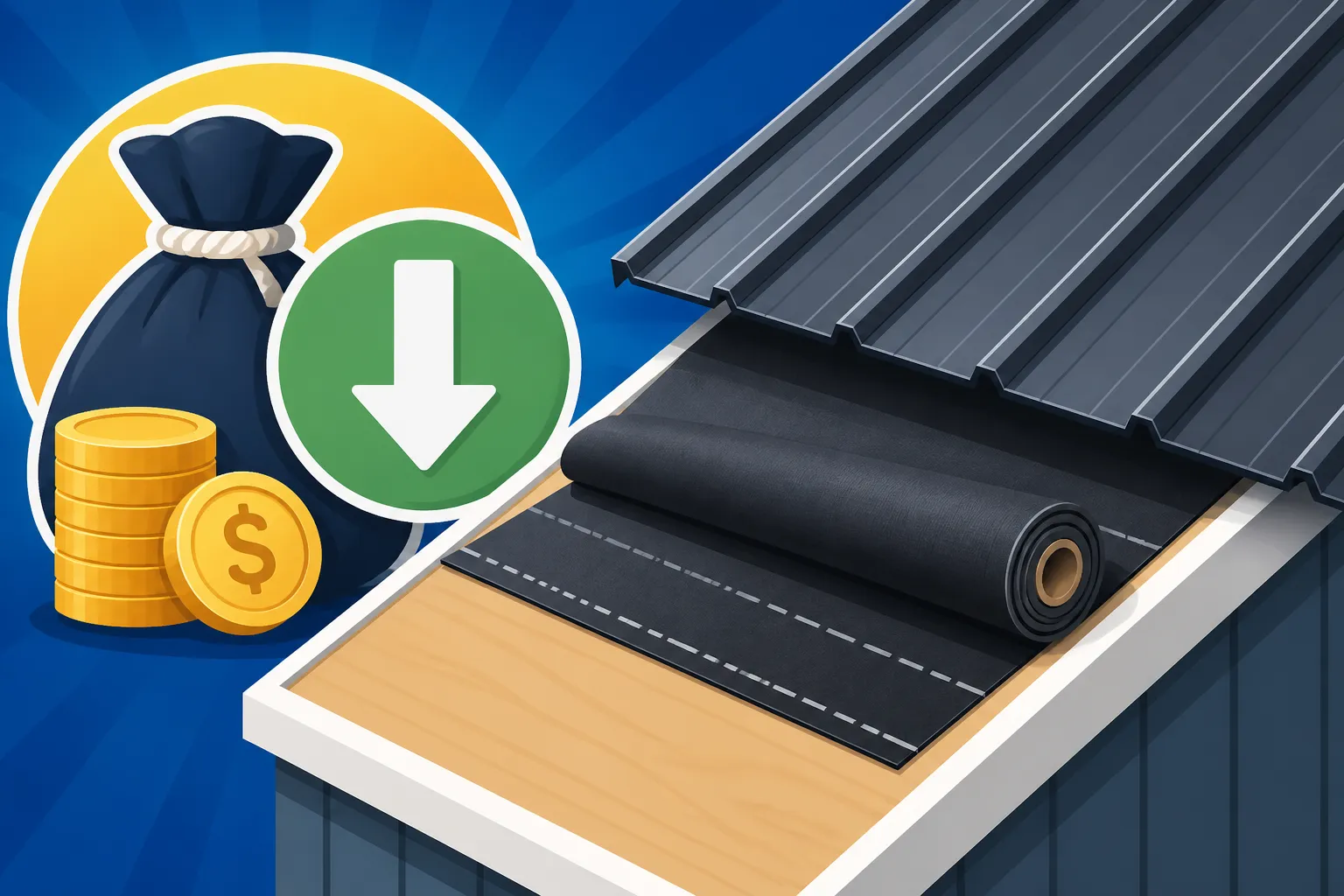
Metal Roof Underlayment Cost
Deciding on a new metal roof is a big step, but often, homeowners get so caught up in the shiny panels and profile choices that they overlook a critical component: the underlayment. You might be wondering, "Do I really need to spend more on something I'll never even see?" It's a valid concern, as underlayment costs can add a significant chunk to your overall project budget. But trust me, skimping here can lead to headaches and costly repairs down the line. This comprehensive guide is here to break down everything you need to know about metal roof underlayment costs, ensuring you make an informed decision for the long-term health of your roof and home.
Understanding Metal Roof Underlayment
It’s easy to focus on the aesthetics and durability of the metal panels themselves, but what lies beneath is equally, if not more, important for your roof's longevity and performance. The underlayment is the unsung hero, providing crucial protection that often gets overlooked in initial discussions.
What is Underlayment and Why is it Essential?
Think of your roof's underlayment as a sophisticated secondary barrier, nestled between your roof deck and the exterior metal panels. Its primary role is to act as an additional shield against the elements, specifically water and moisture. While your metal panels are the first line of defense, they aren't foolproof. Wind-driven rain can sometimes find its way under seams, condensation can form, and in the rare event of a panel being damaged, the underlayment steps up to prevent water from reaching your roof deck and, eventually, your home's interior.
Beyond just water resistance, underlayment provides an essential layer of protection for your roof deck during installation. Imagine a sudden rain shower during the roofing process – without underlayment, your exposed plywood or OSB deck would soak up water, leading to potential warping, mold, or structural damage before your metal panels even go on. It also offers a smoother, more uniform surface for the metal panels to rest upon, which can help prevent oil canning (a wavy appearance) and reduce noise. In essence, it's cheap insurance against expensive problems, extending the life of your entire roofing system and giving you invaluable peace of mind. Without it, you're essentially leaving your roof's most vulnerable component – the decking – exposed to potential damage from moisture and the elements.
Types of Underlayment for Metal Roofs
Not all underlayments are created equal, especially when it comes to the unique demands of metal roofing. The type you choose will significantly impact both performance and cost.
Felt Underlayment (Asphalt-Saturated Felt)
This is the traditional workhorse, often referred to as "tar paper." It’s been around forever, made from organic or fiberglass mats saturated with asphalt, providing a decent level of water resistance. You’ll typically see it in two main weights: 15-pound and 30-pound. While it’s the most budget-friendly option, it's generally not recommended as the primary underlayment for a metal roof. Why? Metal roofs experience significant temperature fluctuations, leading to expansion and contraction. Felt underlayment, particularly the standard variety, can degrade and wrinkle under these conditions, potentially compromising its protective qualities over time. It can also absorb moisture, which isn't ideal under a non-breathing metal panel. For certain low-budget or temporary applications, it might be considered, but for a long-lasting metal roof, it's usually best to look at more advanced options. If you're curious about different materials, you can read more in our guide on Metal Roofing Materials Compared: Steel, Aluminum, Copper & Zinc.
Synthetic Underlayment
Synthetic underlayments are the modern, superior alternative to felt. Made from polypropylene or polyethylene woven fabrics, they are much lighter, stronger, and more tear-resistant than felt. They’re also inherently water-resistant, often featuring a textured surface for better walkability during installation. Because they don't absorb water, they are far more resistant to mold and rot. Most importantly for metal roofs, synthetic underlayments handle temperature changes much better, meaning they won't wrinkle or crack due to the expansion and contraction of the metal panels above. They offer excellent durability and a longer lifespan, making them a wise investment for most residential metal roofing projects. Many brands, like Titanium UDL and RhinoRoof, offer high-quality synthetic options that are specifically designed for the demands of metal roofing.
High-Temperature Synthetic Underlayment
This specialized category of synthetic underlayment is an absolute must-have for certain metal roofing systems, especially those with darker colors or in climates prone to intense sun exposure. When metal roofs get hot, they get really hot. Temperatures under a metal roof can easily reach 180-200°F or even higher. Standard felt or even some basic synthetic underlayments can literally melt, degrade, or stick to the metal panels at these extreme temperatures, jeopardizing their effectiveness. High-temperature synthetic underlayments are formulated with advanced polymers (like those found in Polyglass or GCP Applied Technologies' products) that can withstand these scorching conditions without breaking down. If you're installing a standing seam metal roof, particularly one with a dark finish, this is often the recommended, if not required, underlayment to ensure proper performance and maintain manufacturer warranties. It’s a higher upfront cost, but it prevents catastrophic failure of the underlayment, which would lead to far more expensive repairs.
Ice & Water Shield (Self-Adhering Membranes)
Ice & water shield is a crucial component in many roofing systems, particularly in colder climates or areas with heavy rainfall. This isn't your everyday underlayment; it's a self-adhering, modified bitumen membrane with a rubberized asphalt adhesive backing that forms a watertight seal directly to the roof deck. It's designed to protect vulnerable areas from water penetration caused by ice dams (when melting snow refreezes at the eaves, backing up water under shingles or panels) or wind-driven rain. You'll typically find it installed along the eaves, in valleys, around chimneys, skylights, and other penetrations where water is most likely to pool or penetrate. While it offers superior protection, it is also the most expensive type of underlayment per square foot. It’s usually used in conjunction with a felt or synthetic underlayment covering the main field of the roof, providing targeted, critical protection where it's needed most. You can learn more about specific requirements in our article on Ice and Water Shield for Metal Roofs.
Factors Influencing Metal Roof Underlayment Cost
The cost of metal roof underlayment isn't a one-size-fits-all number. Several critical factors come into play, influencing everything from the material price to the overall installation expense. Understanding these can help you better budget for your project and avoid any unwelcome surprises.
Material Type and Quality
As we’ve just discussed, the biggest driver of underlayment cost is the material itself. You’ll see a significant price jump from traditional felt to high-quality synthetic options and a further increase for specialized ice and water shield products.
- Felt underlayment (e.g., 15 lb or 30 lb) is the cheapest, often ranging from $0.05 to $0.15 per square foot for the material alone. Its low cost makes it tempting, but its performance under metal roofs can be subpar, leading to premature failure and voided warranties if not explicitly approved by the metal roof manufacturer.
- Standard synthetic underlayment is a step up, typically costing $0.15 to $0.35 per square foot. Brands like Epilay and GAF offer robust options in this range. These provide better tear resistance, moisture protection, and UV resistance, making them a much better choice for the long haul.
- High-temperature synthetic underlayment runs higher, usually between $0.30 and $0.60 per square foot. The specialized polymers and manufacturing processes that allow them to withstand extreme heat contribute to this higher price point. If you have a dark metal roof, especially a standing seam one, this is practically non-negotiable.
- Ice and water shield, due to its self-adhering, rubberized asphalt composition, is the most expensive per square foot, typically ranging from $0.70 to $2.00 or more, depending on the brand and thickness. Remember, this is usually applied only to specific vulnerable areas, not the entire roof.
The quality within each type also varies. Premium synthetic underlayments might have stronger scrims (the woven base), better UV resistance for prolonged exposure during installation, or enhanced non-slip surfaces. These quality differences impact the material's durability and ease of installation, making the slightly higher cost often justifiable.
Roof Size and Complexity
It might seem obvious, but the larger your roof, the more underlayment material you’ll need, and thus, the higher your total material cost. However, complexity adds another layer to this equation.
- Roof Size: A 2,000 square foot roof will naturally require more material than a 1,000 square foot roof. When getting estimates, keep in mind that roofing contractors often talk in "squares," where one square equals 100 square feet. So, a 2,000 square foot roof is 20 squares.
- Roof Pitch: Steeper roofs (higher pitch) require more effort, specialized safety equipment, and sometimes more intricate installation techniques, which can increase labor costs for underlayment application. A low-slope roof might be easier to work on, but it often necessitates higher-performance, fully adhered underlayments to prevent leaks.
- Roof Design and Features: A simple gable roof is far less complex than a multi-faceted roof with numerous valleys, dormers, skylights, and chimneys. Each penetration and change in roof plane requires careful cutting, sealing, and flashing of the underlayment, particularly with ice and water shield. This intricate work adds significant time and labor, increasing overall installation costs. For instance, a roof with many valleys will require more specialized ice and water shield coverage, driving up both material and labor expenses in those specific areas. Understanding what goes under a metal roof is crucial for budgeting, and it's not just the underlayment itself; it's how it interacts with other components.
Regional Labor and Supply Costs
Just like pretty much any home improvement project, the cost of installing metal roof underlayment can vary significantly depending on where you live. This isn't just about the underlayment itself, but the entire roofing ecosystem in your area.
- Labor Rates: Roofing labor costs differ widely across states and even within different cities in the same state. A highly skilled roofing crew in a metropolitan area like San Francisco or New York City will command higher hourly rates than one in a rural town in Oklahoma or Alabama. These rates directly influence the installation cost of your underlayment. Furthermore, the demand for roofing services in your area can also play a role; in regions recovering from a major storm, labor costs might temporarily spike due to increased demand.
- Supply Chain and Shipping: The availability and proximity of roofing material suppliers can also affect costs. If your chosen underlayment needs to be shipped a long distance, those transportation costs will inevitably be passed on to you. Major roofing manufacturers like CertainTeed, GAF, and IKO have extensive distribution networks, but specialized underlayments might be less readily available in certain remote areas.
- Local Regulations and Permitting: Some regions have stricter building codes or permit requirements that might necessitate specific types of underlayment (like ice and water shield in snow-prone areas) or a more involved inspection process, which can add to the overall project cost. For instance, coastal areas, particularly in states like Florida, often have stringent requirements for hurricane-resistant roofing, which may include specific underlayment types and installation methods to qualify for wind mitigation credits. You can find more details in our guide on Metal Roof Permits and Codes by State.
Detailed Cost Breakdown by Underlayment Type
Let's get down to the numbers. Understanding the specific costs associated with each type of underlayment will help you better compare bids and make an informed decision for your metal roofing project. Keep in mind these are national averages, and your local costs might vary.
Felt Underlayment Costs
Felt underlayment, often known as "tar paper," is the most traditional and budget-friendly option. It comes in rolls, typically 3 feet wide, and is rated by weight per "square" (100 square feet).
- Material Cost:
- 15-lb felt: You're looking at about $0.05 to $0.10 per square foot. So, for a 2,000 square foot roof, the material alone might cost $100 to $200. It's thin, tears relatively easily, and offers basic moisture resistance.
- 30-lb felt: A bit more robust, costing roughly $0.08 to $0.15 per square foot. For a 2,000 square foot roof, this would be $160 to $300. It's thicker and provides slightly better durability and water resistance than 15-lb felt.
- Installation Cost: While felt is cheap to buy, it's a bit heavier and less tear-resistant than synthetics, which can sometimes slow down installation slightly, though it's generally still straightforward. Professional installation typically adds another $0.10 to $0.25 per square foot.
- Total Cost (Material + Installation): For a 2,000 sq ft roof, expect to pay roughly $300 to $900 for 15-lb felt, and $520 to $1200 for 30-lb felt.
Pros of Felt Underlayment: Extremely affordable, widely available, familiar to most roofers.
Cons of Felt Underlayment: Prone to wrinkling and cracking under thermal cycling, can absorb moisture, not ideal for the high temperatures of metal roofs, shorter lifespan, may not meet modern building codes or manufacturer warranties for metal roofing.
Synthetic Underlayment Costs
Synthetic underlayments are the modern standard for metal roofs, offering superior performance and durability. They are typically made from woven polypropylene or polyethylene, often with a non-slip coating.
- Material Cost:
- Standard Synthetic: This typically ranges from $0.15 to $0.35 per square foot. For a 2,000 square foot roof, that's $300 to $700 for the material. Brands like Owens Corning ProArmor and Atlas Hy-Breeze are popular choices in this category.
- Premium Synthetic: Some high-end synthetic underlayments might push $0.40 to $0.50 per square foot, offering enhanced UV resistance, greater tear strength, and better walkability.
- Installation Cost: Synthetic underlayments are lightweight, easier to handle, and less prone to tearing than felt, which can sometimes make installation slightly faster or more efficient. Professional installation generally runs $0.15 to $0.30 per square foot, similar to felt.
- Total Cost (Material + Installation): For a 2,000 sq ft roof, expect to pay approximately $600 to $1300 for standard synthetic underlayment.
Pros of Synthetic Underlayment: Much stronger and more tear-resistant than felt, excellent water resistance, doesn't absorb moisture (resists mold/rot), stable under temperature changes, longer lifespan, typically compatible with metal roof warranties.
Cons of Synthetic Underlayment: Higher upfront material cost than felt.
High-Temperature Synthetic Underlayment Costs
This is the specialized category designed to withstand the extreme heat generated by metal roofs, particularly darker colors in sunny climates.
- Material Cost:
- High-Temp Synthetic: Expect to pay $0.30 to $0.60 per square foot for the material. For a 2,000 square foot roof, this translates to $600 to $1200. Look for reputable brands like Sharkskin, IKO Stormtite, or CertainTeed DiamondDeck.
- Installation Cost: The installation process is similar to standard synthetics, so labor costs will be in the same range, about $0.15 to $0.30 per square foot.
- Total Cost (Material + Installation): For a 2,000 sq ft roof, the total cost could range from $900 to $1800.
Pros of High-Temperature Synthetic Underlayment: Essential for metal roofs, especially dark colors, superior heat resistance, excellent durability, often a requirement for metal roof manufacturer warranties, prevents sticking and degradation under extreme conditions.
Cons of High-Temperature Synthetic Underlayment: Highest material cost among general underlayments.
Ice & Water Shield Costs
Ice and water shield is a self-adhering membrane used for critical areas, not typically for the entire roof field.
- Material Cost:
- Ice & Water Shield: This product is significantly more expensive per square foot due to its specialized adhesive and rubberized asphalt composition. Material costs typically range from $0.70 to $2.00 per square foot, sometimes even more for premium products or those specifically designed for extreme cold.
- Installation Cost: Due to the meticulous application required (peeling off backing, ensuring no wrinkles or bubbles, sealing around penetrations), installation can be more labor-intensive per square foot than roll-out underlayments. Expect installation to add $0.30 to $0.70 per square foot to the areas where it's applied.
- Total Cost (Material + Installation): For the sections where it's applied (e.g., 3-6 feet up from the eaves, around penetrations, in valleys), the total cost can be $1.00 to $2.70+ per square foot. A 2,000 sq ft roof doesn't typically get 2,000 sq ft of ice and water shield. Instead, a typical application might cover 20-30% of the roof area in colder climates, or just critical areas in warmer ones.
Pros of Ice & Water Shield: Unmatched protection against ice dams and wind-driven rain, self-sealing around fasteners, creates a watertight barrier in vulnerable areas, often mandated by building codes in snow regions.
Cons of Ice & Water Shield: Very high cost per square foot, labor-intensive to install precisely.
Here's a quick summary table to give you a clearer picture:
| Underlayment Type | Material Cost (per sq ft) | Installation Cost (per sq ft) | Total Installed Cost (per sq ft, est.) | Key Feature for Metal Roofs |
|---|---|---|---|---|
| 15-lb Felt | $0.05 – $0.10 | $0.10 – $0.25 | $0.15 – $0.35 | Lowest Cost, Basic Barrier (Not ideal for metal) |
| 30-lb Felt | $0.08 – $0.15 | $0.10 – $0.25 | $0.18 – $0.40 | Better Durability than 15-lb (Still not ideal for metal) |
| Standard Synthetic | $0.15 – $0.35 | $0.15 – $0.30 | $0.30 – $0.65 | Strong, Water-Resistant, Stable (Good general choice) |
| High-Temp Synthetic | $0.30 – $0.60 | $0.15 – $0.30 | $0.45 – $0.90 | Withstands Extreme Heat (Essential for dark metal roofs) |
| Ice & Water Shield | $0.70 – $2.00+ | $0.30 – $0.70 | $1.00 – $2.70+ | Self-Sealing, Watertight Barrier (Critical areas only) |
Note: Costs are estimates and can fluctuate based on location, brand, and market conditions.
Installation Costs and DIY vs. Professional
When it comes to putting on a metal roof, the panels themselves are only part of the story. The underlayment, while unseen, demands careful and precise installation. This is where the choice between DIY and hiring a professional truly comes into play, with significant cost and quality implications.
Professional Installation Expenses
Hiring a professional roofing contractor to install your metal roof underlayment is almost always the recommended path, even if it comes with a higher price tag than doing it yourself. The costs you incur here aren't just for the physical labor; they cover expertise, specialized tools, insurance, and the peace of mind that comes with a properly installed system.
- Labor Breakdown: Professional installation costs typically range from $0.10 to $0.70 per square foot for underlayment, depending on the type and complexity. For a standard synthetic underlayment, you might pay around $0.15-$0.30 per square foot for labor. For ice and water shield, which requires more meticulous cutting, adhesion, and sealing around details like vents and chimneys, labor can easily jump to $0.30-$0.70 per square foot for the areas it covers. This includes the crew's time, proper safety measures, and the use of tools for cutting, adhering, and fastening.
- Why It's Worth It:
- Expertise and Efficiency: Experienced roofers know the nuances of installing different underlayments with various metal roofing systems. They understand how to properly overlap seams, seal penetrations, and ensure proper adhesion, especially with self-adhering membranes. This efficiency can actually save you money in the long run by preventing costly mistakes.
- Warranty Compliance: Many metal roof manufacturers have strict requirements for underlayment installation to keep your material warranty valid. A professional contractor, especially one that is Manufacturer-Certified Metal Roof Installers Explained, will be familiar with these specifications, ensuring your roof is installed to code and warranty standards.
- Safety: Roofing is dangerous work. Professionals have the training, equipment (like harnesses and scaffolding), and insurance to perform the job safely. This protects them and, importantly, protects you from liability should an accident occur on your property.
- Quality Assurance: A reputable contractor stands behind their work, often providing a workmanship warranty on top of the manufacturer's product warranty. This means if there's an issue stemming from the installation, they'll come back and fix it. You can learn more about this in our guide on Metal Roof Warranties: Workmanship vs Manufacturer.
Ultimately, the slightly higher upfront cost of professional underlayment installation is an investment in the overall integrity, longevity, and warranty of your entire metal roofing system.
DIY Considerations and Hidden Costs
The allure of saving money by doing it yourself is strong, especially for components like underlayment that won't be visible once the metal panels are on. However, DIY metal roof underlayment installation comes with a steep learning curve and several potential hidden costs and risks.
- Tools and Equipment: You'll need more than just a utility knife. Essential tools include safety gear (harness, ropes, anchor points), a hammer tacker or cap nailer, measuring tapes, chalk lines, and potentially a roller for ice and water shield. These can add a few hundred dollars to your budget.
- Time Commitment: Installing underlayment correctly is meticulous work. For an average-sized roof, a professional crew can lay underlayment in a day or two. A DIY homeowner, especially without prior experience, could easily take several days, or even a week, extending the overall project timeline and leaving your roof deck exposed to the elements for longer.
- Potential Errors: This is where hidden costs truly manifest. Improperly installed underlayment can lead to:
- Wrinkles and Bubbles: These can create uneven surfaces that show through your metal panels (especially standing seam), or worse, create channels for water to travel, compromising the barrier.
- Poorly Sealed Seams: If seams aren't overlapped correctly or sealed properly (especially with ice and water shield), water can penetrate, leading to leaks, rot, and structural damage to your roof deck and interior.
- Voided Warranties: If you don't follow the manufacturer's specific installation instructions for the underlayment, your metal roof warranty could be voided. This leaves you on the hook for future material defects or failures.
- Injury: As mentioned, roofing is dangerous. A fall could lead to serious injury or even death, and your homeowner's insurance might not cover you for injuries sustained during DIY roofing work.
While the material cost savings might seem attractive, the risks of improper installation, the time commitment, and the potential for costly future repairs or voided warranties often outweigh the initial savings. For most homeowners, understanding Should You Hire a Contractor or DIY Your Metal Roof? comes down to these critical trade-offs.
Long-Term Value and ROI of Quality Underlayment
It's tempting to view underlayment as an extra expense, an invisible layer that just adds to the bottom line without providing tangible benefits you can see or touch. However, thinking of underlayment as merely a cost is a shortsighted perspective. A high-quality underlayment is a critical investment that delivers substantial long-term value and an excellent return on investment (ROI) for your entire metal roofing system.
Protecting Your Investment
Your metal roof is a significant investment, often costing more upfront than traditional asphalt shingles, but offering decades of superior performance. The underlayment plays a pivotal role in ensuring you get every bit of that promised longevity and durability.
- Leak Prevention: While metal panels are incredibly resilient, they aren't completely impervious. Wind-driven rain, especially during severe storms, can occasionally force water underneath panel seams. Minor imperfections during installation or unforeseen damage can also create tiny pathways for moisture. This is where the underlayment becomes your primary water defense. A robust synthetic or high-temperature underlayment acts as a reliable secondary barrier, channeling any stray water down to the eaves and away from your home's vulnerable roof deck. This prevents costly leaks that can lead to rotten wood, damaged insulation, mold growth, and extensive interior repairs.
- Prolonging Roof Deck Life: The roof deck, typically plywood or OSB, is the structural foundation of your roof. Moisture is its arch-nemesis. By preventing water penetration, a quality underlayment ensures your roof deck remains dry, stable, and free from rot or deterioration. A healthy roof deck is essential for the longevity of your entire roofing system, including the metal panels themselves.
- Thermal Stability: Metal roofs experience significant temperature swings, expanding when hot and contracting when cold. This movement can stress the underlayment. High-temperature synthetic underlayments are specifically designed to withstand these conditions without degrading, becoming brittle, or sticking to the metal. This ensures a stable, long-lasting barrier that won't compromise over time due to thermal cycling, a common issue with less suitable underlayment materials under metal.
By diligently protecting against moisture and handling thermal demands, a good underlayment essentially acts as the bodyguard for your entire metal roof, ensuring its structural integrity and performance for decades to come. When you consider the Metal Roof Cost vs Lifespan Value, the underlayment's contribution to that lifespan is immense.
Impact on Warranty and Insurance
The choice of underlayment extends beyond just physical protection; it can have significant financial implications related to your roof's warranty and even your homeowner's insurance premiums.
- Warranty Compliance: Many metal roof manufacturers explicitly state the type and installation method of underlayment required to validate their product warranty. Using an incorrect or improperly installed underlayment can void this warranty, leaving you without coverage if the panels themselves develop issues that can be traced back to an underlayment failure. For instance, some premium standing seam panels require a high-temperature synthetic underlayment to prevent premature degradation and ensure the panels don't stick. Always check the manufacturer's specifications for both the metal panels and the underlayment.
- Insurance Savings: While not as direct as a Class 4 impact-resistant metal roof, the presence of a robust underlayment can indirectly contribute to insurance benefits. In storm-prone areas, especially those susceptible to hurricanes or heavy winds, insurance companies are increasingly looking for entire roofing systems that offer superior protection. A high-quality underlayment, particularly self-adhering ice and water shield in critical areas, enhances the roof's overall wind and water resistance. This improved resilience can sometimes lead to discussions about potential homeowners insurance discounts or more favorable policy terms, especially when combined with a Metal Roof Wind and Fire Ratings Explained certification. Even if it doesn't result in a direct discount, it certainly improves the roof's ability to withstand perils, potentially reducing the likelihood of future claims. You can delve deeper into this topic with our article on Metal Roof Insurance Savings & Discounts.
Investing in the right underlayment is not just about safeguarding your home from leaks; it's about safeguarding your investment, ensuring your warranty remains intact, and potentially even contributing to lower long-term insurance costs. It’s a foundational element that underpins the value and longevity of your entire metal roofing system.
Disclaimer
Please note that all cost estimates and figures provided in this guide are approximate and intended for informational purposes only. Actual metal roof underlayment costs can vary significantly based on your specific location, the complexity of your roof, chosen materials, current market conditions, labor rates, and the individual contractor. It is always recommended to obtain multiple detailed quotes from qualified local roofing professionals to get an accurate estimate for your project.