How Much Does Metal Roof Repair Cost?
It’s a truly frustrating moment when you first notice a problem with your metal roof. Maybe it’s a drip, a strange sound during a storm, or a visual imperfection that wasn't there before. Immediately, your mind jumps to the cost: "How much is this going to cost me to fix?" The uncertainty of metal roof repair costs can feel overwhelming, but this guide is here to break down the expenses involved, helping you understand typical repairs and how to budget for them.
The Initial Shock: Understanding What Drives Metal Roof Repair Costs
When you're faced with a metal roof issue, the first thing that probably comes to mind is the gaping hole in your wallet. It's totally natural to feel that way! The truth is, the cost of repairing a metal roof isn't a single, fixed number. It's a spectrum, influenced by a few key factors that come into play right from the moment you notice a problem. Understanding these elements can help you brace for the financial impact and make more informed decisions.
Diagnosing the Problem: Beyond the Obvious Leak
Sometimes, a leak is obvious – a steady drip into a bucket in your attic or a water stain spreading across your ceiling. But often, the actual source of the problem is far more elusive. A small leak might originate yards away from where the water actually appears inside your home, traveling along rafters or insulation. This investigative work is crucial and can add to the initial cost.
A skilled roofing professional won't just slap a patch over the visible symptom. They'll meticulously trace the water's path, examine flashing details, check seam integrity, and inspect fasteners to pinpoint the root cause. This diagnostic phase can take time, especially on complex roofs with multiple valleys, dormers, or skylights. If the problem is subtle, like minor condensation issues or oil canning that might be exacerbated by improper ventilation, the diagnosis itself might require specialized knowledge and equipment, potentially increasing the initial assessment fee. For instance, a quick patch might cost a couple of hundred dollars, but if the issue is a systemic problem from improper installation causing widespread leaks, the diagnostic effort before any repair can begin might be a few hundred dollars on its own.
Material Costs: From Panels to Sealants
Just like building a house, repairing a metal roof requires specific materials, and their cost can vary significantly. Are we talking about a simple tube of high-quality sealant, or do you need to replace an entire 20-foot panel of standing seam metal? The difference is monumental.
For minor fixes, like reapplying sealant around a penetration or replacing a few screws, the material cost is relatively low. You might be looking at a few dozen dollars for a premium sealant, like a urethane-based caulk, or a box of self-sealing fasteners. However, if a repair involves replacing a full metal panel, especially for systems like a standing seam metal roof, the cost jumps because these panels are often custom-fabricated. The type of metal also plays a huge role; replacing a section of aluminum will be less expensive than, say, a section of copper roof. The color and finish also matter – a specialty color or a Kynar 500® (PVDF) coating will cost more than a standard painted Galvalume steel panel. Furthermore, you might need specific underlayment materials or ice and water shield if the repair exposes the roof deck, adding to the total material expenditure.
Labor Rates: The Human Element of Repair
This is often the largest component of your metal roof repair bill, and for good reason. Metal roofing is a specialized trade that requires precision, expertise, and safety consciousness. You're not just paying someone to climb a ladder; you're paying for their years of experience, their specialized tools, and their understanding of how metal behaves with expansion and contraction.
Labor rates vary widely by region, the complexity of the job, and the specific contractor. In bustling metropolitan areas like Miami or Los Angeles, you can expect higher hourly rates for skilled roofing technicians than in more rural locales. A simple repair that takes a few hours might run you anywhere from $300 to $800, including the technician's travel time and minimum service fees. For more involved repairs that require a full day or multiple days, labor costs can easily climb into the thousands. Reputable companies often have a minimum service charge, even for small jobs, to cover their overhead, insurance, and travel expenses. This is why a "small" leak might still come with a surprisingly robust bill – you're paying for the professional expertise and peace of mind.
Common Metal Roof Issues and Their Typical Repair Costs
Let's face it, nobody wants to deal with roof problems. But understanding the typical issues that crop up with metal roofs can help you better anticipate what kind of repair you might be facing and, importantly, what that might mean for your budget. While metal roofs are incredibly durable, they aren't completely impervious to wear and tear or the occasional rogue tree branch.
Fixing Leaky Fasteners and Screws
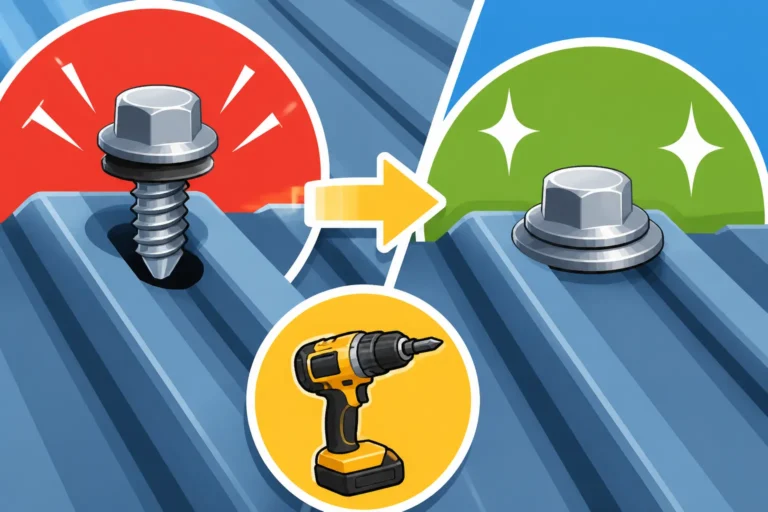
This is arguably one of the most common issues on exposed fastener metal roofs, like corrugated or R-panel styles. Over time, the neoprene washers on the screws that hold the panels down can degrade due to UV exposure and temperature fluctuations. When these washers fail, water can seep through the screw holes, leading to leaks.
The good news is, this is often one of the less expensive repairs. A professional will usually replace the old, degraded screws with new, oversized ones equipped with fresh, high-quality washers. Sometimes, they might even apply a dab of specialized sealant around each new screw head for added protection. The cost for this type of repair typically ranges from $200 to $700, depending on how many screws need replacing and the accessibility of the roof. If the underlying wood sheathing or purlins have started to rot due to prolonged leaks, the repair complexity and cost will increase significantly, as it requires addressing the structural damage beneath the panels. You can learn more about specific leak issues in our detailed guide on how to fix a leaking metal roof.
Repairing Damaged Panels or Seams
Life happens, and sometimes metal roof panels take a hit. This could be from a fallen tree limb, impact from severe hail, or even just general wear and tear in high-traffic areas if the roof isn't designed for walking. Damage can range from small punctures to large gashes or even panels that have become detached in high winds. For standing seam roofs, issues can include "oil canning" (wavy appearance) or seams that have separated due to improper installation or extreme thermal expansion/contraction.
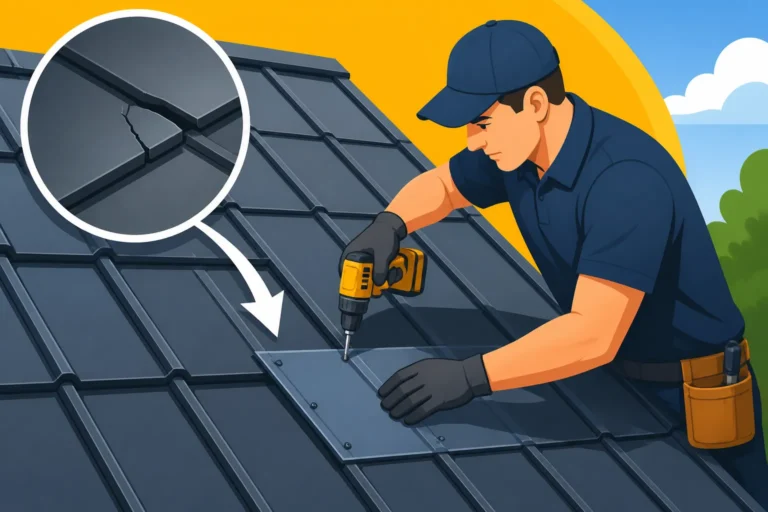
Repairing a damaged panel can be tricky. For minor dents or small punctures, a skilled technician might be able to patch the area with a piece of matching metal and a robust sealant, followed by touch-up paint. This might cost anywhere from $400 to $1,500. However, if a panel is severely bent, torn, or if multiple panels are damaged, replacement is usually the only option. This is a more involved process, requiring careful removal of fasteners (for exposed fastener systems) or unseaming (for standing seam systems), fabricating or ordering a new panel, and then installing it meticulously to match the existing roof. Panel replacement costs can range from $800 to $3,000+ per panel, depending heavily on the metal type (steel, aluminum, copper), the panel profile, and the complexity of integration with the surrounding roof system. For comprehensive insights into repair versus replacement scenarios, our article on metal roof repair vs replacement: how to decide offers a deeper dive.
Addressing Flashing and Trim Issues
Flashing is arguably the most critical component for preventing leaks on any roof, and metal roofs are no exception. Flashing is found wherever the roof meets another surface – chimneys, skylights, valleys, wall intersections, and along the eaves and rake edges (trim). If flashing is improperly installed, damaged, or has deteriorated over time, it's a guaranteed source of leaks.
Repairing flashing usually involves removing the old, compromised flashing, repairing any underlying damage to the roof deck, and installing new, properly bent and sealed flashing. This requires precision metalwork and a thorough understanding of water diversion principles. Depending on the complexity of the area – for example, a chimney flashing is more intricate than a simple wall flashing – costs can vary. Expect to pay anywhere from $500 to $2,500 for flashing repairs. If the trim pieces, like rake or eaves trim, are bent or detached, the repair might be on the lower end, focusing on re-securing or replacing smaller sections. However, if a major valley flashing is compromised, leading to significant water intrusion, the repair can be extensive and costly.
Dealing with Dents and Cosmetic Damage
While metal roofs are incredibly tough, they aren't invincible to dents. Hailstorms, falling debris, or even heavy foot traffic can leave unsightly depressions. For many, purely cosmetic dents, especially if they haven't compromised the panel's coating or structural integrity, might not warrant an expensive repair. However, if the dents are deep enough to create standing water (which can lead to accelerated coating degradation) or if they've broken the paint, then repair becomes more critical.
Cosmetic dent repair without panel replacement is challenging and often involves specialized techniques that can be costly and don't always yield perfect results. Some minor dents can be gently worked out, but this is a rare skill and usually limited to specific panel types. In most cases, if a dent is truly bothersome and cannot be ignored, the solution might involve panel replacement, as discussed above. For small, isolated dents that haven't compromised the integrity of the panel, some homeowners opt to live with them, or a minor cosmetic touch-up might cost a few hundred dollars. If you're dealing with extensive hail damage, your homeowners insurance might cover the cost of a full replacement, making the decision easier. Our article on metal roof dent repair from hail provides more specifics on this type of damage.
Here's a quick overview of typical repair costs:
| Type of Repair | Average Cost Range (Materials & Labor) | Description |
|---|---|---|
| Leaky Fasteners/Screws | $200 – $700 | Replacing degraded screws/washers, potentially applying sealant. |
| Small Panel Patch | $400 – $1,500 | Patching small punctures or minor damage with matching metal and sealant. |
| Full Panel Replacement | $800 – $3,000+ per panel | Replacing severely damaged or detached individual panels, including labor and custom fabrication/ordering. |
| Flashing Repair (Minor) | $500 – $1,200 | Re-sealing or replacing small sections of flashing around vents or simple penetrations. |
| Flashing Repair (Complex) | $1,200 – $2,500+ | Replacing flashing around chimneys, skylights, or intricate valleys, often requiring specialized metalwork. |
| Trim Repair | $300 – $1,000 | Re-securing or replacing bent or detached rake or eave trim pieces. |
| Gutter Attachment Points | $150 – $500 | Repairing or reinforcing gutter connections to the metal roof system. |
Note: These are average cost ranges. Actual prices can vary based on location, contractor, complexity, and specific materials used.
Factors That Significantly Influence Your Repair Bill
You might get a quote for a repair that seems surprisingly high or low compared to what your neighbor paid for a "similar" issue. That's because what appears similar on the surface can have vastly different underlying factors that drive up or down the final bill. When a professional assesses your metal roof, they’re not just looking at the obvious problem; they're considering the whole picture.
Type of Metal Roof and Panel Profile
The design of your metal roof system plays a monumental role in repair costs. There’s a world of difference between repairing a corrugated metal roof and a standing seam system.
-
Exposed Fastener Systems (Corrugated, R-Panel, 5V Crimp): These systems are generally simpler and quicker to install, which also makes them somewhat easier and less costly to repair. Panels are typically secured with screws that are visible on the surface. Replacing a panel on an R-panel roof, for instance, involves unscrewing the old panel and screwing in a new one. While still requiring skill, it’s less intricate than hidden fastener systems. However, the exposed fasteners themselves are a common point of failure for leaks, meaning you might incur more frequent, though less expensive, repairs over the lifespan. Our guide on how much does a corrugated metal roof cost can give you an idea of initial installation expenses for these types of roofs.
-
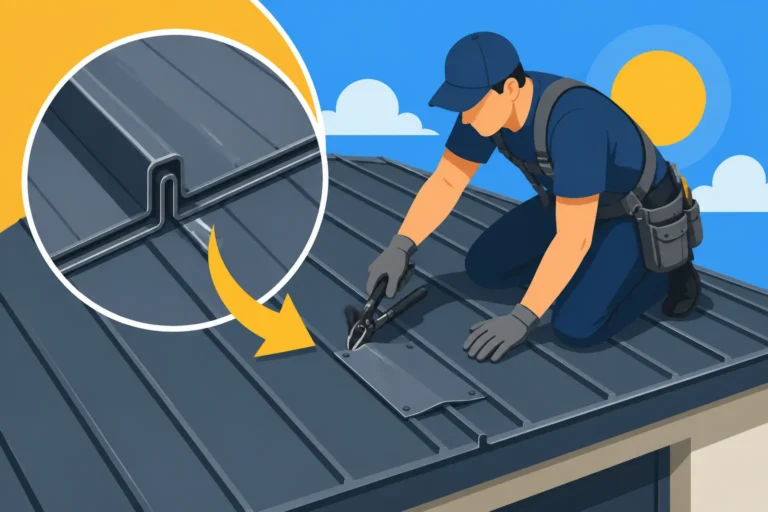
Hidden Fastener Systems (Standing Seam, Metal Shingles, Metal Tiles): These are often more aesthetically pleasing and offer superior weather resistance because the fasteners are concealed, protecting them from UV degradation and moisture. However, this sophisticated design makes repairs more complex and, consequently, more expensive. To replace a single standing seam panel, a contractor might need specialized seaming tools to "unzip" the old panel and then reseal the new one, often requiring partial disassembly of adjacent panels. This process demands highly skilled labor and specialized equipment, driving up the repair cost significantly. Repairing a section of a metal shingle or metal tile roof can also be complex, as these often interlock and may require careful removal of several surrounding pieces to access the damaged one. If you're curious about the premium associated with these systems, check out our piece on how much does a standing seam metal roof cost.
Roof Pitch and Accessibility Challenges
Imagine trying to fix something on a nearly flat surface versus trying to do the same job while clinging precariously to a steep slope. The difference in difficulty, safety precautions, and time needed is immense, and these factors directly translate into labor costs.
-
Low-Slope vs. Steep-Slope Roofs: A low-slope metal roof (often found on commercial buildings or modern residential designs) is generally easier and safer for roofers to navigate, leading to lower labor costs per hour or per project. On the other hand, a steep-slope roof requires extensive safety measures, including harnesses, ropes, staging, and often additional crew members for safety supervision. This increases labor time and risk, which is reflected in the repair bill. Contractors might charge a premium for working on roofs with pitches exceeding 6/12 (meaning a 6-inch rise over a 12-inch run) or particularly high roofs.
-
Accessibility Issues: Beyond pitch, how easy is it for roofers to get to your roof and move materials around? If your home has complex architecture, multiple gables, or is surrounded by mature landscaping that limits ladder placement, access becomes a challenge. Similarly, if there are obstructions like solar panels, chimneys, or numerous vents that need to be worked around or temporarily removed, the labor time will increase. Some contractors might even need to rent specialized equipment like boom lifts or scaffolding for particularly challenging access points, adding significantly to the overall cost.
Geographical Location and Local Market Rates
Just like the cost of living varies from city to city, so do the costs of construction and roofing services. What you pay for metal roof repair in, say, Houston, Texas, might be quite different from what you'd pay in a smaller town in the Midwest.
-
Regional Economic Factors: In areas with a high cost of living, higher wages for skilled labor, and greater demand for roofing services, repair costs will naturally be higher. Major metropolitan areas tend to have more expensive labor, material delivery costs, and overhead for businesses. For example, a metal roof repair in Los Angeles, known for its high construction costs, will likely be more expensive than the same repair in a less densely populated area.
-
Local Supply and Demand: If your area has been hit by a major storm, causing widespread roof damage, the demand for qualified roofers will skyrocket. This surge in demand often leads to higher prices as contractors prioritize more lucrative jobs and can afford to charge more. Conversely, in regions with less demand or a higher supply of skilled labor, prices might be more competitive. It's always a good idea to research typical costs in your specific location. Our guide to metal roof cost by state and city can offer some local insights.
Urgency and Emergency Repairs
When your roof is actively leaking and water is pouring into your living room, you're in an emergency situation. And unfortunately, emergencies almost always come with a premium.
-
Expedited Service Costs: If you need immediate service outside of normal business hours, or if a contractor has to rearrange their schedule to fit you in urgently, expect to pay more. Emergency call-out fees or overtime rates for labor are common in these scenarios. A sudden repair request during a busy season or after a major weather event can easily double the typical labor cost.
-
Temporary vs. Permanent Fixes: Sometimes, an emergency repair might just be a temporary patch to stop the immediate water intrusion, allowing the contractor to return later for a more permanent, detailed fix during regular hours. This means you might pay for two visits – an initial emergency stop-gap and then the actual, comprehensive repair. While this might seem like an added expense, it’s crucial to prevent further damage to your home’s interior, which could be far more costly in the long run.
DIY vs. Professional Repair: Weighing the Costs and Risks
When you're looking at a repair bill for your metal roof, it's tempting to think, "Could I just do this myself and save some money?" The answer, as with most things in life, is: it depends. While some minor fixes might be within the realm of a confident DIYer, the complexities and risks associated with metal roofing often make professional help the wiser investment.
The Allure and Hidden Costs of DIY Repairs
The idea of saving hundreds or even thousands of dollars by tackling a metal roof repair yourself is incredibly appealing. For very minor issues, like replacing a couple of obviously failing screws on a low-slope utility shed or applying a bit of sealant around a loose vent pipe, DIY might be feasible. You'd primarily be paying for materials: a box of screws, a tube of sealant, maybe a ladder if you don't own one.
However, the allure often hides significant hidden costs and risks:
- Safety First (Always!): Roofing is inherently dangerous. Falls from roofs are a leading cause of construction fatalities. Do you have the proper safety gear – harnesses, sturdy ladders, non-slip footwear? If not, buying or renting these adds to your cost. A single fall could result in serious injury or even death, far outweighing any monetary savings.
- Lack of Expertise and Tools: Do you know the specific type of sealant compatible with your metal roof's coating? Do you know how to properly tension a screw to prevent overtightening but ensure a good seal? Do you have the specialized seaming tools for a standing seam roof? Incorrect repairs can worsen the problem, void your warranty, and lead to even more expensive professional repairs down the line. Improper sealing can lead to future leaks, and using the wrong materials can cause corrosion or premature failure.
- Time Commitment: Even a "simple" repair can take a DIYer hours or days, especially if you're learning as you go, running to the hardware store multiple times, and dealing with unexpected issues. Your time has value, too!
- Warranty Voidance: Many metal roof manufacturers offer robust warranties, but these often depend on professional, certified installation and repair. Attempting a DIY repair could inadvertently void parts of your warranty, leaving you unprotected if a larger problem arises.
- Incomplete Diagnosis: As mentioned earlier, the visible leak might not be the actual source. A DIYer might fix the symptom only for the leak to reappear elsewhere, necessitating another attempt or, eventually, a professional call-out.
Ultimately, while the upfront material cost for DIY might be lower, the potential for injury, ineffective repairs, or voiding warranties makes it a high-risk gamble for anything beyond the most basic, non-structural issues.
Benefits and Price Tag of Professional Expertise
Hiring a professional metal roofing contractor might seem like the more expensive option upfront, but it's an investment in quality, safety, and peace of mind. Professionals bring a wealth of benefits that often justify their price tag:
- Specialized Knowledge and Experience: Reputable roofers understand the nuances of different metal types, panel profiles, coatings, and installation techniques. They know how to diagnose the root cause of a leak, not just the symptom. They're also adept at dealing with challenges like thermal expansion and contraction, which are critical for metal roofs.
- Correct Tools and Materials: Professionals have access to the right tools, from power seaming machines for standing seam roofs to high-quality sealants and replacement panels that match your existing system. They also know which materials are compatible and will last.
- Safety Protocols and Insurance: A professional crew is trained in safety procedures and equipped with the necessary gear. Crucially, they carry liability insurance, which protects you from financial responsibility if a worker is injured on your property or if your property is accidentally damaged during the repair. This alone is a massive benefit that DIY cannot offer.
- Warrantied Work: Many contractors offer a workmanship warranty on their repairs, giving you assurance that if the problem recurs due to their work, they’ll fix it at no additional charge. This is a valuable guarantee that a DIY project cannot provide.
- Efficiency: Because of their experience and specialized tools, professionals can often complete repairs much more quickly and effectively than a homeowner, minimizing disruption to your life.
While the cost of professional labor and materials will be higher, the value delivered through expertise, safety, and warranted work often makes it the most cost-effective solution in the long run. If you are considering the investment of a metal roof, understanding who pulls the permit: contractor or homeowner? and the associated responsibilities is also crucial.
How to Find a Reputable Metal Roofing Contractor
Okay, so you've decided to go the professional route – smart choice! Now, how do you find someone reliable who won't overcharge or do shoddy work? This step is absolutely critical.
- Start with Referrals: Ask friends, family, and neighbors who have metal roofs for recommendations. Word-of-mouth is often the best indicator of quality.
- Check Online Reviews and Portals: Websites like the Better Business Bureau, Google Reviews, and industry-specific platforms like Modernize can be incredibly helpful. Look for contractors with consistently high ratings and specific positive comments about their metal roofing expertise. Be wary of companies with many generic 5-star reviews or a significant number of unresolved complaints.
- Verify Credentials: Ensure the contractor is licensed (if required in your state or city), bonded, and insured. Ask for proof of liability insurance and workers' compensation. This protects you in case of accidents or property damage. Our article on metal roof contractor licensing, bonding & insurance provides more detailed information on what to look for.
- Ask for Metal Roofing Specific Experience: Don't just hire a general roofer; seek out someone with specific, extensive experience with metal roofs, especially the type you have (e.g., standing seam specialists). Ask how many metal roofs they've installed or repaired in the last year.
- Get Multiple Detailed Quotes: Don't settle for the first estimate. Contact at least three different contractors. Make sure their quotes are detailed and itemize labor, materials, and any other charges. A good quote should clearly outline the scope of work. Comparing metal roof bids apples to apples is essential.
- Questions, Questions, Questions: Don't be shy! Ask them about their process, their timeline, the materials they'll use, their safety procedures, and their warranty. A reputable contractor will be happy to answer all your questions thoroughly. Our guide on questions to ask a metal roofing contractor before you hire is a fantastic resource for this.
Finding the right contractor can take a little time and effort, but it’s time well spent to ensure your metal roof repair is done correctly and safely.
When Is Repair Not Enough? Deciding Between Repair and Full Replacement
There comes a point in every roof's life when patching things up just doesn't make sense anymore. It's a tough decision, especially with the higher upfront cost of metal roofs, but understanding when to opt for a full replacement instead of repeated repairs can save you a lot of headaches and money in the long run.
Assessing the Extent of Damage and Age of the Roof
This is probably the most crucial factor in deciding between repair and replacement. A good, honest contractor will help you make this assessment.
-
Widespread vs. Isolated Damage: If the damage is highly localized – say, a single punctured panel or a section of flashing that's failed – then repair is almost always the more economical choice. However, if you're dealing with multiple leaks across different sections of the roof, severe rust and corrosion spreading across many panels, or structural damage affecting a large percentage of the roof deck, individual repairs quickly become a losing battle. Each patch becomes a temporary band-aid on a system that's failing overall.
-
Age of the Roof: Metal roofs are renowned for their longevity, often lasting 40 to 70 years, sometimes even longer for materials like copper or zinc. But even the best metal roof eventually reaches the end of its useful life. If your metal roof is nearing the 30-40 year mark and you're starting to see multiple issues cropping up (more than just isolated wear and tear), it might be a strong indicator that replacement is imminent. Continually repairing an aging roof that’s past its prime can be like throwing good money after bad. For more on this, our article on metal roof lifespan: how long do they last? is a great read. If you’re asking yourself, "Should I repair or replace a 20-year-old metal roof?" it’s definitely time for a thorough professional inspection.
-
Underlying Issues: Sometimes, the visible damage is just the tip of the iceberg. If the original installation was flawed, leading to widespread issues like inadequate ventilation (causing condensation), improper panel alignment, or incorrect fastening across the entire roof, piecemeal repairs won't solve the systemic problem. In such cases, a complete overhaul might be necessary to ensure the long-term performance and integrity of the roofing system.
Long-Term Value and ROI Considerations
Beyond the immediate cost, think about the long-term implications for your home's value, energy efficiency, and your own peace of mind.
-
Return on Investment (ROI): While a metal roof replacement is a significant investment, it often provides an excellent return, especially if you plan to sell your home in the future. A new, high-quality metal roof is a major selling point, offering durability, energy efficiency, and curb appeal. Buyers often appreciate the low maintenance and long lifespan. If your existing roof is constantly needing repairs, it becomes a liability that detracts from your home's value. Replacing it with a new metal roof can significantly increase home value. Our guide on does a metal roof increase home value? delves into this topic.
-
Energy Efficiency: A new metal roof, particularly one with specialized coatings, can significantly improve your home's energy efficiency by reflecting solar radiation. If your old metal roof is performing poorly in this regard, a replacement could lead to noticeable savings on your utility bills over time, effectively paying for itself through reduced energy consumption.
-
Peace of Mind: Constantly worrying about the next leak, the next repair bill, or the potential for catastrophic failure in a severe storm can be incredibly stressful. A new, properly installed metal roof offers decades of worry-free protection, which has an intangible but very real value. If you're tired of chasing down leaks every season, replacement might be the best option for your mental well-being alone.
Financial Implications: Repair vs. Replacement Cost
This is where the rubber meets the road. You need to crunch the numbers.
-
Cost Over Time: If you're looking at a repair that costs, say, $1,500, but you anticipate needing similar repairs every 2-3 years because of the roof's overall condition, those costs add up. Over a decade, you could spend $5,000-$7,500 on repairs, which might be a substantial percentage of a new roof's cost. Sometimes, the cumulative cost of ongoing repairs can quickly approach or even exceed the cost of a full replacement, especially when you consider that a full replacement comes with a new, comprehensive warranty.
-
The "25% Rule": In some areas, particularly in Florida, there's a "25% rule" in building codes. If more than 25% of your roof needs repair or replacement, you might be required to bring the entire roof up to current building codes. This often means a full replacement, as repairing less than 25% repeatedly is not a viable long-term strategy for a failing roof. This rule effectively pushes homeowners towards full replacements in certain scenarios.
-
Insurance Considerations: If your roof damage is due to a sudden event like a severe storm, your homeowners insurance might cover a significant portion of a replacement, especially if the damage is widespread. In some cases, insurers might even mandate replacement if repairs are deemed insufficient to protect the home. It’s always worth investigating potential metal roof insurance savings & discounts. Conversely, if damage is due to neglected maintenance, insurance might not cover it.
The decision to repair or replace is never easy, but by carefully weighing the extent of damage, the age of your roof, long-term value, and the financial implications of both options, you can make the best choice for your home and your budget.
Smart Strategies to Manage Metal Roof Repair Expenses
Nobody wants to pay more than they have to, especially for something as critical as roof repairs. Thankfully, there are proactive steps you can take to keep those costs in check, from preventing problems in the first place to smart planning if a repair becomes unavoidable.
The Role of Regular Maintenance in Preventing Costly Repairs
This might sound obvious, but consistent, proactive maintenance is your absolute best defense against hefty repair bills. It’s the difference between catching a small issue that costs a few hundred dollars to fix and discovering a catastrophic problem that costs thousands.
-
Annual Inspections: Just like you get your car serviced, your roof needs regular check-ups. Ideally, you should inspect your metal roof at least once a year, preferably in the spring after winter’s harshness or in the fall before winter sets in. Look for loose fasteners, bent panels, compromised sealants, or debris accumulation. If you're not comfortable climbing on your roof (and many aren't, for good reason!), hire a professional to perform an inspection. Many reputable roofing companies offer inspection services for a reasonable fee. This fee is a fraction of what you'd pay for a major repair down the line.
-
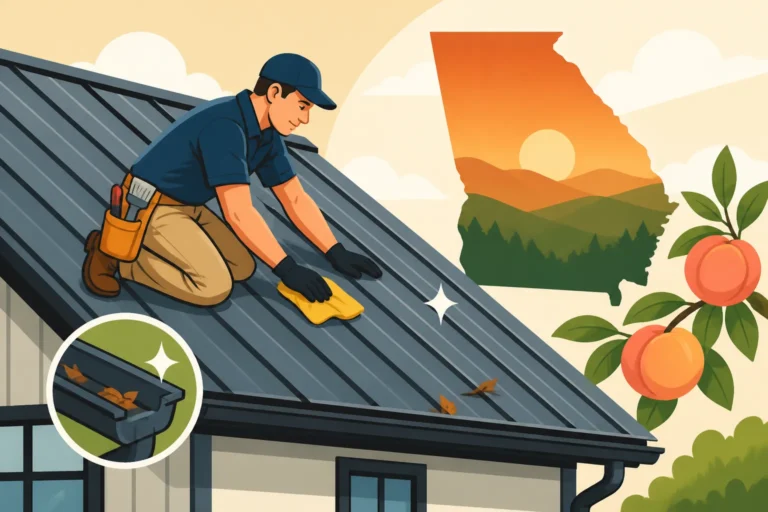
Keeping it Clean: Debris like leaves, branches, and dirt can accumulate in valleys, around chimneys, and in gutters. This organic matter retains moisture, which can accelerate corrosion on metal panels, especially if the protective coating is compromised. It can also block proper drainage, leading to standing water – a nightmare for any roof. Regularly cleaning your roof and gutters prevents these issues. Just be sure to use appropriate methods and avoid harsh chemicals or abrasive brushes that could damage the metal coating.
-
Promptly Address Small Issues: Don't procrastinate on small problems. A single loose screw might lead to a small leak, but if left unattended, that small leak can lead to wood rot, insulation damage, and mold growth, transforming a minor repair into a major headache. Addressing issues like loose trim, minor sealant cracks, or displaced flashing immediately can save you thousands later. Think of it like a dental cavity – much cheaper to fill a small one than to deal with a root canal! Our article on metal roof maintenance guide provides excellent tips to help extend your roof's life.
Navigating Insurance Claims for Metal Roof Damage
When unexpected damage occurs due to severe weather events, your homeowners insurance can be a lifesaver. However, navigating the claims process can feel like a labyrinth.
-
Understand Your Policy: Before disaster strikes, take the time to read and understand your specific homeowners insurance policy. Pay close attention to sections related to roof coverage, deductibles, and exclusions. For example, some policies might cover sudden storm damage but exclude damage due to wear and tear or poor maintenance. Also, be aware of any specific clauses regarding cosmetic damage exclusions for metal roofs, which are becoming more common in hail-prone regions.
-
Document Everything: If your metal roof sustains damage from a storm (hail, high winds, falling trees), document everything immediately. Take clear, well-lit photos and videos of the damage from multiple angles, both on the roof and any interior damage. Date your documentation. This provides crucial evidence for your claim.
-
Contact Your Insurer Promptly: Report the damage to your insurance company as soon as safely possible. They will typically send an adjuster to inspect the damage. It's often beneficial to have your roofing contractor present during this inspection, as they can point out hidden damage that an adjuster might miss.
-
Get a Professional Assessment: Before filing a claim or accepting an insurance payout, get a detailed assessment and estimate from a reputable metal roofing contractor. Their expert opinion can be invaluable in ensuring all damage is identified and properly accounted for in your claim. Sometimes, using a service like Modernize can help you connect with experienced contractors who are familiar with insurance claims processes.
-
Compare Estimates and Payouts: Once you have your contractor’s estimate and the insurance company’s offer, compare them carefully. Don't be afraid to negotiate if there’s a significant discrepancy. Ensure the insurance payout covers the full scope of necessary repairs or replacement. Our comprehensive guide on metal roof insurance savings & discounts might provide additional insights on this topic.
Getting Multiple Quotes and Understanding Estimates
This strategy is fundamental for any significant home repair, and metal roofing is no exception. It’s about being an educated consumer.
-
Three is the Magic Number: Always aim to get at least three detailed quotes from different reputable metal roofing contractors. This provides you with a range of pricing and allows you to compare the proposed scope of work, materials, and warranties. Be wary of quotes that are significantly lower or higher than the others; they might indicate a contractor cutting corners or trying to overcharge.
-
Detailed is Better: A good estimate shouldn't just be a single number. It should break down costs for labor, materials (including specific types and quantities), permit fees (if applicable), disposal costs for old materials, and any other charges. This transparency helps you understand exactly what you're paying for and makes it easier to compare apples to apples. Our guide on how to read and compare metal roof quotes offers practical advice on this.
-
Ask for Clarification: If anything in a quote is unclear, ask! Don't assume. Understand why one contractor might propose a different solution or material than another. This conversation can reveal a lot about their expertise and commitment to customer service. For instance, if one contractor quotes a higher price for a specific sealant, ask why it's better than a cheaper alternative – it might save you a future leak.
-
Don't Just Go for the Cheapest: While cost is important, it shouldn't be the only factor. Consider the contractor's reputation, experience (especially with metal roofs), warranty offerings, and communication. The cheapest bid often comes with hidden compromises or inferior workmanship that will cost you more in the long run. An investment in a quality repair is an investment in your home’s longevity.
By actively maintaining your roof, understanding your insurance, and being diligent in gathering and comparing quotes, you can effectively manage and potentially reduce the financial burden of metal roof repairs.
Disclaimer
Please remember that the information and cost estimates provided in this article are for general guidance only. Actual metal roof repair costs can vary significantly based on your specific location, the extent and type of damage, the materials used, the complexity of the repair, and the rates charged by local contractors. It is always recommended to obtain multiple detailed quotes from qualified and insured metal roofing professionals for an accurate assessment of your individual situation. We do not provide financial, legal, or construction advice.