What to Ask About Crew Experience and Safety
The thought of replacing your roof can be overwhelming, and finding the right contractor often feels like navigating a maze. It's not just about the price tag; it's about trusting that the people working on your home know exactly what they're doing and will do it safely. This guide is here to help you cut through the confusion and empower you with the crucial questions to ask about a metal roofing crew's experience and safety practices.
Why Crew Experience Matters for Your Metal Roof
When you're investing in a metal roof, you're not just buying materials; you're buying into the expertise of the people who will install them. A metal roof, unlike traditional asphalt shingles, is a precision product. The panels, the fasteners, the flashing—it all needs to come together perfectly for your roof to perform as it should for decades. Without an experienced crew, even the highest quality materials can fall short of their potential.
The Learning Curve of Metal Roofing
Installing a metal roof isn't simply a matter of nailing down panels. It requires a distinct skill set and a deep understanding of metal properties like expansion and contraction. For instance, standing seam metal roofs involve intricate seaming processes that create waterproof joints, a far cry from overlapping shingles. If these seams aren't crimped or snapped together correctly, or if the panels aren't aligned precisely, you're looking at potential leaks and structural issues down the line.
Consider a scenario where a crew is unfamiliar with the specific type of metal paneling you've chosen, say, a hidden fastener system. They might inadvertently over-tighten screws, leading to "oil canning" – a visible distortion of the flat metal surface that, while often cosmetic, can indicate underlying stress. Or, they might use incorrect flashing techniques around chimneys or skylights, which are notorious areas for leaks if not handled by seasoned professionals. This isn't something a weekend DIY enthusiast or a general roofing crew learning on the job should be attempting on your home.
Impact on Quality and Longevity
The expertise of your installation crew directly correlates with the long-term performance and durability of your metal roof. An experienced team understands the nuances of weather conditions in your area, choosing appropriate underlayments and ventilation strategies to prevent issues like condensation or ice dams. They know how to properly prepare the roof deck, ensuring a stable foundation for the metal panels. This attention to detail means your roof will not only look great but will also stand up to the elements for its full intended lifespan.
Think about the longevity claims that metal roofs boast – often 40 to 70 years! Those numbers are based on proper installation. If a less experienced crew makes shortcuts or errors during the initial installation, such as improper fastening or poor panel alignment, you could face premature wear, rust, or even panels detaching in high winds. You might end up needing costly repairs or even an early replacement, completely negating the long-term value proposition. To truly understand the investment, it's worth exploring the topic of Metal Roof Lifespan: How Long Do They Last? to appreciate just how critical a professional installation is to achieving that promised durability.
Essential Questions About Crew Experience
When interviewing potential contractors, don't be shy about digging into the specifics of their crew's experience. A general answer about "years in business" isn't enough; you need to understand the boots-on-the-roof experience level. This is where you can truly differentiate a seasoned metal roofing specialist from a generalist.
Inquire About Specific Metal Roofing Expertise
It's one thing to have been in the roofing business for twenty years; it's another to have been installing metal roofs for that long. Metal roofing is a specialized craft. Ask directly: "How many years has your lead installer, and the core of the crew, been exclusively installing metal roofs?" Don't settle for "we've been doing roofs forever." You want a team that breathes and lives metal.
Go further by asking about the types of metal roofs they've installed. Has their experience primarily been with agricultural corrugated panels, or do they have extensive experience with architectural standing seam, metal shingles, or even more complex profiles like metal tiles or slate? Each system has its own quirks and installation techniques. A crew proficient in corrugated panels might struggle with the intricate details of a standing seam system, which requires specialized seaming tools and a different approach to fastening. You should also inquire if they are Manufacturer-Certified Metal Roof Installers Explained. Many manufacturers offer training and certification programs, ensuring installers are up-to-date on the latest product specifications and best practices, which can be critical for maintaining your warranty.
For example, if you're looking at a sleek standing seam roof, ask, "How many standing seam projects has this specific crew completed in the last year alone?" A contractor might have completed hundreds of jobs, but if only a handful were standing seam, their dedicated crew might still be relatively new to that particular system. Look for enthusiasm and confidence when they talk about these specific project types, not hesitation.
Understanding Crew Structure and Training
Another crucial line of questioning revolves around the employment status and training of the crew. Many roofing companies utilize subcontractors, which isn't inherently bad, but it does add a layer of complexity. Ask, "Do you use in-house employees for your installation crews, or do you subcontract the work?" Both models have pros and cons, which you can learn more about in Subcontractors vs In-House Roofing Crews. If they use subcontractors, ask how long they've worked with the same subcontracting teams and what their vetting process entails. You want continuity and a track record of collaboration.
Beyond employment status, inquire about ongoing training and certifications. "What kind of continuing education or manufacturer-specific training do your crews receive?" The metal roofing industry evolves, with new materials, fastening systems, and installation techniques emerging regularly. A contractor committed to excellence will invest in keeping their teams current. This could involve regular workshops, safety refreshers, or updates on new product lines from companies like Petersen Aluminum (PAC-CLAD) or McElroy Metal.
Finally, clarify who will be the point person on-site. "Will a dedicated foreman or project manager be present on the job site at all times during installation?" A strong, experienced supervisor is vital for ensuring quality control, adherence to plans, and immediate resolution of any issues that arise. They act as the communication bridge between you, the crew, and the main office, ensuring smooth operations.
Prioritizing Safety on the Job Site
Roofing work, by its very nature, is one of the most hazardous professions. When a crew is working on your home, their safety is paramount, not just for their well-being, but also for your peace of mind and protection against potential liability. A contractor who prioritizes safety is often one who prioritizes quality in all aspects of their work.
Importance of Comprehensive Safety Protocols
Falls from roofs are a leading cause of injury and fatality in construction. Beyond falls, workers handle heavy materials, sharp metal edges, and power tools, all of which carry inherent risks. A robust safety protocol isn't just about complying with OSHA regulations; it's about creating a culture where every crew member understands the dangers and takes proactive steps to mitigate them.
Consider the potential implications for you, the homeowner. If a worker gets injured on your property due to a contractor's negligence or lack of safety equipment, you could potentially be drawn into legal proceedings, even if you have homeowner's insurance. While the contractor's insurance should cover their workers, an accident is still a major disruption and a deeply unpleasant experience. This is why verifying a contractor's Metal Roof Contractor Licensing, Bonding & Insurance is non-negotiable before any work begins. A safe job site also means a more efficient job site, with fewer delays due to incidents or accidents. It reflects professionalism and respect for both the workers and your property.
Key Safety Questions to Ask
When discussing safety, ask for specifics rather than vague assurances. A great starting point is: "What kind of safety training do all your crew members receive, and how often is it updated?" Look for mentions of OSHA 10 or OSHA 30 certifications, which are basic and advanced safety training courses recognized across the construction industry. These indicate a foundational understanding of workplace hazards and prevention.
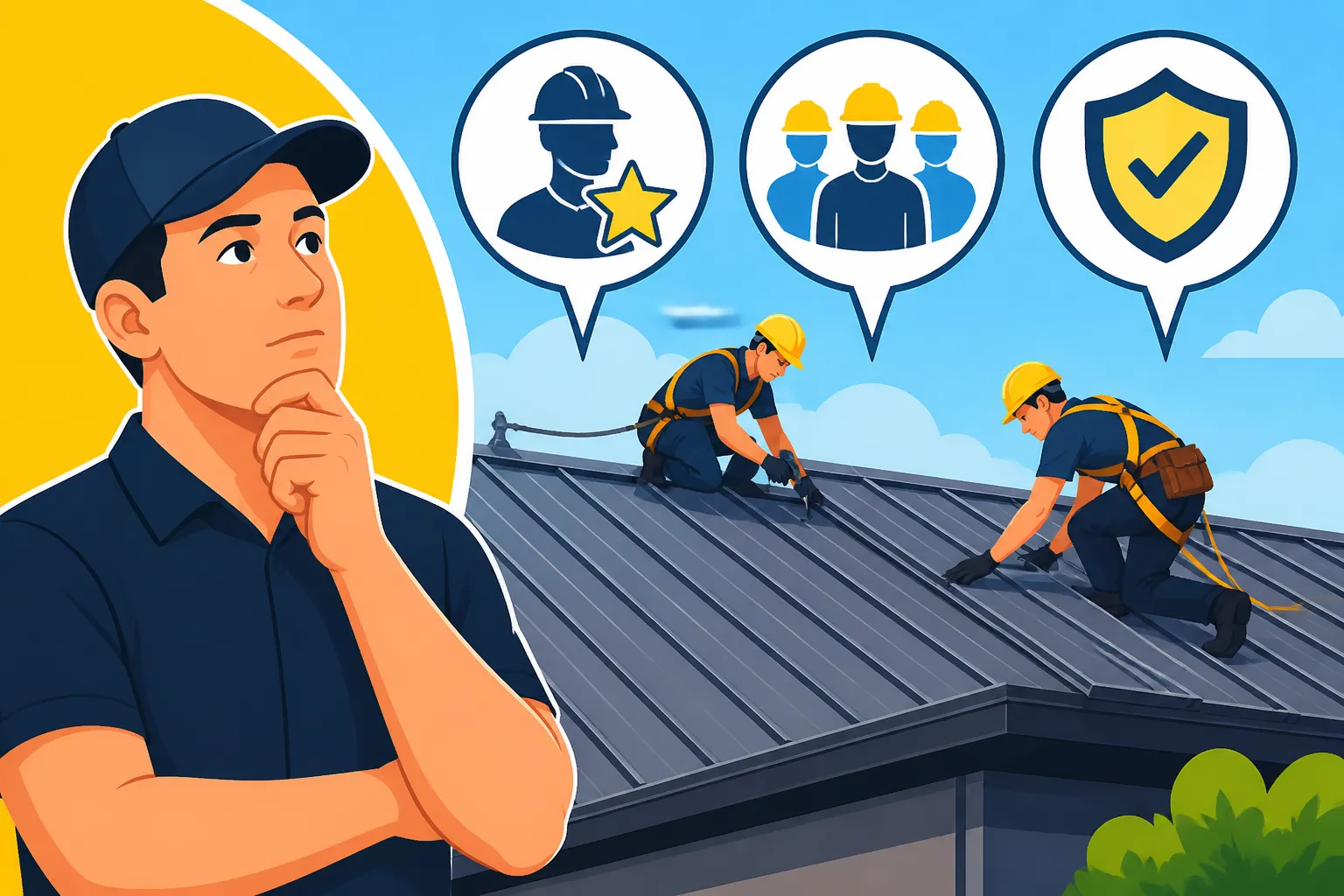
Next, inquire about their fall protection plan. "What specific fall protection measures do your crews use on every job?" You should hear about a combination of personal fall arrest systems (harnesses, lanyards, anchor points), guardrail systems around the perimeter, and potentially safety nets for certain steep or complex roofs. A reliable contractor will detail these measures without hesitation. They should also explain how they manage material handling to prevent strain injuries or dropped materials.
Don't forget about site management. "How do you maintain a safe and clean work environment around my home, especially for my family and pets?" This includes daily cleanup of debris, proper storage of tools and materials, and clearly marked hazardous areas. A disorganized site is a dangerous site. A professional crew will ensure that pathways are clear, sharp metal scraps are contained, and nails are picked up diligently, protecting children and pets. They should conduct daily safety briefings before work begins, reviewing potential hazards specific to your roof and reinforcing safe practices.
| Safety Aspect | Key Questions to Ask | What to Look For |
|---|---|---|
| Training | What safety training do your crew members receive? How often is it updated? | OSHA 10/30 certifications, regular refresher courses, manufacturer-specific safety protocols. |
| Fall Protection | What specific fall protection measures do your crews use on my roof? | Detailed explanation of harnesses, lanyards, anchor points, guardrails, and potentially safety nets. Commitment to 100% tie-off. |
| Insurance | Can you provide proof of workers' compensation and general liability insurance? | Up-to-date certificates directly from their insurance provider, confirming sufficient coverage amounts. Verify the contractor's Licensed vs Insured vs Bonded: What's the Difference. |
| Site Management | How do you manage debris and maintain site cleanliness? How do you protect my property? | Daily cleanups, designated waste containers, clear pathways, protection for landscaping/driveways, post-project magnet sweeps for nails. |
| Emergency Plan | What is your protocol in case of an accident or injury on the job site? | Clear chain of command, immediate medical attention, incident reporting, contact information for emergency services and property owner. |
| Supervision | Who is responsible for overseeing safety on a daily basis? | A dedicated foreman or site manager with safety training, conducting daily safety briefings and checks. |
Verifying Their Claims and Making Your Decision
Asking the right questions is only half the battle. The next crucial step is verifying the answers. Any contractor can say they have experienced, safety-conscious crews. It's up to you to confirm their claims through due diligence. This verification process is what separates a good hire from a regrettable one, and it's a vital part of How to Hire a Metal Roofing Contractor.
Checking References and Past Work
One of the most effective ways to gauge a contractor's crew experience and safety adherence is by talking to their past clients. When you ask for references, specify that you'd like to speak with homeowners for whom they've installed metal roofs within the last year or two. Don't just ask, "Were you happy with the work?" Dig deeper.
Ask the references specific questions like: "Did the crew seem knowledgeable about metal roofing?" "Were they respectful of your property?" "How did they manage debris and keep the site clean?" Most importantly, "Did you observe them consistently using safety equipment, like harnesses, on the roof?" This is a direct insight into their on-the-ground practices. You can find more targeted questions to ask when checking references in How to Check Roofing Contractor References.
Beyond verbal references, ask to see examples of their completed metal roofing projects, either through photos or by providing addresses you can drive by. While you won't be able to inspect the safety practices directly, you can assess the quality of the installation, which is often a reflection of an experienced crew. Look for straight lines, uniform seams, and clean flashing details. This also helps you understand the aesthetics of their work on similar homes to yours.
The Role of Insurance and Warranties
Proof of comprehensive insurance is non-negotiable. Request current certificates of insurance for both workers' compensation and general liability. Workers' compensation protects the contractor's employees if they are injured on your property, while general liability covers damages to your property or neighboring properties caused by the contractor's work. Call their insurance provider directly to verify that the policies are active and the coverage limits are adequate. Never take a contractor's word or a photocopy at face value. This deep dive into Metal Roof Contractor Licensing, Bonding & Insurance is critical.
Furthermore, a crew's experience and adherence to manufacturer guidelines directly impact your roof's warranty. Many metal roof manufacturers will void their material warranty if the roof is not installed by a certified or qualified installer following their specific instructions. When you review Metal Roof Warranties: Workmanship vs Manufacturer, you'll see that a workmanship warranty from the installer is just as important, guaranteeing the quality of the installation itself. If an inexperienced crew makes errors, the burden of repair could fall on you if the workmanship isn't explicitly covered or if the contractor disappears. Make sure the contractor's promises are clearly outlined in What a Metal Roof Contract Should Include. Also, ask Questions to Ask About Metal Roof Warranty to ensure you understand what's covered.
Leveraging Platforms like Modernize
In today's digital age, finding and vetting reputable contractors has become easier thanks to platforms designed to connect homeowners with qualified professionals. Services like Modernize can be incredibly useful in your search for a metal roofing contractor. These platforms often pre-screen contractors for essential qualifications such as licensing, insurance, and a certain level of experience.
When you use a platform like Modernize, you can submit details about your project, and they will connect you with local roofing companies that meet their vetting criteria. This can save you a significant amount of time and effort in the initial search phase, helping you bypass the less qualified or less reputable options. While Modernize helps streamline the connection, it’s still crucial to ask all the questions outlined in this guide during your direct interviews with the contractors they recommend. Think of it as a helpful filter that brings you closer to reliable professionals, but your final due diligence remains paramount.
Ultimately, by asking targeted questions about crew experience and safety, and then diligently verifying the answers, you'll feel confident in your decision. Choosing the right crew is just as important as choosing the right metal roof materials; it ensures a lasting, beautiful, and safe investment for your home.
Disclaimer
This guide is intended for informational purposes only and does not constitute professional advice. Always consult with licensed and insured metal roofing professionals for specific recommendations and evaluations regarding your home. Building codes, regulations, and best practices can vary by location and change over time.