Is Hail Damage to a Metal Roof Covered by Insurance?
It's an utterly frustrating experience to invest in a durable metal roof, thinking you're safe from the common woes of asphalt shingles, only to have a severe hailstorm roll through and leave behind a landscape of dents. The immediate thought for many homeowners is, "Will my insurance even cover this, or am I on the hook for repairs?" This guide is here to shed light on how insurance typically handles hail damage to metal roofs, helping you navigate the complexities of claims and understand your policy.
Understanding Your Homeowners Insurance Policy
Navigating the nuances of your homeowners insurance policy can feel like deciphering ancient texts, especially when you’re in the stressful aftermath of a natural disaster like a hailstorm. But taking the time to understand the basics before a storm hits can make all the difference in how smoothly your claim proceeds. It's not just about having insurance; it's about knowing what you actually have.
Key Policy Components for Roof Damage
When it comes to roof damage, a few specific terms in your policy are absolutely critical. Your dwelling coverage is what protects the physical structure of your home, including the roof, from specific perils. Most standard homeowners policies cover damage from wind, fire, and yes, hail. However, the extent of that coverage, and how much you'll get back, can vary wildly depending on whether your policy offers Actual Cash Value (ACV) or Replacement Cost Value (RCV).
Actual Cash Value (ACV) policies can be a real gut punch for homeowners. With ACV, your insurer will factor in depreciation based on the age and condition of your roof. So, if your metal roof is 10 years old, they'll subtract a significant amount for wear and tear, leaving you to cover the difference for a new roof. This can mean a much smaller payout than you might expect, often leaving a substantial gap between what you receive and the actual cost of repairs or replacement. On the other hand, Replacement Cost Value (RCV) policies are generally far more favorable. They pay out the cost of replacing or repairing your roof with materials of similar kind and quality, without deducting for depreciation. This means you’re much more likely to get the full amount needed to restore your roof to its pre-loss condition, making the financial burden much lighter. It's definitely worth checking if your policy is RCV, especially for a significant investment like a metal roof.
Beyond ACV vs. RCV, your deductible is another crucial component. This is the amount you have to pay out of pocket before your insurance coverage kicks in. For hail and wind damage, many policies now have a separate, higher deductible, often calculated as a percentage of your home's insured value (e.g., 1% or 2%). So, if your home is insured for $300,000 and you have a 1% wind/hail deductible, you'd pay $3,000 before your insurer pays anything. Understanding this number is vital for calculating your potential out-of-pocket expenses.
"Cosmetic Damage Exclusion" Explained
This is where things often get tricky, especially for metal roofs. Many insurance policies, particularly in hail-prone regions like parts of Texas or Oklahoma, now include a "cosmetic damage exclusion" or an "appearance clause." Essentially, this clause states that if your metal roof suffers damage that only affects its aesthetic appearance – like minor dents that don't compromise the integrity or functionality of the roof – the insurer may not cover the cost of repairs or replacement.
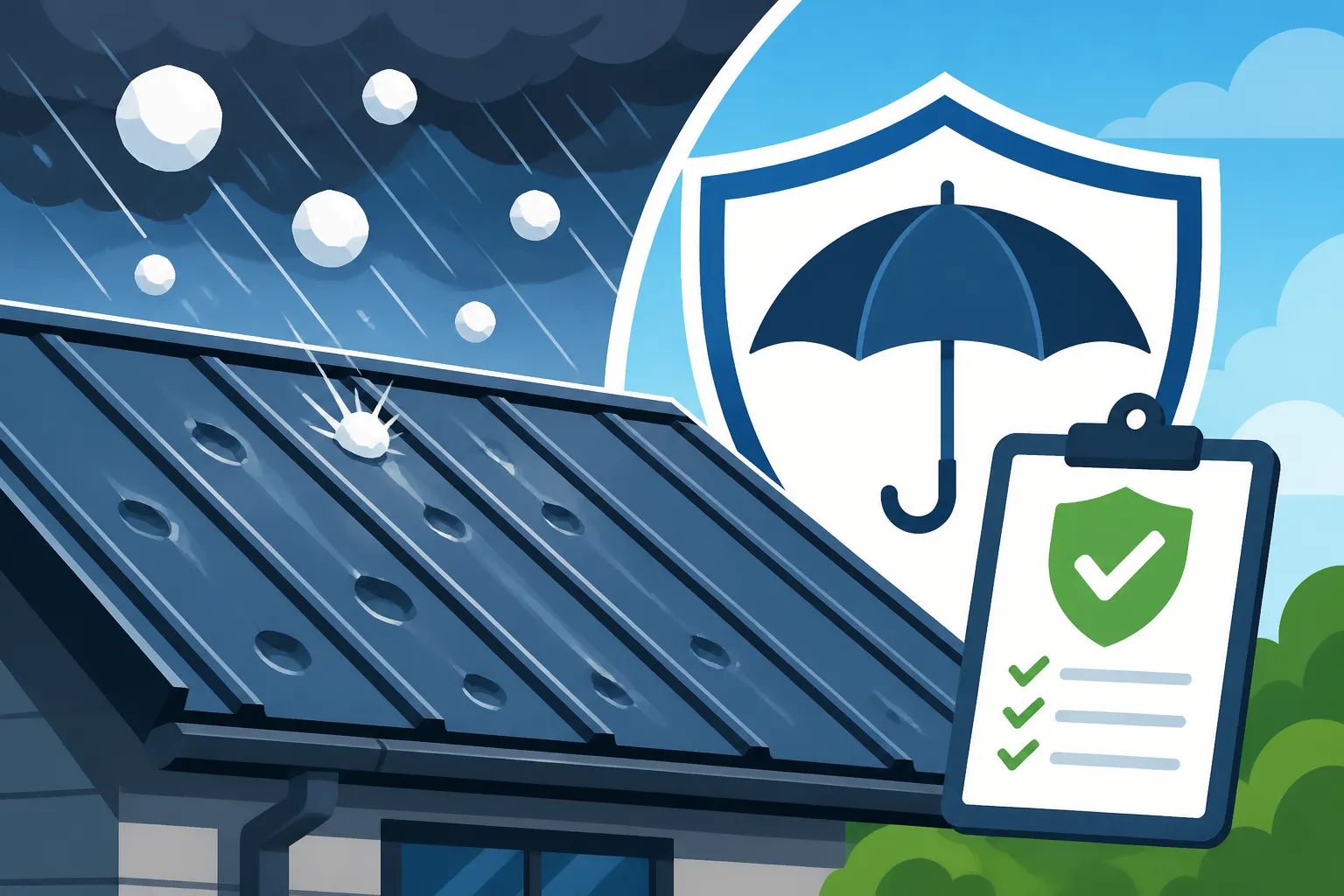
Imagine a hailstorm pelting your beautiful, charcoal gray standing seam metal roof. After the storm, you notice dozens of small dimples across the panels. To you, it looks terrible; your roof no longer has that pristine, sleek appearance you paid for. However, if these dents haven't punctured the panels, caused leaks, or compromised the protective coating, an adjuster might deem it "cosmetic." This means your insurer could deny your claim, arguing that the roof is still doing its job of protecting your home, even if it's not as pretty. This is a common point of contention and a huge source of frustration for homeowners.
The intent of these clauses is to prevent insurers from paying out large sums for purely aesthetic issues on durable materials like metal, which, while dentable, often remain functional. However, it completely overlooks the property value impact and the homeowner's pride in their investment. It's crucial to thoroughly review your policy for any such exclusions and, if possible, discuss them with your insurance agent. Some insurers might offer riders or endorsements that provide coverage for cosmetic damage for an additional premium, which could be a worthwhile investment if you live in an area prone to hail. Understanding a Metal Roof Cosmetic Damage Insurance Exclusion is key before signing any policy.
Acts of God vs. Negligence
Insurance policies generally cover "sudden and accidental" damage caused by specific perils, often referred to as "Acts of God" when they are natural disasters outside of human control. Hailstorms certainly fall into this category. If a hailstorm damages your roof, your policy is designed to kick in, assuming you meet your deductible and there are no other exclusions.
However, insurance policies typically don't cover damage resulting from neglect or poor maintenance. For instance, if your metal roof was already in disrepair, with loose fasteners or rusted areas that pre-existed the hailstorm, the insurer might argue that the hail damage was exacerbated by your negligence. They might deny the claim entirely or only cover a fraction of the cost, attributing a portion of the damage to your failure to maintain the roof. This highlights the importance of regular roof maintenance and promptly addressing any minor issues before they become major problems. A well-maintained roof not only performs better but also strengthens your position when filing an insurance claim. You can find more tips in a Metal Roof Maintenance Guide.
How Hail Affects Metal Roofs Differently
Metal roofs are renowned for their incredible durability and longevity, often outlasting traditional asphalt shingles by decades. This superior performance is a big reason why so many homeowners choose them, especially in regions with extreme weather. But even the toughest materials have their vulnerabilities, and hail damage on a metal roof presents a unique set of challenges and considerations that differ significantly from other roofing types.
Types of Hail Damage to Metal Roofs
When hailstones impact a metal roof, the primary and most obvious form of damage is denting. These dents can range from tiny pockmarks, barely noticeable from the ground, to significant depressions that are clearly visible. The severity of the denting depends on several factors: the size, density, and velocity of the hailstones, as well as the gauge and type of metal roofing material. For instance, a lighter gauge aluminum roof might dent more easily than a heavier gauge steel roof.
Beyond just dents, hail can cause more insidious forms of damage that might not be immediately apparent. The protective coating on metal panels, such as a Kynar 500 (PVDF) or SMP finish, can be chipped, cracked, or even completely removed by heavy hail impact. This isn't just a cosmetic issue; it exposes the underlying metal to the elements, making it susceptible to rust and corrosion over time. This is particularly true for steel or Galvalume roofs where the protective layer is critical for longevity. Over time, these compromised areas will degrade, leading to potential leaks and a shortened roof lifespan.
Another concern is panel warping or distortion. While less common, extremely large hailstones, especially combined with other factors like wind uplift during a storm, can actually warp panels, causing them to lift, buckle, or create gaps. This kind of damage can compromise the structural integrity of the roof and certainly lead to leaks. Lastly, the fasteners used on some metal roof profiles (like corrugated or R-panel roofs) can be damaged. The rubber washers beneath screws can be cracked or dislodged, breaking their watertight seal and creating entry points for water. Even on standing seam roofs, heavy impact can affect the integrity of seams or clips, leading to issues.
The Durability Misconception
It's a common misconception that because metal roofs are advertised as "impact-resistant" or "Class 4 rated" (which is the highest rating for impact resistance for roofing materials), they are completely immune to hail damage. While it's true that a metal roof is far more resistant to hail than, say, a standard asphalt shingle roof, it's not indestructible. Asphalt shingles might lose granules, crack, or even shatter under severe hail, often leading to immediate leaks. Metal roofs, especially those with a Class 4 impact rating, are designed to withstand significant impacts without penetrating or compromising the roof's ability to shed water.
However, "withstanding" impact doesn't necessarily mean "remaining pristine." A metal roof might not leak after a severe hailstorm, but it can certainly show widespread denting and coating damage. This is where the durability perception clashes with the cosmetic reality. Homeowners expect a roof that looks as good as it performs, especially after investing a premium. While a metal roof might prevent interior water damage that an asphalt shingle roof would succumb to, the cosmetic damage can still be extensive and disheartening. This discrepancy is often at the heart of insurance disputes, especially with the aforementioned cosmetic damage exclusions. The bottom line is that while your metal roof is highly durable, don't assume it's impervious to all signs of hail.
Visible vs. Functional Damage
This distinction is perhaps the most critical when dealing with insurance claims for metal roof hail damage. Visible damage refers to the aesthetic changes: the dents, dings, and surface imperfections that affect the roof's appearance. Functional damage, on the other hand, refers to damage that compromises the roof's primary purpose: protecting your home from the elements. This includes punctures, cracks in the panel that allow water intrusion, dislodged or damaged fasteners that create leak points, or significant warping that affects the roof's ability to drain water effectively. Damage to the protective coating that leads to rust is also considered functional, as it shortens the roof's lifespan.
Insurance companies are primarily concerned with functional damage. If your roof is leaking, or there's clear evidence that it will leak due to structural or protective layer compromise, they are generally obligated to cover the repair or replacement. The challenge arises when the damage is predominantly visible, like minor dents, but doesn't immediately cause a leak or functional failure. This is where the "cosmetic damage exclusion" comes into play. If your policy has this clause, and the adjuster determines the damage is purely aesthetic, your claim may be denied.
For homeowners, the distinction can be agonizing. A roof covered in dents might not be leaking today, but it significantly impacts curb appeal and potentially resale value. Furthermore, even seemingly minor dents can sometimes lead to functional issues down the line, especially if they stress the metal or coatings in ways that accelerate wear. This is why having a skilled, independent roofing contractor assess the damage, especially one experienced with metal roofing, can be invaluable. They can often identify subtle functional damages that an insurance adjuster might overlook or dismiss. Understanding the true extent of damage can help you determine if Metal Roof Repair vs Replacement: How to Decide is the best path forward.
The Insurance Claim Process for Hail-Damaged Metal Roofs
Filing an insurance claim after a hailstorm can be an intimidating process, filled with paperwork, inspections, and negotiations. It’s a journey that can often feel like you’re on your own, especially when you’re dealing with the emotional toll of property damage. Knowing what to expect and how to prepare can significantly ease the burden and improve your chances of a fair settlement.
Initial Steps After Discovering Damage
The moment you suspect hail damage on your metal roof, your first priority is to ensure safety. Only inspect your roof from the ground if it's safe to do so. If you have concerns about the structural integrity or if the roof is too high or slippery, do not attempt to climb on it yourself. Instead, call a reputable local roofing contractor experienced with metal roofs for a professional assessment. They can safely inspect the roof and identify potential issues.
Once you’ve made a preliminary assessment, the next step is to secure any immediate damage to prevent further loss. This might involve temporarily covering a small puncture with a tarp, though extensive roof tarping might be a job for a professional. Document everything before any temporary repairs. Take clear photos and videos from multiple angles, capturing both widespread damage and close-ups of specific dents, chipped coatings, or compromised fasteners. Date-stamp these if possible.
Finally, contact your insurance company as soon as possible to report the damage and initiate a claim. Most insurers have a dedicated claims department or online portal. Be prepared to provide your policy number, the date of the storm, and a brief description of the damage. They will assign you a claim number and an adjuster. Remember, the sooner you report it, the sooner the process can begin.
Documenting the Damage Thoroughly
This step cannot be stressed enough. Your documentation is your strongest ally in an insurance claim. Don’t just take a few quick photos; be comprehensive. Walk around your property and photograph everything that might be related to the hail event. This includes your roof, obviously, but also gutters, downspouts, siding, windows, outdoor furniture, vehicles, and even your landscaping. Hail rarely damages just one component. If you can show widespread damage to other property, it helps substantiate the severity of the storm and, by extension, the damage to your roof.
For the metal roof specifically, take clear, well-lit photos of every section of the roof. Use a zoom lens if necessary. Look for obvious dents, but also pay close attention to the surface coating. Are there any spots where the paint has chipped or peeled? Are there signs of rust already forming in damaged areas? Try to get photos that show the pattern of the hail impact. If you have a drone, that can provide invaluable aerial footage. Consider measuring the size of some of the larger hailstones if you find them, as this can correlate with the damage severity. If you hire a professional roofer to inspect, ask for their detailed report, including photos and a written assessment of both cosmetic and functional damage. This report, especially if it points to functional damage or a compromised protective coating, will be vital in challenging a "cosmetic-only" claim denial.
Navigating the Adjuster's Inspection
After you file your claim, your insurance company will send an adjuster to assess the damage. It’s important to be present during this inspection. This is your opportunity to point out what you’ve observed and provide them with your detailed documentation. Don’t just stand by; actively walk through the inspection with them. Ask questions about what they are looking for and how they are assessing the damage.
Adjusters typically look for quantifiable damage. For metal roofs, they'll often look for clear evidence of functional damage like perforations, seam separation, or significant structural compromise. They might use a grid method to count dents within a specific area to determine if there's enough damage to warrant replacement. However, their assessment can sometimes downplay cosmetic damage or the long-term implications of coating loss. This is where your independent contractor's report, detailing issues like compromised coatings leading to future corrosion, becomes crucial. Be polite but firm, and ensure all your concerns are heard and documented by the adjuster. It's often helpful to have your contractor present during the adjuster's visit, as they can speak the "roofing language" and advocate on your behalf.
Dealing with Claim Denials and Negotiations
It's unfortunately not uncommon for metal roof hail damage claims to be initially denied, especially if the policy has a cosmetic damage exclusion. If your claim is denied or if the payout offered is insufficient, don't give up. The first step is to request a detailed explanation in writing from your insurer for the denial. Understand precisely why they denied it. Was it deemed purely cosmetic? Was there a pre-existing condition clause invoked?
Once you have their reasoning, you can begin to negotiate. This often involves providing additional evidence. If your independent roofing contractor found functional damage that the adjuster missed or dismissed, submit their report and photos. Highlight specific areas where the protective coating has been compromised, explaining that this leads to premature corrosion and a shortened lifespan, which constitutes functional damage over time. You might need to secure a second or even third opinion from other reputable contractors. If you still face resistance, consider hiring a public adjuster. A public adjuster works for you, not the insurance company, and their fee is typically a percentage of the settlement. They are experts in insurance policies and claims negotiation and can be very effective in getting a fair settlement, particularly for complex claims like those involving metal roofs. Another option is to consult with an attorney specializing in insurance law. Sometimes, the threat of legal action or an appeal can prompt an insurer to reconsider their stance.
Factors Influencing Coverage and Payouts
The road to a successful insurance claim for metal roof hail damage isn't always straightforward. Several variables can significantly impact whether your claim is approved and the size of your payout. Understanding these elements can empower you to better prepare and advocate for yourself.
Age and Condition of Your Roof
The age and pre-storm condition of your metal roof play a pivotal role in the insurance assessment. A brand-new metal roof, only a year or two old, will typically receive the most favorable consideration, especially if your policy includes Replacement Cost Value (RCV) coverage. In this scenario, even extensive cosmetic denting might be more likely to trigger a full replacement, as the roof's aesthetic appeal is still considered a significant part of its value. Furthermore, a new roof is less likely to have pre-existing issues that an insurer could use to deny or reduce a claim.
Conversely, an older metal roof, perhaps 20-25 years into its expected 40-70 year lifespan, presents a different challenge. If your policy is Actual Cash Value (ACV), the depreciation alone could significantly reduce your payout, leaving you with a substantial out-of-pocket expense even if the damage is undeniable. Even with an RCV policy, an older roof might be scrutinized more heavily for pre-existing wear and tear, rust, or maintenance issues. If these issues are present, the insurer might argue that the hail damage is not the sole cause of the roof's compromised state, or that the hail simply exposed latent problems. This is why a regular Metal Roof Maintenance Guide is important; keeping your roof in prime condition means fewer excuses for an insurer to deny coverage.
Local Building Codes and Requirements
Building codes are not just suggestions; they are legally binding rules that dictate how structures must be built and repaired in a particular area. When a metal roof is significantly damaged by hail and requires replacement, your insurance company is typically obligated to cover the cost of repairing or replacing it to meet current local building codes. This can be a huge advantage for homeowners, especially if codes have changed since your original roof installation.
For example, if your existing roof was installed before new wind uplift standards were enacted, and the hail damage is severe enough to warrant a full replacement, your insurer might have to pay for the installation of hurricane clips or other reinforcements required by the current code, even if they weren't on your old roof. Similarly, if your region now requires specific underlayment or ventilation for metal roofs, those upgrades would likely be covered. This "ordinance or law" coverage is often included in standard policies, but it's wise to confirm its presence and limits in your own policy. This becomes particularly relevant in areas with strict regulations, such as the Florida Metal Roof Codes: FBC, HVHZ & Approvals, where specific product approvals and installation methods are mandatory for storm resilience.
Specific Policy Riders and Endorsements
Standard homeowners policies cover a lot, but they don't cover everything. This is where riders and endorsements come into play. These are optional additions to your policy that provide extra coverage for specific risks or situations. For metal roofs, particularly in hail-prone regions, several endorsements can be incredibly beneficial.
One of the most important endorsements to inquire about is specific hail damage coverage, especially if your standard policy includes a "cosmetic damage exclusion." Some insurers offer an endorsement that specifically includes coverage for cosmetic hail damage to metal roofs, albeit often at an increased premium. This can be a game-changer, turning a denied claim into a covered one, as it explicitly overrides the cosmetic exclusion for an additional cost. Another relevant endorsement might be guaranteed replacement cost, which ensures that even if the cost to rebuild or repair your roof exceeds your dwelling coverage limit, the insurer will cover the difference up to a certain percentage. This is important given potential fluctuations in material costs, such as those that impact Metal Roof Cost Increase From Steel Prices 2026. Discussing these options with your insurance agent is crucial to tailor your policy to your specific needs and risks.
Choosing the Right Contractor for Assessment and Repair
The contractor you choose after a hail event is not just a repair person; they are a critical partner in your insurance claim. An experienced metal roofing contractor can provide a detailed, accurate assessment of the damage, distinguishing between cosmetic and functional issues. They understand the nuances of metal roofing materials, installation methods, and the specific ways hail can compromise them.
Look for a contractor with a strong reputation, proper licensing, bonding, and insurance. Ask for references and verify their expertise with metal roofs specifically – it’s a specialized skill set. A contractor experienced in dealing with insurance claims can also assist you by providing detailed estimates, explaining the damage to the adjuster, and advocating for necessary repairs that might initially be deemed "cosmetic" but have long-term functional implications. Getting multiple quotes, as outlined in How Many Metal Roof Quotes Should You Get, is always a smart move. Be wary of storm-chasers who arrive immediately after a storm; prioritize local, established businesses. A good contractor can make the difference between a frustrating claim process and a smooth, successful one, ensuring your roof is repaired correctly and completely.
Proactive Steps for Protecting Your Metal Roof and Maximizing Future Claims
Investing in a metal roof is a significant decision, driven by its promises of longevity, durability, and low maintenance. While they are incredibly robust, proactive measures are essential to ensure your metal roof lives up to its potential and that you're fully prepared should hail ever strike. Being proactive not only extends your roof's life but also significantly smooths out the insurance claims process.
Regular Maintenance and Inspections
Just because metal roofs are considered low-maintenance doesn't mean they're no-maintenance. Regular inspections, at least once a year and certainly after any significant weather event, are paramount. These inspections should ideally be conducted by a professional metal roofing contractor who knows what to look for. They can spot potential issues that you might miss, such as loose fasteners, minor dings, or early signs of coating degradation that could lead to rust.
Early detection of issues allows for minor repairs before they escalate into major, costly problems. For instance, a small scratch in the paint coating, if left untreated, could eventually lead to localized rust, compromising the panel. A professional can identify and treat this, extending the life of your roof. Moreover, a well-documented history of regular maintenance and promptly addressed minor repairs demonstrates to your insurer that you are a responsible homeowner. This can be invaluable if you ever need to file a claim, as it mitigates any argument that the damage resulted from neglect. A well-maintained roof is more resilient and strengthens your position for any future claims. For more details on what to check, refer to a Metal Roof Inspection: What to Check guide.
Understanding Different Metal Roof Materials and Their Hail Resistance
Not all metal roofs are created equal when it comes to hail resistance. While most offer superior protection compared to asphalt, variations exist between materials and profiles.
- Steel Roofs: Often coated with Galvalume or Galvanized finishes, steel is generally very strong. Heavier gauge steel (e.g., 24 gauge) offers excellent impact resistance, often earning Class 4 ratings. It can dent, but usually without puncturing.
- Aluminum Roofs: Lighter than steel, aluminum is corrosion-resistant but can be more prone to denting from large hail, especially in thinner gauges. However, it won't rust if the coating is compromised.
- Copper and Zinc Roofs: These premium metals are incredibly durable and long-lasting, but they are also softer than steel. They will dent more easily from hail, and the "patina" (natural aging process) might be affected by widespread hail marks, though their functionality remains superb.
- Stone-Coated Steel Roofs: These roofs feature a steel core covered with an acrylic resin and ceramic stone granules. They are designed to mimic the look of traditional shingles or tiles but offer the strength of steel. The stone coating helps to absorb impact, making them highly resistant to denting and often providing excellent Class 4 ratings. Damage typically manifests as granule loss or coating chips rather than deep dents in the metal itself.
Knowing the specific material and gauge of your metal roof helps you set realistic expectations for hail performance and discuss potential vulnerabilities with your insurer. For example, a homeowner with a Stone-Coated Steel Roof Cost might have different concerns than one with a standing seam aluminum roof.
Updating Your Policy and Communication with Your Insurer
Your home and its value change over time, and so should your insurance policy. It's not a "set it and forget it" kind of thing. Periodically review your homeowners insurance policy with your agent, ideally once a year. Discuss any upgrades or significant renovations you've made, including your metal roof installation. Ensure your coverage limits accurately reflect the current replacement cost of your home and roof, especially given the cost of Metal Roof Cost: Complete 2026 Guide.
Crucially, have an open conversation with your agent about hail damage coverage for your metal roof. Specifically, ask about the "cosmetic damage exclusion" and if there are any endorsements or riders you can add to cover such damage. Some insurers might offer a "Limited Metal Roof Cosmetic Damage Coverage" endorsement for an additional premium. This is a critical discussion to have before a storm hits. Document these conversations and keep records of any policy changes or endorsements you add. The more transparent and proactive you are with your insurer, the better equipped you'll be to handle a claim successfully.
Wind Mitigation and Roof Premium Credits
Many insurance companies offer discounts or premium credits for homes that have features designed to withstand severe weather, particularly wind. Since metal roofs are inherently more wind-resistant than many other roofing materials, installing one can often qualify you for these savings. These are often referred to as "wind mitigation credits."
To qualify, you'll typically need a wind mitigation inspection conducted by a certified inspector. They will assess various features of your home, including your roof's shape, construction, attachment method (e.g., hurricane clips), and, of course, the material itself. Metal roofs, especially those installed with robust hidden fastener systems like standing seam, tend to score very well on these inspections. Not only can these credits lower your insurance premiums, but they also reflect the enhanced resilience of your home, which is a benefit in itself. In hurricane-prone states like Florida, these credits can be substantial and are actively encouraged. Exploring Metal Roof Insurance Savings & Discounts can be a wise financial move, proving that your investment in a metal roof pays off in more ways than one.
Actual Cash Value (ACV) vs. Replacement Cost Value (RCV) for Metal Roof Hail Damage
Understanding the difference between Actual Cash Value (ACV) and Replacement Cost Value (RCV) is absolutely critical when assessing your potential insurance payout for hail damage to your metal roof. This often determines whether you're left with a hefty bill or a fully covered repair.
| Feature | Actual Cash Value (ACV) | Replacement Cost Value (RCV) |
|---|---|---|
| Definition | Pays the cost to repair or replace the damaged property, minus depreciation. | Pays the cost to repair or replace the damaged property with new materials of similar quality, without subtracting depreciation. |
| Depreciation | Deducted based on age, wear, and tear of the roof. | Not deducted. Pays full cost for new materials. |
| Payout Process | Initial payment reflects ACV. No further payment. | Initial payment often ACV. Final payment (depreciation withheld) after repairs are completed. |
| Out-of-Pocket Cost | Typically higher for the homeowner, as they cover the depreciation. | Typically lower for the homeowner, as they only pay the deductible. |
| Premium Cost | Generally lower premiums. | Generally higher premiums. |
| Suitability | Older roofs, homeowners seeking lower premiums. | Newer roofs, homeowners wanting full coverage for repairs. |
| Impact on Hail Claim | A severely dented, older metal roof might only get a small payout, leaving a large gap for replacement costs. | A severely dented metal roof, regardless of age, would likely be fully covered for replacement, minus deductible. |
Disclaimer
Please remember that insurance policies vary widely by provider, state, and individual policy details. The information provided in this guide is for general informational purposes only and does not constitute professional insurance advice. Always consult with your insurance agent or a qualified legal professional to understand the specifics of your policy and how it applies to your unique situation.