How to Tell If a Roofing Contractor Is Licensed
Deciding to invest in a new metal roof is a huge step, and the last thing you want is to hand over your hard-earned money to an unqualified or, worse, unethical contractor. It’s a common fear, and for good reason—untrained installers can lead to costly mistakes, voided warranties, and endless headaches. This guide will walk you through the essential steps to verify if a roofing contractor is properly licensed, helping you make a confident and informed decision for your home.
Why Licensing Matters More Than You Think
When you’re undertaking a significant home improvement project like a new metal roof, it's easy to get caught up in comparing bids and choosing colors. But before you get too far down that road, ensuring your chosen contractor is properly licensed isn't just a formality; it's a critical safeguard for your home, your finances, and your peace of mind. Without it, you’re opening yourself up to a whole host of potential problems that can turn your dream roof into a nightmare.
Protecting Your Investment and Your Home
Imagine this: you've just spent tens of thousands on a beautiful new standing seam metal roof, only to discover leaks after the first major storm. If your contractor wasn't licensed, your avenues for recourse might be severely limited. A licensed contractor typically demonstrates a certain level of competency and adherence to industry standards. Their license is often a testament that they've met state or local requirements, which can include passing exams, demonstrating experience, and maintaining ongoing education. This isn't just about their ability to put metal on your roof; it's about their understanding of building codes, proper installation techniques, and safety protocols that protect the structural integrity of your home. Think of it as a quality assurance stamp. Without it, you're essentially hiring someone whose basic qualifications haven't been vetted by an official body. Your homeowner’s insurance might even question claims if the work was performed by an unlicensed individual, leaving you to foot the bill for repairs that should have been covered by a workmanship warranty.
Understanding Liability and Recourse
This is where things can get really messy if you hire an unlicensed contractor. If a worker gets injured on your property, and the contractor isn't properly licensed and carrying workers' compensation insurance, you, the homeowner, could be held liable. This means medical bills, legal fees, and potential lawsuits landing squarely on your doorstep. It’s a terrifying prospect that most homeowners aren't even aware of. Beyond injuries, consider property damage. What if a piece of heavy equipment falls and damages your landscaping, or worse, part of your house during the installation? An unlicensed contractor might not have the necessary general liability insurance to cover such incidents, leaving you to deal with the repair costs out of pocket. A license often signifies that a contractor is operating as a legitimate business, which includes maintaining appropriate insurance policies. When things go wrong, and sometimes they do even with the best contractors, having a licensed and insured professional gives you a clear path for recourse and ensures that financial burdens don't unexpectedly fall back on you. It’s a layer of protection that’s absolutely non-negotiable for a major project like a roof replacement.
The Nitty-Gritty: How to Verify a Roofing Contractor's License
Okay, so you understand why it's important. Now, let's talk about how to actually do it. It might seem daunting at first, because licensing requirements can vary widely, but it’s a crucial step you absolutely shouldn’t skip. This isn't just about making a phone call; it's about knowing where to look and what questions to ask to truly confirm their credentials.
State-Level Licensing Boards
The first place to check, and often the most comprehensive, is your state's contractor licensing board. Not all states require a general contractor's license for roofing specifically, and some states might not have a statewide roofing contractor license at all, instead leaving it up to local municipalities. This is where it gets a little tricky, but a quick search for "How to Verify a Roofing License by State" can get you started. For instance, in Florida, contractors need to be licensed by the Department of Business and Professional Regulation (DBPR), and there are specific classifications for roofing contractors. In contrast, states like Texas don't have a statewide licensing board for residential roofing contractors, making local permits and registrations even more critical.
When you visit these state websites, you'll usually find a searchable database where you can input the contractor's license number or business name. Pay close attention to the status of the license – is it active, expired, suspended, or revoked? An expired license is a huge red flag, indicating they might not be up-to-date with current regulations or insurance. You should also check for any disciplinary actions or complaints filed against them. This public record can give you invaluable insight into their past business practices. If a contractor is hesitant to provide their license number or business name, consider that a major warning sign. A legitimate contractor will be proud to share this information. Platforms like Modernize can also help you connect with pre-vetted, licensed professionals in your area, taking some of the guesswork out of this initial screening.
City and County Requirements
Even if your state doesn't have a specific licensing requirement for roofers, or if the state license is more general, many cities and counties will have their own local licensing or registration requirements. This is particularly true in larger metropolitan areas like Los Angeles or Miami. These local requirements often focus on ensuring contractors are registered to do business within their jurisdiction, carry local business licenses, and sometimes adhere to specific local building codes.
To check local requirements, you'll need to contact your city's building department or county clerk's office. Their websites often have a section for contractor licensing or permits. For example, in cities like Denver, a separate city-issued license might be required in addition to any state-level certifications. It’s essential to look up the exact address where the work will be performed, as requirements can vary even within a few miles. Ask the contractor for their local registration or business license number and verify it with the appropriate municipal office. Don't assume that a state license covers everything; a responsible contractor will be well-versed in all local requirements and able to provide proof of their compliance. Remember, getting a permit for your metal roof installation is also a local requirement, and a licensed contractor will know how to navigate this process correctly.
What to Look For on a License
Once you've found the contractor's license information, whether it's at the state or local level, you need to know what you're actually looking at. It’s not just about a string of numbers.
First, verify the license number itself. Does it match what the contractor provided? A simple typo could be an honest mistake, but a completely different number is a problem.
Second, check the license holder's name. Does it match the company name or the individual you’re dealing with? Be wary if the license is under a completely different name than the company pitching to you, as this could indicate they're sub-contracting to an unlicensed entity or misrepresenting themselves.
Third, look at the license type or classification. Many states have different license categories, such as general contractor, residential contractor, or specialty roofing contractor. You want to ensure they hold the appropriate license for the scope of work you need done. A general contractor license might cover roofing, but a specific roofing license often indicates a deeper specialization.
Fourth, confirm the expiration date. As mentioned, an expired license means they are not legally allowed to perform work. Always ensure the license is active and will remain active through the duration of your project.
Finally, review any disciplinary actions or complaints. Most licensing boards make this information public. A spotless record is ideal, but occasional minor complaints that have been resolved might not be a deal-breaker. However, a pattern of unresolved complaints, fines, or revocations should send you running for the hills. A reputable contractor will have a clean record or be transparent about any past issues and how they were resolved.
Beyond the License: Other Crucial Verifications
While checking for a license is paramount, a truly reliable metal roofing contractor offers more than just a valid permit. Licensing ensures they're legally allowed to operate, but other factors speak volumes about their professionalism, financial stability, and commitment to client satisfaction. Think of it as a comprehensive background check for your home's most important protector. You don't just want a license; you want a complete package of trust and reliability. This is also where understanding what goes into Metal Roof Contractor Licensing, Bonding & Insurance becomes incredibly helpful.
Insurance: General Liability and Workers' Comp
This cannot be stressed enough: insurance is non-negotiable. Even the most skilled contractor can face unforeseen accidents, and you absolutely do not want to be held financially responsible if something goes wrong on your property.
- General Liability Insurance: This protects you from damages to your property that might occur during the roofing project. For example, if a heavy piece of equipment falls and cracks your driveway, or if a rogue nail causes damage to a neighbor’s car parked nearby, the contractor's general liability insurance should cover it. Always ask for a current certificate of insurance directly from their insurance provider, not just a copy from the contractor. This verifies that the policy is active and genuine.
- Workers' Compensation Insurance: If the contractor has employees, they must carry workers' comp. This insurance covers medical expenses and lost wages if an employee is injured on your job site. If a worker falls off your roof and the contractor doesn't have workers' comp, guess who could be on the hook for those massive medical bills? That's right, you. Again, ask for a certificate of insurance from their provider, confirming active coverage for all employees. If a contractor claims they don't need workers' comp because they use "subcontractors," dig deeper. Ensure those subcontractors also have their own workers' comp and general liability insurance. It’s a common trick to bypass costly insurance premiums, and it puts you at tremendous risk.
Bonding: What It Is and Why It's Important
While not universally required, bonding adds another significant layer of protection, particularly for larger projects or in certain states. A contractor bond is a type of surety bond that protects you financially if the contractor fails to complete the work as specified in the contract, or if they don't pay their subcontractors or suppliers.
- How it works: If a contractor is bonded, a third-party surety company guarantees that the contractor will fulfill their obligations. If the contractor defaults, you can make a claim against the bond to recover losses.
- Types of Bonds: There are several types, including performance bonds (guaranteeing project completion) and payment bonds (guaranteeing payment to subs and suppliers). For residential roofing, a general contractor's bond often covers these aspects.
- Why it matters: Imagine your contractor takes your deposit, starts the tear-off, and then vanishes. Or they complete the job but never pay the material supplier, who then places a lien on your house. A bond offers a pathway to recoup your losses without having to sue the contractor directly, which can be a long, expensive process. While not always mandatory, a bonded contractor shows an extra level of financial stability and commitment to their promises. It’s a strong indicator of a trustworthy business.
Online Reviews and References
Once you’ve confirmed their licensing and insurance, it's time to check their reputation. In today’s digital age, online reviews are a goldmine of information, but they shouldn't be your only source.
- Online Platforms: Sites like Google, Yelp, Angie's List, and the Better Business Bureau (BBB) are excellent places to start. Look for a consistent pattern of positive feedback regarding professionalism, quality of work, communication, and adherence to timelines and budgets. Be wary of contractors with no reviews or an abundance of overly generic, glowing reviews that sound fake. Conversely, a few negative reviews aren't necessarily a deal-breaker if the contractor responded professionally and resolved the issues. Modernize can also be a good resource for finding reputable contractors with established online presences.
- Customer References: Beyond online reviews, always ask for at least three recent customer references whose projects were similar to yours. Don't just take their word for it – actually call these references. When you call, ask specific questions:
- Was the project completed on time and within budget?
- Were there any unexpected issues, and how did the contractor handle them?
- Was communication clear and consistent?
- Did they clean up thoroughly after the job?
- Would they hire this contractor again?
- Could you drive by and see the finished roof? (This is especially useful for metal roofs, as you can see the quality of the installation and materials firsthand).
Checking these references provides real-world insights that a license number alone can't convey. It helps paint a clearer picture of what working with that contractor will truly be like, an essential step in How to Hire a Metal Roofing Contractor.
Red Flags and Warning Signs to Watch Out For
Navigating the world of home renovations can sometimes feel like walking through a minefield, especially when you’re dealing with something as critical as your roof. While many contractors are honest and skilled, there are unfortunately some bad apples out there looking to take advantage. Knowing the red flags can save you a significant amount of stress, money, and headaches down the road. Trust your gut, but also equip yourself with concrete signs that should make you pump the brakes. For more detailed insights into avoiding common pitfalls, consider reviewing resources on Metal Roofing Scams and Red Flags to Avoid.
Vague Answers and Evasiveness
One of the biggest red flags you can encounter is a contractor who seems to dance around your questions, especially when it comes to crucial details. If you ask for their license number, insurance certificates, or references, and they respond with vague excuses like "It's on file," "We're in the process of renewing," or simply change the subject, that's a huge warning sign. A reputable contractor will have all their credentials readily available and will be eager to share them with you. They understand that you're making a significant investment and that due diligence is part of the process.
Beyond credentials, be wary if they are vague about the project scope, materials, or timeline. If they can't clearly explain the steps involved in the Metal Roof Installation Process: Step by Step, the specific gauge of metal they’re using, or how long the project will actually take, it suggests a lack of professionalism or, worse, an attempt to conceal shoddy practices. A clear, detailed What a Metal Roof Contract Should Include should outline everything, leaving no room for ambiguity. If they rush you through the contract without explaining the fine print, or dismiss your concerns, it’s time to look elsewhere.
Unusually Low Bids
While saving money is always appealing, an estimate that seems significantly lower than all others should trigger your alarm bells. There’s a reason for every cost, from labor to materials, and drastically undercutting competitors often means corners are being cut somewhere. This could manifest in several ways:
- Using inferior materials: They might substitute the high-quality Galvalume steel you discussed for a cheaper, less durable alternative that will rust prematurely.
- Unlicensed labor: They might hire an uninsured, untrained crew at minimum wage, putting everyone at risk and likely resulting in poor workmanship.
- Skipping permits or codes: They might try to bypass necessary permits and inspections, which can lead to fines for you and major issues when you try to sell your home.
- Hidden costs: The low bid might just be a bait-and-switch, with numerous "unexpected" charges cropping up once the project is underway, inflating the final bill well beyond what you originally agreed to.
Always compare bids thoroughly, ensuring you're looking at apples-to-apples comparisons. A reliable contractor will provide a detailed quote that breaks down materials, labor, and other costs. If a bid seems too good to be true, it almost certainly is. This is why it's so important to get How Many Metal Roof Quotes Should You Get—at least three to five—to establish a realistic cost range for your project.
High-Pressure Sales Tactics
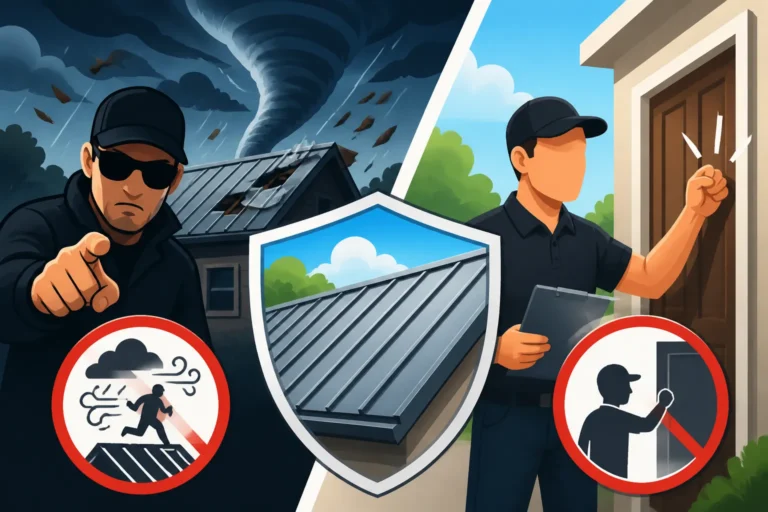
Any contractor who tries to pressure you into signing a contract on the spot, demands a large upfront cash payment, or offers steep "today-only" discounts should be approached with extreme caution. This kind of aggressive salesmanship is a hallmark of dishonest operators, often known as "storm chasers" who swoop into areas after natural disasters.
- "Sign now or lose the deal": A legitimate contractor will give you ample time to review their proposal, check their references, and compare it with other bids. They understand this is a major decision.
- Large upfront cash payments: While a reasonable deposit (typically 10-30% of the total project cost) is normal, demanding 50% or more upfront, especially in cash, is a massive red flag. This can be a sign they intend to disappear with your money. Always try to link payments to project milestones.
- Door-to-door solicitation after a storm: Be extra vigilant after severe weather events. While some legitimate roofers will canvas neighborhoods, many storm chasers will appear, offering quick fixes or pushing for immediate repairs without proper assessment. Always verify their identity, license, and insurance before engaging further.
Remember, you are in control of your home and your investment. Never feel obligated to sign anything under pressure. Take your time, do your homework, and choose a contractor who respects your process and offers transparency every step of the way. If you feel uncomfortable, it's always best to politely decline and find another option.
Key Licensing Information by State (General Guidelines)
It's crucial to remember that licensing requirements for roofing contractors can vary significantly not just by state, but often by individual city or county within that state. This table provides a general overview, but you should always verify with your specific local authorities.
| State/Region | Typical Licensing Authority | General Requirement for Roofing Contractors | What to Look For |
|---|---|---|---|
| Florida | Department of Business and Professional Regulation (DBPR) | State-issued license (e.g., Certified Roofing Contractor) | Active status, specific roofing classification (CCC or RC), no disciplinary actions. Check for local county/city licenses. |
| California | Contractors State License Board (CSLB) | State-issued license (C-39 Roofing Contractor) | Active status, C-39 classification, bond in place, workers' comp details (if employees). |
| Texas | No Statewide Licensing Board | Local city/county registration and permits are critical | Business permits, proof of insurance, local registration numbers. Verify with your specific city's building department (e.g., Houston, Dallas). |
| New York | No Statewide Licensing Board for most trades; NYC has specific rules | Local city/county licensing and registration | Varies by municipality (e.g., NYC Department of Buildings), business licenses, insurance. |
| Colorado | No Statewide General Contractor License | Local city/county licensing and permits | Many cities (e.g., Denver, Aurora) require local contractor licenses. Verify specific permits and insurance. |
| Georgia | Secretary of State's Professional Licensing Boards Division | Residential and General Contractor licenses usually cover roofing | Active license, appropriate classification, good standing. Check local county/city business licenses. |
| Arizona | Registrar of Contractors (ROC) | State-issued license (Residential or Roofing Contractor) | Active status, specific license type (CR-42 Roofing, CR-60 Residential). Check for any complaints. |
| North Carolina | NC Licensing Board for General Contractors | General Contractor license may be required for projects over a certain value | Active license, appropriate classification (e.g., residential builder), verify with local authorities. |
| Tennessee | Board for Licensing Contractors | General Contractor license may be required for projects over a certain value | Active license, appropriate classification (e.g., residential building), check for local permits. |
This table serves as a starting point. Always cross-reference with your local building department or consumer affairs office for the most accurate and up-to-date information for your specific area.
Don't Skip This Crucial Step: Your Home Depends On It
Choosing a roofing contractor can feel like a daunting task, especially with the sheer number of options and the varying quality of work out there. But by taking the time to verify their licensing, insurance, bonding, and reputation, you're not just crossing items off a checklist; you're actively protecting one of your most valuable assets—your home. This diligence prevents costly repairs, shields you from potential liability, and ensures you get the quality metal roof you're paying for. Don't let the excitement of a new roof overshadow the importance of hiring a truly qualified professional. Do your homework, ask the right questions, and you'll enjoy a beautiful, durable metal roof for decades to come, installed by someone you can truly trust.
Disclaimer
The information provided in this guide is intended for general informational purposes only and does not constitute legal, financial, or professional advice. Licensing and regulatory requirements for roofing contractors vary significantly by state, county, and municipality and are subject to change. Always consult with your local building department, licensing board, or a qualified legal professional to confirm current requirements and verify the credentials of any contractor you consider hiring. We do not endorse any specific contractor or company.