Metal Roof Warranties: Workmanship vs Manufacturer
Most homeowners assume that a fifty-year metal roof warranty is a universal safety net that covers every possible leak, dent, or discoloration for the next half-century. Unfortunately, the reality of roofing contracts is far more nuanced, and many families discover too late that their manufacturer's warranty won't pay a dime for a leak caused by an improperly driven screw. This guide explains the critical differences between workmanship and manufacturer warranties so you can protect your investment and your home.
Understanding the Two Pillars of Metal Roof Protection
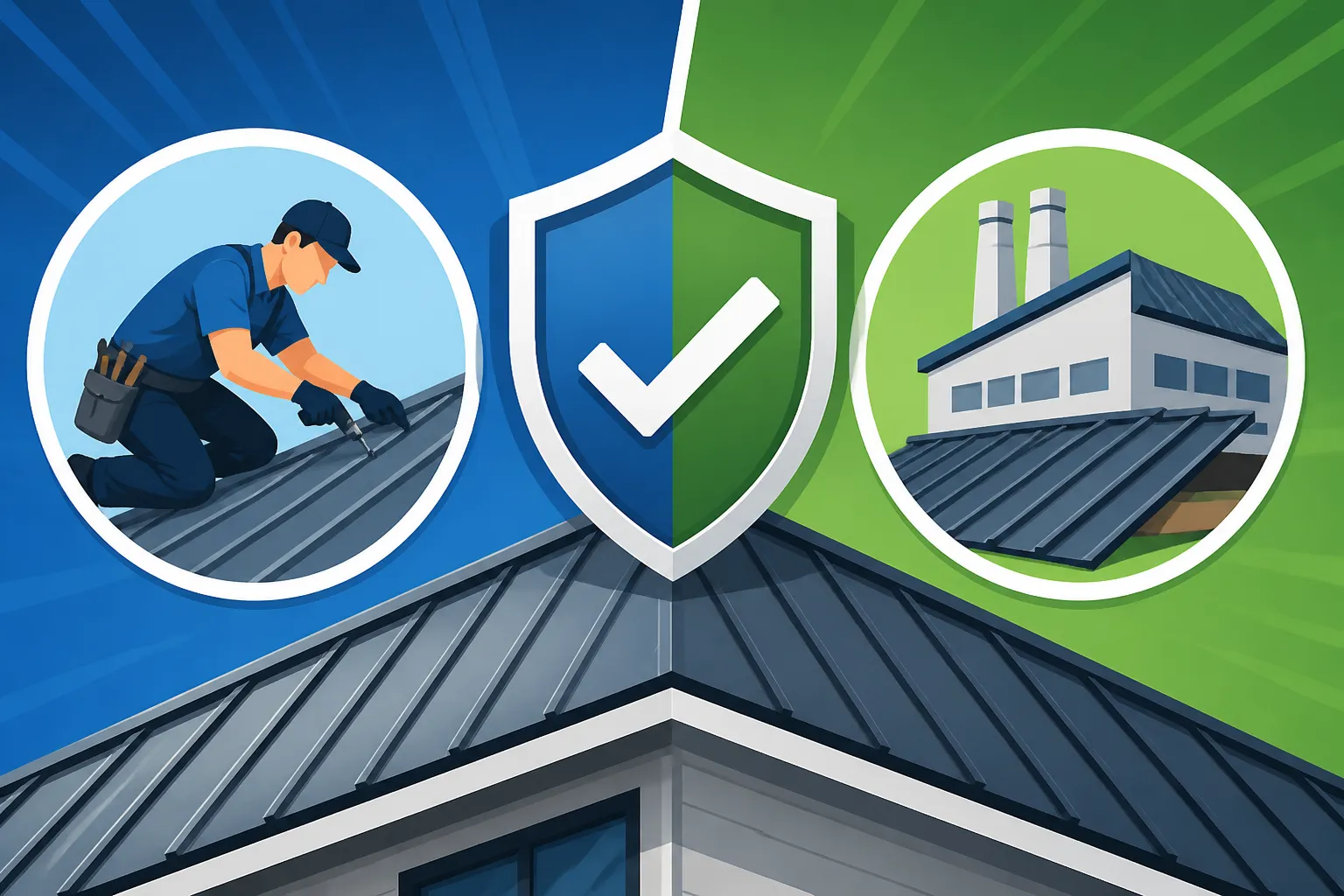
When you invest in a new metal roof, you are essentially entering into two separate agreements. One is with the company that manufactured the physical panels, and the other is with the local contractor who installed them. It is very common for people to get these confused, especially when a salesperson starts throwing around terms like lifetime protection or guaranteed for life. To truly protect your home, you have to understand that these two warranties cover entirely different parts of the project.
What is a Manufacturer Warranty?
The manufacturer warranty is all about the ingredients of your roof. Think of it like buying a high-end oven; the company that built the oven guarantees the heating element won't fail due to a defect in the metal, but they don't care if the delivery driver dropped it on your porch or if the electrician wired it incorrectly. In the world of metal roofing, the manufacturer is promising that the metal substrate itself won't fail and that the specialized paint coating will remain adhered and vibrant for a specified number of years.
These warranties are often remarkably long, ranging from twenty to fifty years, or even a lifetime in some cases. However, they are highly specific. They cover things like chalking, where the paint turns into a powdery residue, or fading beyond a certain number of Hunter Delta-E units. They also cover structural failure of the metal, such as the alloy itself corroding or perforating under normal conditions. What they do not cover is the way those panels were cut, overlapped, or fastened to your decking.
If you are just beginning to budget for this kind of project, looking at the Metal Roof Cost: Complete 2026 Guide] can help you understand how these high-quality materials, which carry such extensive warranties, impact your overall bottom line. Higher-end materials often come with more robust manufacturer backings because the companies have massive confidence in their chemical engineering.
What is a Workmanship Warranty?
The workmanship warranty is your contractor’s personal promise that they didn't cut corners during the installation process. This is often the more important warranty for the first ten years of your roof's life because the vast majority of roof leaks are caused by human error, not material failure. A workmanship warranty covers issues like improperly installed flashing around a chimney, screws that were over-driven or under-driven, and mistakes in the Metal Roof Underlayment and Ventilation Guide] implementation.
While manufacturer warranties are measured in decades, workmanship warranties are usually much shorter. A standard reputable contractor might offer anywhere from two to ten years of workmanship coverage. Some elite "master" level installers might offer lifetime workmanship guarantees, but those are rarer and usually come with a higher upfront price tag. If a leak develops because a worker didn't apply enough sealant at a hip or ridge, the manufacturer will tell you to call the guy who climbed the ladder, not them.
Using a platform like Modernize to find vetted contractors is a smart move here, as they can connect you with professionals who are transparent about their workmanship policies. You want a contractor who stands behind their labor just as firmly as the factory stands behind the steel.
Why You Need Both for Total Peace of Mind
Relying on just one of these protections is like wearing a belt but no pants. If you have a great manufacturer warranty but a one-year workmanship guarantee, you might be on the hook for a massive repair bill in year three when a poorly flashed valley starts leaking. Conversely, if you have a great contractor but they use "seconds" or unbranded metal with no manufacturer backing, you could face widespread paint peeling that the contractor can't afford to fix out of their own pocket.
The goal is to create a seamless shield of coverage. You want the material manufacturer to guarantee that the panels will look and perform as intended, and you want the contractor to guarantee that those panels were integrated into your home's structure correctly. When these two overlap perfectly, you have a truly worry-free roof. This is especially important for complex projects, such as when you are looking at Standing Seam Metal Roof Cost], where the precision of the install is just as vital as the quality of the standing seam panels.
In many cases, the two warranties work in tandem during a claim. If a panel begins to rust, the contractor might be the one to come out and inspect it, but the manufacturer provides the replacement panel, while the contractor handles the labor to swap it out. Understanding this relationship is the first step in being a savvy roofing consumer.
Deep Dive into Manufacturer Warranties
Manufacturer warranties are often the "hero" of the sales pitch because of their impressive duration. However, these documents can be twenty pages long and filled with technical jargon that the average homeowner might overlook. To really know what you are getting, you need to break down the specific components of the material guarantee, starting with the finish.
Paint and Finish Warranties (PVDF vs SMP)
Not all metal roof coatings are created equal. The two main players in the industry are PVDF (often known by the brand name Kynar 500) and SMP (Silicone Modified Polyester). The warranty for a PVDF coating is almost always superior to an SMP coating. PVDF warranties typically cover color fading and chalking for thirty to forty years, even in high-UV environments like Arizona or Florida. SMP warranties are usually shorter and have much stricter limits on how much color change is considered "acceptable" before the warranty kicks in.
If you live in a coastal area, the finish warranty is even more critical. Salt air is brutal on metal, and many standard manufacturer warranties actually have "coastal exclusions" that void the paint and corrosion coverage if you live within a certain distance of the ocean. In these cases, you might need to look for specialized aluminum products or high-build PVDF coatings that carry a specific coastal rider.
Before you commit, it is helpful to look at Metal Roofing Materials Compared: Steel, Aluminum, Copper & Zinc] to see how different metals interact with these coatings. For instance, aluminum is naturally more corrosion-resistant, which can sometimes result in a more favorable warranty structure in humid or salty environments compared to galvanized steel.
Substrate and Corrosion Warranties
Beyond the paint, the manufacturer guarantees the metal itself. This is known as the substrate warranty. For steel roofs, this usually refers to the Galvalume or galvanized coating that prevents the raw steel from rusting. The warranty will state that the metal will not "perforate" or rust through for a certain period. It is important to note that "surface rust" at the cut edges of a panel is often excluded from these warranties, as that is considered a natural occurrence when steel is cut in the field.
These warranties are often prorated. This means that if your roof is fifty years old and fails in year forty-five, the manufacturer might only cover 10% of the cost of replacement materials. Always check to see if your warranty is "non-prorated" for at least the first twenty years, as this offers significantly better financial protection.
Companies found through Modernize often provide samples and warranty documents from various manufacturers so you can compare the substrate protections of a 24-gauge panel versus a 26-gauge panel. The thickness of the metal can sometimes influence the length and terms of the corrosion guarantee.
Weather-Tightness Warranties (Commercial vs Residential)
You might hear the term "weather-tightness warranty" during your research. It is vital to distinguish between a standard residential warranty and a formal commercial weather-tightness warranty. In the commercial world, a manufacturer will actually inspect the installation and take on the legal responsibility for the roof not leaking. These are very expensive and require specific "certified" installers to follow a rigid set of blueprints.
In residential roofing, "weather-tightness" is rarely guaranteed by the manufacturer. Instead, the manufacturer guarantees the material, and the contractor guarantees the seal. If you are a homeowner being promised a "manufacturer weather-tightness warranty," be sure to read the fine print. Usually, this is only available for standing seam systems and requires a significant extra fee paid to the manufacturer at the time of installation.
If you are worried about leaks specifically, focusing on the Metal Roof Leak Repair Guide] can give you an idea of what common failure points look like. Knowing these helps you ask the right questions when looking at the weather-protection clauses in your contract.
The Workmanship Warranty: Your Contractor’s Promise
While the manufacturer handles the "what," the contractor handles the "how." The workmanship warranty is the document that protects you from the most common roofing nightmares: leaks, rattling panels, and wind uplift. This is where you find out if your contractor is a true professional or just someone looking for a quick paycheck.
Common Installation Errors Covered
A comprehensive workmanship warranty should cover any defect arising from the labor performed. This includes things like failing to install an ice and water shield in the valleys, using the wrong type of screws for the specific metal gauge, or failing to properly hem a standing seam panel. It also covers the "invisible" parts of the roof, like the underlayment and the ridge vents.
One common issue that a workmanship warranty should address is "oil canning," which is a wavy appearance in flat metal panels. While some oil canning is considered a natural characteristic of metal, excessive waving caused by over-tightened fasteners or an uneven roof deck should be the contractor's responsibility to remediate. If your contractor refuses to cover these types of aesthetic and functional errors, it’s a major red flag.
When you are researching How to Hire a Metal Roofing Contractor], you should prioritize those who offer a written workmanship warranty that specifically lists what is covered. A vague promise of "we'll fix it if it leaks" is not a warranty; you need a signed document with a clearly defined duration.
Duration of Workmanship Guarantees
The length of a workmanship warranty varies wildly. Many regional roofing companies offer a standard 5-year or 10-year warranty. The logic is that if a roof is going to leak due to an installation error, it will almost certainly do so within the first few heavy rain cycles or through one full cycle of the four seasons (thermal expansion and contraction).
However, some contractors offer "lifetime" workmanship warranties. While this sounds amazing, you have to consider the longevity of the business itself. A lifetime warranty from a company that has only been in business for two years might not be worth much if they vanish next season. This is why many homeowners prefer a solid 10-year warranty from a company with a 30-year track record.
If you are concerned about the long-term viability of your installer, check out Modernize to find contractors who have been vetted for their business stability and reputation. You want someone who will actually be around to answer the phone in 2035 if a piece of trim blows loose in a storm.
What Usually Voids a Workmanship Warranty?
Just like a car warranty, a roofing workmanship warranty has rules. The most common way to void this protection is by having a different company perform work on the roof. If you hire a generic handyman to install a satellite dish or a solar panel array and they drill holes in your metal roof, your original contractor’s workmanship warranty is effectively dead. They cannot be held responsible for the integrity of the roof once someone else has walked on it or modified it.
Another common "void" clause involves lack of maintenance. If your gutters are so clogged that water backs up under the metal eaves, the contractor may argue that the resulting damage was caused by negligence rather than poor installation. This is why keeping a copy of your Metal Roof Maintenance Guide] and following its schedule is not just good for the roof—it's essential for your legal protection.
| Warranty Feature | Manufacturer Coverage | Workmanship Coverage |
|---|---|---|
| Primary Goal | Protects against material defects | Protects against installation errors |
| Duration | 20 to 50+ Years | 2 to 10 Years (typically) |
| Commonly Covers | Paint fading, chalking, corrosion | Leaks, loose trim, fastener issues |
| Usually Voids By | Chemical exposure, salt air (unrated) | Third-party modifications, neglect |
| Cost | Included in material price | Included in labor quote |
| Who to Contact | The Material Brand (e.g., McElroy) | Your Local Roofing Company |
Critical Fine Print and Exclusions to Watch For
The "Big Print" gives you the warranty, but the "Fine Print" takes it away. Every warranty, no matter how prestigious, has a list of exclusions. Being aware of these before you sign a contract can save you thousands of dollars in future disputes. You need to know exactly where the manufacturer’s and contractor’s responsibilities end.
The Impact of Acts of God and Natural Disasters
Almost every warranty excludes "Acts of God." This typically includes hurricanes, tornadoes, lightning strikes, and extreme hail. If a tree falls on your roof during a storm, that is an insurance claim, not a warranty claim. However, there is a gray area when it comes to wind. If your roof is rated for 120 mph winds and it blows off in a 70 mph gust, you have a strong case for a workmanship claim.
Hail is another tricky subject. Some metal roofs are "Class 4 Impact Resistant," which may get you a discount on your homeowners insurance, but the manufacturer still won't pay for the cosmetic dents caused by a hailstorm. They only guarantee that the hail won't crack the metal or compromise the weather-tight seal. Understanding Does a Metal Roof Increase Home Value?] often involves explaining these insurance and durability perks to potential buyers later on.
Improper Maintenance and Aftermarket Add-ons
As mentioned earlier, you are the guardian of your warranty. If you allow moss or debris to sit on the roof for years, the trapped moisture can cause "edge creep" corrosion that isn't covered by the manufacturer. Furthermore, adding things like skylights after the fact can be a nightmare for warranties. If you want to add solar, always check Can You Put Solar Panels on a Metal Roof?] and consult your original installer to ensure the mounting brackets used are "warranty-compliant" (usually non-penetrating clamps for standing seam).
Transferability: Selling Your Home with a Warranty
One of the best selling points of a metal roof is the warranty, but only if it stays with the house. Some warranties are "non-transferable," meaning they expire the moment you sell the home. Others allow for a "one-time transfer" to the next owner, often requiring a small fee and a notification to the manufacturer within 30 days of the closing.
Always ask for a "transferable" warranty if you plan on moving within the next decade. Being able to hand a new buyer a document that says their roof is covered for another thirty years is a massive leverage point during negotiations. If the warranty is confusing, your contractor should be able to provide a summary sheet that explains the transfer process.
Comparing Warranty Types Across Metal Materials
The type of metal you choose for your home will drastically change the warranty landscape. A copper roof and a corrugated steel roof are treated very differently by both manufacturers and installers.
Steel vs Aluminum Warranty Differences
Steel is the most common residential metal roofing material, usually coated in Galvalume. Its warranties are very standardized. Aluminum, however, is often used in coastal regions because it doesn't rust. Aluminum warranties usually focus more on the paint adhesion and less on corrosion because the substrate is inherently more stable. Because aluminum is a softer metal, the workmanship warranty regarding "walking on the roof" is often stricter to prevent denting during installation.
Specialized Warranties for Copper and Zinc
If you are looking at Metal Roofing Materials Compared: Steel, Aluminum, Copper & Zinc], you’ll notice that copper and zinc are in a league of their own. These metals are "natural," meaning they aren't painted; they develop a patina over time. Because there is no paint to fade and the metal is incredibly long-lived, these roofs often don't have a traditional "50-year manufacturer warranty." Instead, you are relying almost entirely on the workmanship of the specialist who installs it. Copper installation is an art form, and the warranty you get will be a direct reflection of the craftsman's confidence.
Stone-Coated Steel and Impact Resistance Ratings
Stone-coated steel roofs (which look like traditional shingles or tile) often have some of the best warranties in the business. They frequently include specific "hail-penetration" warranties and high wind-speed guarantees (up to 120-130 mph). If you are looking at Stone-Coated Steel Roof Cost], keep in mind that the premium price often includes a more comprehensive "all-in-one" warranty style that bridges the gap between material and performance better than standard corrugated panels.
How to Vet a Contractor’s Warranty Policy
You shouldn't just take a contractor's word for it. You need to perform your own "warranty audit" before any materials are ordered. This is the stage where you separate the pros from the amateurs.
Questions to Ask About Local Experience
A warranty is only as good as the company’s local reputation. Ask the contractor: "How many warranty claims have you handled in the last three years?" A contractor who says "zero" might be lying or very lucky, but a contractor who says "We had two, and here is how we resolved them" is someone you can trust. You want to know that if a problem arises, they won't treat you like an enemy.
Use Questions to Ask a Metal Roofing Contractor Before You Hire] to dig deeper into their history. You also want to ask if they use in-house crews or subcontractors. Workmanship warranties can get complicated if the person who actually installed the roof was a third-party laborer who is no longer working with the primary contractor.
Verifying Manufacturer Certifications
Many manufacturers offer "extended" warranties if you use one of their certified installers. For example, a manufacturer might offer a standard 20-year warranty to anyone, but if you use a "Gold Level" certified installer, they might bump that up to a 50-year non-prorated warranty.
Always ask to see the contractor’s current certification from the manufacturer. These certifications usually expire every year or two and require the contractor to undergo updated training. You can find more about why this matters in our guide on Manufacturer-Certified Metal Roof Installers Explained].
Getting Everything in Writing (The Contract)
Never rely on a brochure. The only thing that matters legally is the contract you sign. Ensure the contract explicitly states the start and end dates of the workmanship warranty and includes the full legal text (or an addendum) of the manufacturer warranty. If a contractor says "the warranty is on the website," ask them to print it out and initial it as part of your agreement.
Modernize can help you find contractors who are used to providing this level of documentation. Professionals don't mind transparency; in fact, they use their superior warranties as a way to justify their pricing over cheaper, less-reliable competitors.
Navigating the Claims Process
Eventually, you might actually need to use that warranty. Knowing the steps to take can prevent a minor leak from becoming a legal battle. The key is to act quickly and stay organized.
Documenting Issues and Gathering Evidence
The moment you suspect a problem, take photos. Take photos from the ground, take photos in the attic, and if it's safe, take photos from a ladder. Keep a log of when the leak occurred (e.g., "Heavy rain with North-Westerly winds"). This data helps the contractor diagnose the issue faster and prevents the "we couldn't find a leak" excuse.
Who to Call First: Contractor or Manufacturer?
Always call your contractor first. Since most issues are workmanship-related, they can usually fix it in one visit. If the contractor determines the material is at fault, they will often act as your advocate with the manufacturer. If you go straight to the manufacturer, they will likely send an inspector out who will charge you a fee if they determine the problem was actually caused by poor installation.
If you find yourself in a situation where the roof is failing and your contractor is out of business, this is when you reach out to the manufacturer directly. This is also why we warn against Metal Roofing Scams and Red Flags to Avoid]; a scammer will never give you the paperwork you need to file a claim with the factory later on.
Handling Disputes and Legal Recourse
If the contractor refuses to honor their workmanship warranty, you have a few options. First, check if they are bonded; you may be able to file a claim against their surety bond. Second, reach out to the manufacturer; if the contractor is "certified," the manufacturer may put pressure on them to fix the issue to maintain their certification. Finally, if the repair is significant, you may need to consult a local attorney who specializes in construction law. Most disputes, however, can be settled through mediation or by showing the contractor that you have clear documentation of their failure to meet the contract terms.
Metal Roof Warranty Disclaimer
This guide is provided for informational purposes only and does not constitute legal advice or a binding warranty agreement. Warranty terms, local building codes, and manufacturer policies change frequently. Always read the specific terms of your individual contract and consult with a licensed roofing professional and legal counsel before making significant financial decisions regarding your home's roof.