What Happens If You Replace a Roof Without a Permit?
The thought of replacing your roof can be daunting enough without adding stacks of paperwork, inspections, and delays to the mix. It’s a common frustration for homeowners to feel like the permit process is just another bureaucratic hurdle designed to slow things down and cost more money. However, skipping that critical step can lead to a whole host of headaches, legal troubles, and even significant financial losses down the road. This guide will walk you through the serious consequences that can arise if you decide to replace your roof without the necessary permits.
Why Homeowners Sometimes Sidestep the Permit Process
It's completely understandable why someone might be tempted to bypass the permit process. Home renovations, especially a major one like a roof replacement, are often seen as a race against the clock and the budget. Many homeowners aren't aware of the specific regulations in their area, or they might feel confident in their contractor's abilities, assuming the contractor will handle everything.
The Illusion of Saving Time and Money
One of the biggest drivers for skipping a permit is the perceived savings in time and money. Applying for a permit often involves a fee, which can range from a few hundred dollars to over a thousand, depending on your municipality and the scope of work. Then there's the waiting game for approval, which can stretch from a few days to several weeks, particularly in busy areas or during peak construction seasons. For a homeowner eager to get their project started, especially if they're dealing with an active leak or storm damage, these delays can feel unbearable. They might think, "Why pay extra and wait longer when the roof just needs to get done?"
Adding to this, some less reputable contractors might even suggest skipping the permit as a way to offer a lower bid or a faster turnaround. They might tell you it's "not a big deal" for simple replacements, or that "no one will ever know." This kind of advice is a massive red flag, as a legitimate contractor knows the importance of proper permitting for both legal compliance and quality assurance. Falling for this can put both you and your home at significant risk.
Lack of Awareness and Misinformation
Another common reason is simply a lack of awareness about local building codes and requirements. Unless you're in the construction industry, it's not always obvious that a permit is needed for something like a roof replacement. Many people assume permits are only for new construction or significant structural changes. However, most jurisdictions consider a roof replacement a major structural alteration due to its impact on the home's integrity, safety, and energy efficiency.
The exact rules can vary wildly from one city or county to another. For example, in a densely populated area like Los Angeles, strict permitting is the norm for almost any exterior work, while a rural county in Oklahoma might have slightly more relaxed rules for minor repairs. This patchwork of regulations can make it confusing for homeowners, leading to genuine mistakes rather than intentional evasion. Nevertheless, ignorance of the law is rarely an excuse that holds up when consequences arise.
Immediate Repercussions: Stop-Work Orders and Fines
So, you’ve decided to move forward without a permit, and your new metal roof is going up. What happens if someone finds out? The immediate consequences are often swift and unpleasant, designed to halt unauthorized work and ensure compliance.
The dreaded Stop-Work Order
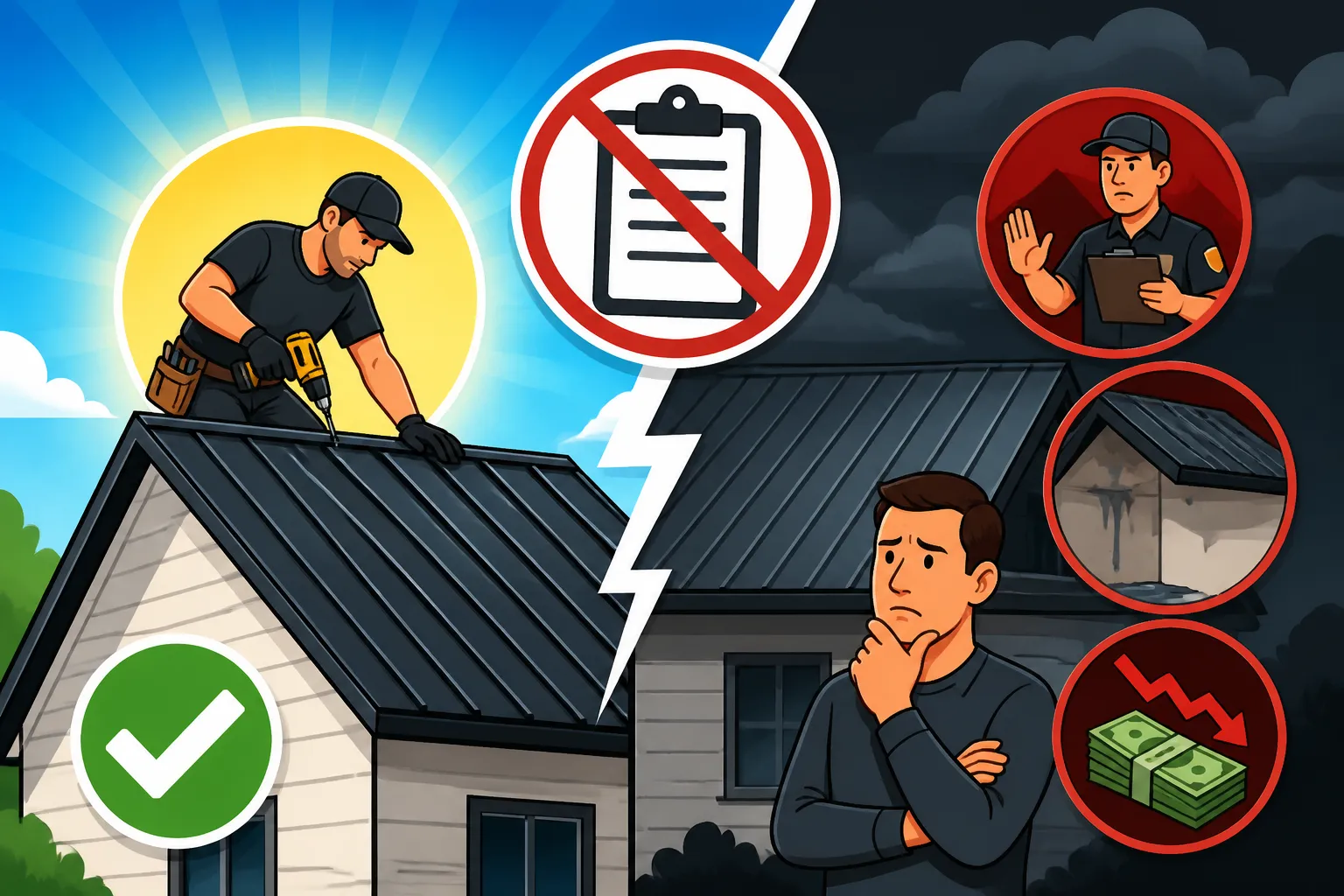
Imagine a crew is diligently installing your new Standing Seam Metal Roof Cost, and suddenly, a city inspector pulls up. This isn't a friendly visit; it's often the start of a very stressful situation. If the building department discovers unpermitted work, the first thing they’ll typically do is issue a stop-work order. This is a legally binding directive that immediately halts all construction activity on your property. Your contractors have to pack up their tools, and work ceases, often leaving your roof partially completed and vulnerable to the elements.
A stop-work order isn't just an inconvenience; it can be incredibly costly. You might still owe your contractor for the work already performed, even if it's incomplete. There could be delays in getting new materials or rescheduling the crew once the permit issues are sorted out. If your roof is half-finished during a rainstorm, you could face severe water damage to your home's interior, escalating an already bad situation. This scenario proves that the initial "savings" of skipping the permit quickly evaporate, replaced by unforeseen expenses and significant stress.
Steep Fines and Penalties
Beyond the stop-work order, you’ll almost certainly face fines and penalties. Building departments are not shy about imposing financial consequences for unpermitted work. These fines can vary widely but often start at several hundred dollars and can quickly climb into the thousands, especially if the work is extensive or if there's a history of non-compliance. Some jurisdictions might even double or triple the original permit fee as a penalty, making the "cost-saving" measure a significant financial burden.
For example, a standard roofing permit might cost a few hundred dollars. If you're caught without one, the fine could be $1,000 or more, plus the original permit fee, and potentially daily fines until the issue is resolved. You might also be required to expose parts of the roof for inspection, meaning portions of your brand-new roof could be torn off just to prove it meets code. This process can be infuriating and expensive, undermining the entire purpose of the metal roof investment.
Remediation and Code Compliance
Once a stop-work order is issued, you’re not just paying fines; you're also on the hook for getting the project into compliance. This means you'll have to retroactively apply for the permit, which often involves submitting detailed plans, undergoing inspections, and demonstrating that the work meets all current building codes. If the initial work doesn't meet code, you may be forced to correct it, which could involve costly rework or even tearing out portions of the new roof.
Consider a situation where your contractor installed your Metal Roof Underlayment Cost or flashing improperly, or used a roofing material that doesn't meet local fire resistance standards for your area. Without a permit and subsequent inspections, these issues wouldn't be caught until a problem arises or an inspector shows up. Now, you’re not just dealing with fines and delays, but potentially having to pay for corrections, making the entire project far more expensive and drawn out than if you had simply followed the process from the start.
Long-Term Headaches: From Resale to Insurance
The immediate consequences of unpermitted work are bad enough, but the problems can ripple out for years, affecting your home's value, insurability, and even future safety.
Issues When Selling Your Home
One of the most significant long-term consequences of unpermitted roof work arises when you decide to sell your home. Most home sales require extensive disclosures to potential buyers. If a permit wasn't pulled for a major renovation like a roof, it becomes a glaring red flag. Savvy buyers and their home inspectors will often check local permit records, and if they find no record of a roof replacement that clearly occurred, it immediately raises suspicions.
A missing permit can lead to several problems:
- Reduced Sale Price: Buyers might demand a lower price to compensate for the potential risks and liabilities associated with unpermitted work. They know they might have to deal with the issue themselves down the line.
- Buyer Backout: Many buyers will simply walk away from a deal rather than inherit a headache. This means you could lose a sale and have to restart the entire selling process, costing you time and money.
- Corrective Action Required: Some buyers might agree to proceed only if you, as the seller, obtain the necessary permits retroactively, which can be a complex and expensive process. You might even have to open up parts of the roof for inspectors, impacting its structural integrity and potentially damaging your new roof.
Imagine you're trying to sell your beautiful home with its modern Metal Roof Installation Process: Step by Step. A buyer falls in love with the place, but their agent does their due diligence and finds no permit for the roof that was installed three years ago. Suddenly, the buyer is hesitant, asking for a $10,000 reduction, or worse, they pull out of the deal entirely. That initial "saving" on the permit now costs you tens of thousands of dollars and immense stress.
Insurance Coverage Denials
This is a big one, and it's something many homeowners don't consider until it's too late. Homeowner's insurance policies are built on the assumption that your home is maintained to code and that all major renovations adhere to legal requirements. If your unpermitted roof suffers damage – say, from a severe hailstorm or high winds – your insurance company could deny your claim.
Here’s why: if the roof wasn't installed according to code (and without a permit, there's no official record that it was), the insurer might argue that the damage occurred due to faulty installation or materials, not solely the natural disaster. They could claim that the lack of a permit demonstrates non-compliance with building standards, voiding coverage for that specific part of your home. This could leave you footing the entire bill for a complete roof replacement out-of-pocket, which for a quality metal roof, can be a significant amount.
Furthermore, if the unpermitted work leads to other damage within your home – for example, a leak from a poorly installed roof leads to mold or structural damage inside – your insurance might also deny claims related to those secondary damages. This can turn a manageable issue into a catastrophic financial burden. Understanding Metal Roof Insurance Savings & Discounts is crucial, but these benefits hinge on proper installation and adherence to local regulations.
Safety and Structural Integrity Concerns
Building codes exist for a reason: to ensure the safety and structural integrity of your home and its occupants. When you bypass the permit process, you bypass the required inspections that confirm your new roof meets these essential safety standards. A roof is not just a covering; it's a complex system that protects your home from the elements and contributes to its overall structural stability.
An unpermitted roof, particularly if installed by an inexperienced or unscrupulous contractor, might have:
- Improper Fastening: Leading to panels detaching in high winds, posing a danger to your property and neighbors.
- Inadequate Ventilation: Causing moisture buildup, mold, and premature deterioration of your roof decking and attic structure.
- Substandard Materials: Using materials not rated for your local climate or structural requirements.
- Structural Overload: A new roof might add significant weight. Without proper engineering and inspection, this could overstress existing framing, especially if you're installing a heavier material like stone-coated steel over existing shingles.
These issues might not be immediately apparent, but they can lead to long-term problems, including leaks, structural failure, and even fire hazards. The risk to your family's safety and your home’s longevity simply isn't worth the perceived shortcuts.
The Right Way: Embracing the Permit Process
While it might seem like a hassle, getting a permit is a critical step that protects you, your home, and your investment. It ensures accountability, quality, and peace of mind.
Understanding Local Requirements
The first step is always to understand what's required in your specific location. Permit requirements vary widely by city, county, and even neighborhood. What might be needed in Miami, Florida, with its stringent hurricane codes, could be different from requirements in a less storm-prone area. A great place to start is your local city or county's building department website. They usually have detailed guides and application forms.
Don't hesitate to call their office with questions. Building department staff are typically happy to clarify requirements. You'll want to inquire about:
- Specific documents needed: Site plans, material specifications, contractor licenses.
- Required inspections: Such as a pre-installation inspection, deck inspection, and final inspection.
- Associated fees: What are the costs involved, and when are they due?
- Timeline: How long does the approval process typically take?
Many areas, especially those with stringent codes like parts of California or Florida, will have specific requirements for things like wind resistance and fire ratings. Researching "Metal Roof Building Codes Explained" can help you understand the technical jargon.
Partnering with a Reputable Contractor
One of the best ways to ensure a smooth permitting process is to work with an experienced and reputable metal roofing contractor. A good contractor will:
- Be Knowledgeable about Local Codes: They should already know the specific permit requirements in your area and be able to guide you through the process.
- Handle the Paperwork: Most reputable contractors will obtain the necessary permits on your behalf as part of their service. This is a huge benefit, as they know exactly what forms to fill out and how to navigate the municipal system.
- Schedule Inspections: They will coordinate with the building department to schedule all required inspections at the appropriate stages of the project.
- Ensure Code Compliance: A professional contractor will install your roof to meet or exceed all local building codes, ensuring your home is safe and passes inspections.
When you're evaluating contractors, always ask about their experience with local permitting and inspections. Ask to see proof of their licensing, insurance, and bonding. You can also research "How to Hire a Metal Roofing Contractor" to ensure you're making an informed decision. A contractor who suggests skipping the permit is a massive red flag and should be avoided at all costs.
The Benefits of a Permitted Roof
While applying for a permit might feel like an extra step, it offers invaluable benefits that far outweigh the minor inconvenience:
| Aspect | Without a Permit | With a Permit |
|---|---|---|
| Legal Standing | Illegal, subject to fines, stop-work orders, and rework | Fully compliant with local laws |
| Home Value & Resale | Significant hurdle, devalues home, scares off buyers | Increases home value, provides buyer confidence, smooth transaction |
| Insurance Coverage | Risk of denied claims for damage, huge out-of-pocket costs | Full coverage for covered damages, potential for Metal Roof Insurance Savings & Discounts |
| Safety & Quality | Unknown quality, potential hazards, structural risks | Assured quality through inspections, adherence to safety standards |
| Peace of Mind | Constant worry about being caught, future problems | Confidence in your investment, no legal or safety concerns |
| Contractor Accountability | No external oversight, contractor might cut corners | External validation of work quality, contractor held to standards |
By going through the proper channels, you’re not just avoiding penalties; you’re investing in the long-term safety, value, and integrity of your home. It’s an essential part of responsible homeownership, particularly for a significant and long-lasting upgrade like a metal roof.
Final Thoughts: Don't Risk It
Ultimately, the decision to replace your roof without a permit is a gamble that rarely pays off. The perceived savings in time and money are almost always eclipsed by the potential fines, legal troubles, complications with selling your home, and devastating insurance claim denials. More importantly, you put your home and your family's safety at risk by bypassing the critical oversight provided by building inspections.
A metal roof is a significant investment, known for its incredible durability and long lifespan. You want that investment to be protected and to add genuine value to your home for decades to come. Ensure that protection by doing things the right way. Work with a reputable contractor who understands and respects the permitting process. It might take a little longer and cost a little more upfront, but the peace of mind and long-term security you gain are absolutely priceless.
Disclaimer
This article is intended for informational purposes only and does not constitute legal, financial, or construction advice. Permit requirements, building codes, and insurance policies vary by location and provider. Always consult with your local building department, a qualified roofing contractor, and your insurance agent to understand the specific requirements and implications for your project.