What License Does a Roofer Need in North Carolina
Deciding to upgrade to a metal roof for your North Carolina home is a fantastic investment, promising durability, energy efficiency, and a sleek aesthetic. However, the process of finding a qualified contractor can feel like navigating a maze, especially when you're trying to understand the specific licensing a roofer needs in North Carolina. It’s frustrating to feel like you’re doing detective work just to ensure you’re hiring someone legitimate and competent. This guide is here to cut through the confusion, explaining precisely what licenses and credentials a metal roofing contractor should possess in the Tar Heel State, so you can make informed decisions with confidence.
Navigating North Carolina's Roofing Licensing Landscape
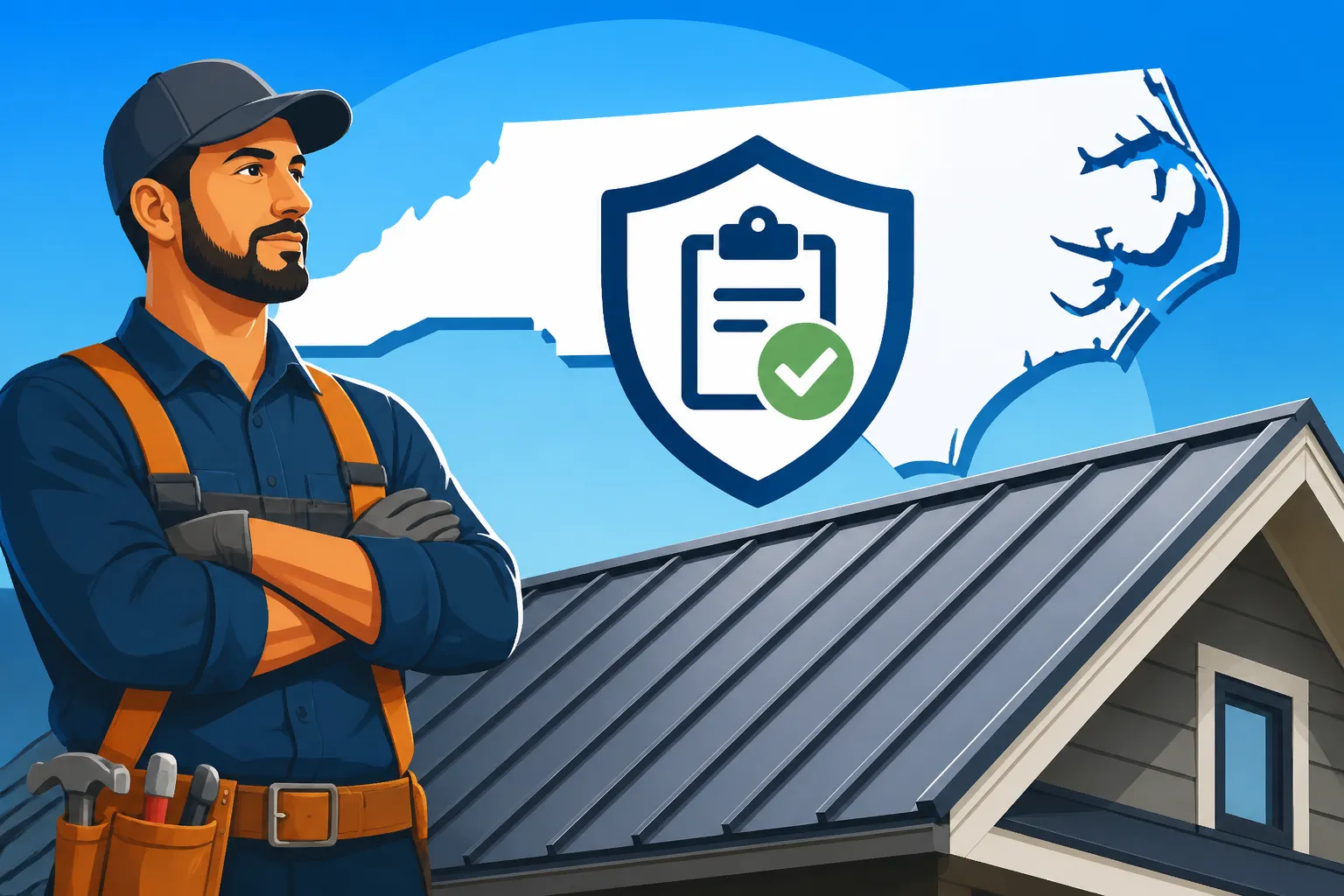
Unlike some states that have a dedicated "roofing contractor" license, North Carolina takes a different approach. This often catches homeowners off guard, leading to confusion about who is truly qualified to work on their home. The key thing to understand is that for most significant roofing projects, the state requires a general contractor's license, not a specialized roofing one.
The General Contractor License Requirement for Roofing
In North Carolina, any construction project, including roofing, that exceeds a certain monetary threshold requires the contractor to hold a valid general contractor's license issued by the North Carolina Licensing Board for General Contractors (NCLBGC). This isn't just a suggestion; it's a legal requirement designed to protect homeowners. The reasoning behind this is that a roofing project, especially a metal roof installation, involves more than just slapping on new materials. It touches upon structural integrity, building codes, and often requires coordination with other trades, all falling under the purview of a general contractor.
The NCLBGC issues licenses in various classifications, each with specific monetary limitations on the projects a contractor can undertake. It's vital to know these classifications because they directly impact whether your chosen contractor is legally allowed to handle your specific metal roofing job.
- Limited License: A contractor with a Limited license is authorized to perform single projects with a contract value of up to $500,000. This covers a significant number of residential roofing projects.
- Intermediate License: For larger residential projects or smaller commercial ones, an Intermediate license allows a contractor to work on single projects valued up to $1,000,000.
- Unlimited License: As the name suggests, an Unlimited license carries no monetary restrictions on the value of the projects a contractor can undertake. This classification indicates a higher level of experience and financial capacity.
When you're getting a quote for your metal roof, especially if it's a full replacement or a complex installation like a Standing Seam Metal Roof Cost project, you should confirm that their license classification matches or exceeds the total value of the proposed work. Hiring a contractor with a Limited license for a project that falls into the Intermediate or Unlimited category could leave you vulnerable, as they are operating outside their legal scope. This general contractor licensing system ensures that individuals undertaking substantial construction work have passed a rigorous exam, met experience requirements, and demonstrated financial solvency. This adds a crucial layer of consumer protection that you simply don't get with an unlicensed individual.
When a General Contractor License Is Not Required
Now, here's where it can get a little tricky. Not every single roofing job in North Carolina requires a state-issued general contractor's license. The magic number often cited is $30,000. If a roofing project, including labor and materials, is estimated to cost less than $30,000, a state general contractor's license is typically not required by the NCLBGC. This usually applies to smaller repairs, minor re-roofing jobs on detached garages, or very small residential roofs.
However, even if the state doesn't mandate a GC license for these smaller jobs, that doesn't mean you should throw caution to the wind. There are still significant risks associated with hiring an unlicensed individual, even for minor repairs. For one, if something goes wrong, you have very little recourse. An unlicensed contractor might not carry the necessary insurance, leaving you personally liable if a worker gets injured on your property or if your home suffers damage. Secondly, the quality of work can be highly questionable. Metal roofing requires precision and specific knowledge, whether it's proper fastening techniques or understanding how to handle metal roof flashing repair. Someone without formal training or licensing might cut corners, leading to premature leaks, rust, or an unsightly installation.
It's also important to remember that this $30,000 threshold applies to the entire project, not just the part the roofer might be doing. If a homeowner breaks down a large project into smaller contracts to avoid the licensing threshold, they could still face issues. Always prioritize professional, licensed contractors, even for those seemingly small fixes, because your roof is one of the most critical components of your home's protection.
Importance of Specialty and Local Licenses
While the state of North Carolina focuses on the general contractor license for significant roofing projects, that doesn't mean there aren't other layers of licensing and regulation to consider. Many municipalities and counties within North Carolina have their own specific local licensing, registration, or permitting requirements for contractors, even for jobs below the state's $30,000 general contractor threshold. These local regulations are put in place to ensure that contractors working within their jurisdiction meet local standards, pay local fees, and are accountable to local authorities.
For instance, a city like Charlotte might have different registration requirements for contractors than a smaller town in a rural county. These local requirements can vary widely, covering aspects from business registration to specific trade permits. A reputable metal roofing contractor will be well-aware of these local nuances and will handle all the necessary paperwork. This includes obtaining the proper building permits, which are almost always required for any new roof installation or significant repair, regardless of cost. Failing to secure the correct permits can lead to costly delays, fines, or even the forced removal of work if it doesn't meet local codes.
Think of it this way: the state GC license is like your main driver's license – it says you're qualified to drive. The local licenses and permits are like your vehicle registration and parking permits – they ensure you're allowed to drive and park in specific areas. A good contractor will have both their state GC license (if required for the project scope) and all necessary local registrations and permits. When you're gathering quotes, be sure to ask prospective contractors about their experience with local regulations and their process for obtaining permits. You can even reach out to your local building department directly to confirm what's needed for your specific project and address.
Verifying a Roofer's License and Credentials in North Carolina
So, you understand what licenses are generally needed. Now, how do you actually check if a contractor has them? This step is crucial and shouldn't be overlooked. Many homeowners skip this, assuming a contractor's word is enough, but unfortunately, that's where some problems can begin.
Checking the NC Licensing Board for General Contractors
The easiest and most reliable way to verify a general contractor's license in North Carolina is to use the official online search tool provided by the North Carolina Licensing Board for General Contractors (NCLBGC). This database is publicly accessible and provides up-to-date information on all licensed general contractors in the state.
Here’s how you typically do it:
- Visit the NCLBGC Website: Go to the official NCLBGC website. You can usually find a "License Search" or "Verify a License" link prominently displayed.
- Enter Contractor Information: You'll typically be able to search by the contractor's company name, license number, or even by individual name. It's best to use the license number if you have it, as company names can sometimes be similar.
- Review the Results: Once you find the contractor, examine the details carefully. Look for:
- Active Status: Ensure the license is currently active and not expired, suspended, or revoked.
- License Classification: Confirm that the classification (Limited, Intermediate, or Unlimited) matches the scope and cost of your project. If your project is $750,000, and they only have a Limited license, that’s a major red flag.
- Contractor's Name: Make sure the name on the license matches the business name and the individuals you are dealing with.
This quick online check takes just a few minutes and provides invaluable peace of mind. It's a fundamental step in how to hire a metal roofing contractor responsibly. Don't be afraid to ask a contractor for their license number upfront; a reputable professional will gladly provide it.
Beyond the License: Insurance, Bonding, and Certifications
While a state general contractor's license is paramount for larger projects, it's just one piece of the puzzle. A truly professional and reliable metal roofing contractor will also carry appropriate insurance, bonding, and often holds manufacturer-specific certifications. These elements offer additional layers of protection for you and ensure the quality of their work.
- Insurance:
- General Liability Insurance: This is non-negotiable. General liability insurance protects you in case the contractor or their crew causes damage to your property during the roofing project. Imagine a panel slips and damages your landscaping or a window; liability insurance covers those costs.
- Workers' Compensation Insurance: If the contractor has employees, they must carry workers' comp insurance. If an uninsured worker gets injured on your property, you, as the homeowner, could be held liable for their medical bills and lost wages. This is a massive risk you absolutely want to avoid. Always ask for certificates of insurance directly from their insurance carrier, not just a copy from the contractor, to ensure it's current and legitimate.
- Bonding: While not always required for residential projects, some reputable contractors may be bonded. A bond provides financial protection if the contractor fails to complete the work as agreed upon in the contract or fails to pay their subcontractors and suppliers. This isn't as common as insurance for residential jobs but offers an extra layer of security.
- Manufacturer Certifications: For metal roofing, manufacturer certifications are a huge plus. Companies like Boral, DECRA, McElroy Metal, or Englert often offer training and certification programs for installers who demonstrate expertise in their specific products and installation methods. A contractor with these certifications is likely to be highly skilled in installing the particular metal roofing system you're interested in, whether it’s Stone-Coated Steel Roof Cost systems or specialized Standing Seam profiles. These certifications often tie into enhanced product warranties as well, as manufacturers trust certified installers to apply their products correctly. Don't hesitate to ask for proof of these certifications. A platform like Modernize can help connect you with vetted, local contractors who emphasize these crucial credentials.
Red Flags to Watch Out For
As you begin talking to different contractors and getting Metal Roof Quotes, keep an eye out for warning signs that indicate you might be dealing with a less-than-reputable individual or company. Trust your gut; if something feels off, it probably is.
- No License or Refusal to Show Proof: This is the biggest red flag. If a contractor can't or won't provide their North Carolina General Contractor license number (for projects over $30,000), or if you can't verify it through the NCLBGC, walk away immediately. It doesn't matter how good their price seems; the risks are too high.
- High-Pressure Sales Tactics: Be wary of contractors who pressure you into signing a contract on the spot, offer "today-only" discounts, or demand immediate cash payments. Reputable contractors understand that homeowners need time to make such a significant decision.
- Demanding Full Payment Upfront or Cash-Only: While a reasonable down payment is standard (often 10-30%), demanding 50% or more upfront, especially in cash, is a serious red flag. Most legitimate contractors will have a payment schedule tied to project milestones.
- Lack of Proper Documentation: A professional contractor will provide a detailed, written contract that outlines the scope of work, materials, payment schedule, warranty information, and completion dates. They should also provide proof of insurance and workers' comp. If they balk at providing a comprehensive contract or seem vague about details, it’s time to move on. Our guide on What a Metal Roof Contract Should Include can help you identify what's missing.
- Out-of-State License Plates After a Storm: Be extremely cautious of "storm chasers" who appear after a major weather event. These contractors often lack local ties, may not be properly licensed or insured in North Carolina, and can disappear quickly if problems arise. Always prioritize local contractors with an established presence.
- Generic or No Physical Address: A legitimate business will have a physical office or a clear business address. Be wary of contractors who only provide a P.O. box or solely work out of a truck.
Why Hiring a Licensed Metal Roofing Contractor Matters
Choosing a metal roof is a significant investment in your home's future. It promises decades of protection, enhanced curb appeal, and potentially lower energy bills. To truly realize these benefits, however, the installation must be done correctly, and that starts with hiring a licensed and qualified contractor. This isn't just about avoiding legal trouble; it's about safeguarding your home and your financial well-being.
Ensuring Quality and Compliance with Building Codes
A licensed North Carolina General Contractor understands the intricacies of local and state building codes. When it comes to metal roofing, these codes dictate everything from proper fastening methods to ventilation requirements and flashing details. An unlicensed contractor might be unaware of these critical regulations or, worse, intentionally disregard them to save time or money. This can lead to an installation that is not only sub-par in quality but also non-compliant with code, which could cause issues during home inspections or with insurance claims down the line.
Metal roof installation is a specialized skill. It involves precise measurements, careful handling of panels to prevent oil canning, and expert installation of complex components like drip edges, ridge vents, and snow guards. For example, a Standing Seam Metal Roof Installation Process requires highly trained professionals to correctly seam the panels and ensure a watertight seal. An experienced, licensed contractor brings this expertise to the table, ensuring that your metal roof is installed to the highest standards, maximizing its longevity and performance. They know the best practices for underlayment, ventilation, and how to prevent common issues like leaks around penetrations.
Protecting Your Investment and Warranty
One of the most compelling reasons to choose a metal roof is its incredible lifespan, often 50 years or more. However, this longevity, along with the robust manufacturer warranties that typically accompany metal roofing materials, is heavily dependent on professional installation. Many metal roof manufacturers explicitly state that their warranties can be voided if the product is not installed by a certified or licensed professional according to their specifications.
Imagine spending a significant amount on a beautiful new metal roof, only to find out years later that the manufacturer won't cover a defect because an unlicensed contractor installed it improperly. This scenario is a nightmare. A licensed contractor, especially one with manufacturer certifications, ensures that your roof is installed in a way that preserves these valuable warranties, protecting your investment for decades to come. Furthermore, many licensed contractors offer their own workmanship warranties, providing an additional layer of assurance should any issues arise from their installation work. This is a critical factor when considering the Metal Roof Cost vs Lifespan Value equation.
What Happens if You Hire an Unlicensed Contractor?
The consequences of hiring an unlicensed contractor, even for projects below the state's $30,000 threshold if local permits are involved, can range from inconvenient to financially devastating.
- No Legal Recourse for Poor Work: If an unlicensed contractor performs shoddy work, disappears before the job is finished, or simply stops returning your calls, your legal options are severely limited. Licensing boards exist to regulate the industry and provide avenues for homeowners to file complaints and seek resolution. With an unlicensed individual, you lose this critical layer of protection.
- Personal Liability for Injuries: As mentioned earlier, if an uninsured worker is injured on your property, you could be held responsible for their medical bills and lost wages. This is an enormous financial risk that you should never take.
- Voided Homeowners Insurance: Some homeowners' insurance policies may not cover damages resulting from work performed by unlicensed contractors or work done without proper permits. This means if your unpermitted, unprofessionally installed metal roof fails during a storm, your insurance claim could be denied.
- Difficulty Selling Your Home: If you have unpermitted work on your home, it can become a major headache when you try to sell. Home inspectors will flag it, and potential buyers may demand that the work be brought up to code (at your expense) or simply walk away.
- Fines and Penalties: If your local municipality discovers unpermitted or non-compliant work, you could face hefty fines and be required to pay for the work to be redone by a licensed contractor, adding significant unforeseen costs to your project.
In summary, choosing a licensed metal roofing contractor in North Carolina is not just a formality; it's a necessary step to ensure quality, protect your finances, and guarantee the long-term performance of your new roof. Taking the time to verify their credentials, insurance, and reputation will pay dividends for decades to come.
Comparing North Carolina General Contractor License Classifications
To help visualize the different levels of general contractor licenses in North Carolina, here's a quick comparison:
| License Classification | Project Monetary Limit (Single Project) | Scope of Work Implications | Ideal for Homeowner Projects |
|---|---|---|---|
| Limited | Up to $500,000 | Most residential builds and significant renovations. | Most average-sized residential metal roof replacements. |
| Intermediate | Up to $1,000,000 | Larger residential custom homes, small commercial projects. | Larger, more complex residential metal roof projects. |
| Unlimited | No monetary limit | Any project size, from residential to large commercial. | Any residential metal roof project, especially very large or high-end custom installations. |
| No State GC License | Under $30,000 | Small repairs, maintenance. Requires local permits. | Very minor metal roof repairs or small accessory structures. Always verify local requirements and insurance! |
This table illustrates why knowing the classification of your chosen contractor is so important. Make sure their license covers the full estimated cost of your Metal Roof Cost: Complete 2026 Guide project.
Disclaimer
Please remember that building codes and licensing requirements can change. While this guide provides current and accurate information for North Carolina as of the time of writing, it is always best to double-check with the North Carolina Licensing Board for General Contractors and your local municipal building department for the most up-to-date and specific requirements pertaining to your exact project and location. This article is for informational purposes only and should not be considered legal advice.